10 Examples of Reciprocity That Boost LTV and AOV in 2025
Jan 3, 2026
|
Published

Stop eroding your margins with endless discounts. The secret to sustainable growth lies in a powerful psychological trigger: reciprocity. When you give genuine value first, customers feel a deep-seated, natural impulse to give back, often by spending more and staying loyal. This isn't about manipulation; it's about building a stronger, more profitable customer relationship that directly boosts Lifetime Value (LTV).
This guide moves beyond theory and dives into 10 potent examples of reciprocity that you can implement today. We will focus on how savvy Shopify merchants are replacing confusing points systems and margin-killing coupons with simple, cash-like store credit. You will find actionable strategies that leverage native Shopify store credit to not only boost average order value (AOV) on the next purchase but to fundamentally increase customer lifetime value (LTV).
Prepare to see exactly how to implement these tactics, from offering surprise micro-credits to structuring referral programs that actually work. We will break down how each example creates a powerful cycle of give-and-get, transforming your retention strategy from purely transactional to deeply relational. Forget chasing one-off sales; it’s time to cultivate loyalty that pays dividends for years.
1. The Gift Principle - Free Value Creates Obligation to Return
At its core, reciprocity is a powerful psychological trigger based on a simple social rule: when someone gives you something of value, you feel an urge to give something back. The Gift Principle leverages this by proactively offering value to customers, creating a sense of indebtedness that they are motivated to repay. This foundational principle underscores that when businesses offer genuine value without immediate expectation of return, like offering valuable freebies, it cultivates a sense of obligation and gratitude in the recipient.
This is one of the most effective examples of reciprocity in ecommerce because it directly influences purchasing behavior, boosting both conversion rates and Average Order Value (AOV). For Shopify brands, this isn't about generic discounts; it's about strategic gifting. By automatically issuing store credit after a customer's first purchase, you create an immediate reason for them to return and spend more, turning a one-time buyer into a repeat customer and increasing their overall lifetime value.
Strategic Implementation
Welcome Credit: Offer a meaningful amount of store credit to new subscribers. This "gift" makes them feel valued and psychologically primes them to use it, often by spending more than the credit amount to increase AOV.
Surprise & Delight: Add a surprise gift of store credit to a customer's account after a significant purchase. This unexpected reward strengthens loyalty and encourages their next purchase, boosting LTV.
Post-Purchase Bonus: Automatically issue store credit after a purchase is completed. This immediately establishes a loop, motivating the customer to return sooner and spend more. For more insights on this tactic, explore how to effectively give store credit on Shopify.
2. Store Credit as 'Mental Money' - Psychological Ownership Effect
Unlike generic discounts or abstract points, Shopify native store credit creates a powerful psychological ownership effect. When customers receive a specific dollar amount, they perceive it as "mental money" already in their possession, which they are highly motivated to spend. This tangible value triggers a much stronger reciprocal response, as customers feel a greater urgency to use the credit they "own" and are more willing to add to their cart to maximize its value. This is a core principle behind why store credit is a more effective LTV driver than traditional loyalty systems.
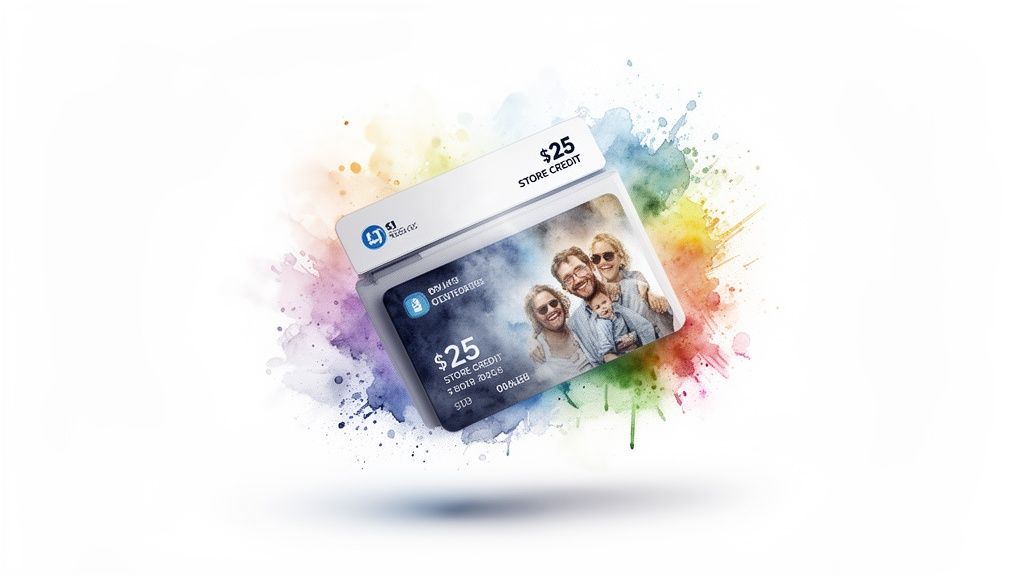
This powerful reciprocity example shifts the customer mindset from saving money to spending money they already have. For Shopify brands, this translates into higher AOV and repeat purchase rates, as customers are not just redeeming a confusing coupon code; they are spending their own rewarded capital. The focus moves from a one-time transaction to a continuous, value-driven relationship that maximizes customer lifetime value.
Strategic Implementation
Prominent Balance Display: Make the store credit balance highly visible on the customer's account page, in the cart, and at checkout. Constant reminders reinforce psychological ownership and encourage use, boosting AOV.
Real-Time Updates: Instantly update a customer's credit balance after a purchase or reward action. This immediate feedback strengthens the feeling of ownership and value received.
Checkout Reminders: Use notifications at checkout to remind customers of their available credit, prompting them to apply it and often increasing their cart size to "get the most" out of their balance. To dig deeper into the mechanics, explore this guide on what store credit is and how it drives behavior.
3. The Sunk Cost Reciprocation - Increased Spending to Justify Rewards
This strategy taps into a potent psychological mix of reciprocity and the sunk cost fallacy. When a customer receives store credit, they perceive it as invested value. This creates a powerful compulsion to "unlock" or "justify" that reward by spending more, leading to a direct increase in Average Order Value (AOV). It reframes the shopping experience from a simple transaction into a goal-oriented quest for value maximization.
This is a key example of reciprocity because the initial gift of credit triggers a reciprocal action from the customer: higher spending. For Shopify merchants, this is far more effective than a generic discount. A customer might see a $10 store credit and feel compelled to spend an extra $20 on an item they were only browsing, just to ensure their "free" credit doesn't go to waste. This behavior significantly boosts both AOV and lifetime value by encouraging larger, more frequent purchases.
Strategic Implementation
Tiered Credit Milestones: Implement a system where customers unlock progressively larger store credit amounts as they spend more. Displaying the next milestone prominently in the cart (e.g., "Spend just $15 more to get $10 in credit!") gamifies the experience and motivates higher spending and a greater lifetime value.
Visual Progress Bars: Use visual cues like progress bars in the cart or on the customer account page. This visually represents how close a customer is to their next reward, making the goal feel tangible and achievable.
Threshold-Based Promotions: Create campaigns where spending a certain amount unlocks a significant credit bonus. For example, "Spend $100 this weekend and get $25 in credit for your next purchase," which encourages customers to increase their AOV to meet the threshold.
Personalized Thresholds: Segment your customer base and tailor the spending thresholds to their typical buying habits. This ensures the next reward always feels within reach, making the incentive more effective for different customer cohorts.
4. Social Proof Through Visible Rewards - Reciprocal Community Effect
Humans are social creatures, and our actions are heavily influenced by the behavior of others. This principle applies directly to reciprocity; when customers see others being rewarded, it validates the reward's value and creates a desire to participate. By making your Shopify store credit rewards visible, you generate powerful social proof that encourages a community-wide reciprocal effect, motivating new customers to join in and existing ones to re-engage.
This is one of the more subtle yet effective examples of reciprocity because it leverages community dynamics to drive conversions and boost Lifetime Value (LTV). For Shopify merchants, this goes beyond simple testimonials. It involves showcasing the real-time value customers are receiving. For instance, on-site notifications showing "Jane just earned $10 in store credit" create a sense of legitimacy and gentle FOMO (Fear Of Missing Out), nudging hesitant shoppers to complete their purchase to earn their own reward.
Strategic Implementation
Publicize Reward Milestones: Feature customers who have earned or redeemed significant amounts of store credit in your email newsletters or social media posts. This showcases the program's value and gives customers a goal to aspire to.
Showcase Participation: Use trust badges on product or cart pages that display messages like "Over 500 customers earned credit on this item last month." This reinforces the purchase decision by showing that others are benefiting.
Leverage Referral Visibility: When a customer refers a friend, ensure both parties see the reward being issued. This public display of reciprocity strengthens the social bond and encourages further referrals. For a deep dive into building such systems, consider exploring strategies for creating a robust referral program on Shopify.
5. Earned Reward Reciprocity - Effort-Based Store Credit Distribution
Unlike a direct gift, rewards that customers earn through their own actions trigger a more profound sense of reciprocity. When customers invest effort-whether through making a purchase, leaving a review, or referring a friend-the resulting store credit feels like a legitimate achievement. This “earned reward” principle creates a powerful psychological ownership over the value, making customers significantly more motivated to redeem it and continue the cycle of engagement.
This is a cornerstone example of reciprocity because it transforms the customer relationship from transactional to collaborative. Instead of just receiving a handout, the customer becomes an active participant in value creation. For Shopify brands, this shifts the focus from one-off discounts to building a sustainable loyalty loop. Issuing automatic store credit for specific, value-driving actions like referrals or social shares encourages behaviors that directly benefit the business, boosting both engagement and lifetime value.
Strategic Implementation
Purchase-Based Earning: Automatically issue a percentage of a customer's order total back as store credit. This provides immediate gratification and an incentive for their next purchase, directly impacting repeat purchase rates and LTV.
Action-Driven Rewards: Grant bonus store credit for high-value actions like writing a product review, sharing user-generated content, or successfully referring a new customer. This incentivizes advocacy and social proof.
Gamified Milestones: Set up milestone bonuses that unlock additional store credit when a customer reaches a specific lifetime spend threshold (e.g., an extra $20 credit after spending $500). This encourages higher AOV and long-term loyalty.
6. Reciprocal Retention Through Credit Expiration and Urgency
The principle of reciprocity is magnified when combined with a sense of urgency. By issuing store credit with a clear expiration date, you create a powerful psychological trigger. The customer feels a reciprocal obligation to use the gift you've given them, and the deadline transforms that feeling into a time-sensitive mission. They are motivated to act before the value disappears, which directly accelerates their next purchase.
This tactic is one of the most effective examples of reciprocity for boosting purchase frequency and compressing the time between orders. For Shopify merchants, this moves beyond a simple "thank you" credit and introduces a behavioral nudge. A 90-day expiration window, for instance, can help establish a quarterly purchasing habit, turning a passive customer into an active, engaged buyer who is mindful of their next shopping opportunity. It's a strategic way to increase lifetime value by systemizing re-engagement.
Strategic Implementation
Set Strategic Windows: Align credit expiration with natural re-purchase cycles for your products. A 60-day window might be perfect for consumables, while 180 days might suit apparel or durable goods.
Automated Reminder Sequences: Use escalating reminders (e.g., 30-day, 14-day, and 3-day warnings) to create urgency without being aggressive. Each reminder is a fresh opportunity to bring your brand top-of-mind.
Visible Countdown: Display the expiration date prominently in the customer's account or digital wallet. This visual cue constantly reinforces the need to act and makes the store credit feel more tangible. This tactic is key for turning store credit into a powerful, margin-friendly alternative to generic discounts.
7. Frictionless Redemption - Reciprocal Satisfaction and Repeat Cycles
Reciprocity weakens when the act of returning a favor is difficult or cumbersome. The principle of frictionless redemption ensures that when a customer wants to use their earned store credit, the process is seamless and satisfying. By removing barriers at checkout, you respect the customer's time and effort, reinforcing the positive feelings associated with the initial gift and motivating them to complete the reciprocal loop.
This is a critical example of reciprocity because a difficult redemption process can negate all prior goodwill. When store credit applies automatically at checkout, like it does with a native Shopify solution, the customer feels understood and valued. This positive experience not only increases redemption rates but also accelerates the repurchase cycle, directly boosting Lifetime Value (LTV) by making it easy and enjoyable for customers to come back and spend their credit.
Strategic Implementation
Automate at Checkout: Use a native Shopify store credit system to automatically apply a customer's balance at checkout. This removes the need to find and enter a code, which is a major point of friction compared to old coupon systems.
Clear Balance Display: Prominently display the customer's available store credit on their account page and in the cart. This constant, visible reminder of their "gift" encourages them to find a reason to use it.
One-Click Redemption: Integrate wallet-based redemption options like Apple Pay or Shop Pay. Allowing customers to use their store credit with these one-click payment methods creates the ultimate low-friction experience.
8. Personalized Credit Offers - Targeted Reciprocal Incentives
Generic, one-size-fits-all rewards often fail to create a strong reciprocal bond because they lack a personal touch. Personalized credit offers, however, segment customers based on behavior and history, making each person feel individually seen and valued. This tailored approach transforms store credit from a simple incentive into a meaningful gesture, creating a much stronger psychological pull to reciprocate with loyalty and repeat purchases.
This strategy is one of the most sophisticated examples of reciprocity because it directly rewards specific, high-value actions. Instead of a blanket offer, you might give VIPs double credit on purchases or send a "we miss you" bonus to a lapsed customer. This level of personalization shows you're paying attention, which deepens the customer relationship and drives more profitable behavior than generic discounts ever could. For Shopify brands, this means using customer data to create targeted incentives that boost Lifetime Value (LTV).
Strategic Implementation
Tiered Rewards: Create VIP tiers where top customers earn store credit at an accelerated rate (e.g., 2x). This not only rewards your best customers but also gives others a clear incentive to spend more to reach the next level.
Win-Back Campaigns: Target inactive customers with a surprise "welcome back" credit offer. This unexpected gift can be the perfect nudge to reignite the relationship and bring them back to your store.
Category-Specific Bonuses: Encourage purchases of high-margin products by offering extra store credit specifically for those items. This guides customer behavior while protecting your profitability. For a deeper dive into this, learn more about how to leverage market segmentation in your marketing.
9. Referral-Based Store Credit - Network Reciprocity Effect
Referral programs create a powerful, dual-sided reciprocity loop by rewarding both the referrer and the new customer. When an existing customer successfully refers a friend, they earn store credit as a thank you for their advocacy. Simultaneously, the new customer receives a welcome credit, making their first purchase more appealing and creating an immediate positive association with the brand. This dynamic transforms customers into brand ambassadors, driving low-cost acquisition and reinforcing loyalty.

This is one of the most effective examples of reciprocity because it builds a self-sustaining growth engine fueled by mutual benefit. Unlike generic discount codes, referral-based store credit feels like a personal recommendation backed by a tangible reward. This model leverages trust and existing relationships to acquire high-value customers who are more likely to have a higher lifetime value. For Shopify brands, it's a margin-friendly way to scale customer acquisition while deepening the bond with your current base.
Strategic Implementation
Dual-Sided Incentives: Structure your program so both the referrer and the referred friend receive a meaningful store credit reward. A "Give $10, Get $10" model is a classic, highly effective approach that feels equitable and compelling.
Milestone Bonuses: Encourage repeat referrals by offering tiered rewards. For example, provide a bonus store credit infusion after a customer successfully refers five new people, creating a gamified incentive to keep sharing.
Automated Distribution: Use a tool like Redeemly to automatically issue store credit to both parties as soon as the referral conditions are met (e.g., the new customer makes their first purchase). This instant gratification reinforces the positive behavior.
10. Surprise and Delight Micro-Credits - Unexpected Reciprocal Triggers
Predictable rewards can feel transactional, but unexpected generosity creates a powerful emotional bond. The "Surprise and Delight" strategy leverages this by issuing small, unsolicited store credit rewards at random or personalized moments. Unlike a standard loyalty program where customers anticipate points, these micro-credits trigger a stronger sense of appreciation and a more potent urge to reciprocate because they feel like a genuine gift, not an earned discount. This approach transforms a simple transaction into a memorable, positive brand experience.
This is one of the most effective examples of reciprocity because it shifts the customer relationship from transactional to relational. For Shopify brands, this tactic is brilliant for boosting lifetime value. A surprise $5 credit on a customer's purchase anniversary or a random "just because" bonus creates a story-worthy moment. This delight encourages immediate engagement and social sharing, driving both repeat purchases and organic marketing far more effectively than a predictable 10% off coupon ever could.
Strategic Implementation
Anniversary Credits: Automatically send store credit to a customer on the anniversary of their first purchase. This acknowledges their loyalty and gives them a compelling reason to celebrate with another order.
Random Acts of Delight: Set up automated workflows to randomly award a small amount of store credit to a handful of customers each week. Announcing it as a "Tuesday Treat" or "Weekly Winner" adds an element of fun and anticipation.
Milestone Bonuses: Surprise customers with bonus credit when they reach a personal milestone, like their third order or a specific lifetime spending threshold. This reinforces their valuable status and encourages them to continue their journey with your brand.
10 Reciprocity Examples — Quick Comparison
Strategy | Implementation Complexity 🔄 | Resource Requirements ⚡ | Expected Outcomes 📊 | Ideal Use Cases 💡 | Key Advantages ⭐ |
|---|---|---|---|---|---|
The Gift Principle - Free Value Creates Obligation to Return | Low–Medium: issue credits and clear messaging | Moderate upfront reward cost; basic integration | ↑ Repeat purchases and LTV | Welcome offers, first-purchase incentives | Builds emotional obligation; better margin than discounts |
Store Credit as "Mental Money" - Psychological Ownership Effect | Medium: wallet UI & real-time balance updates | Technical wallet display, real-time sync, notifications | Higher redemption rates; ↑ AOV | Ongoing loyalty programs, digital-first stores | Perceived cash effect; immediate reward gratification |
The Sunk Cost Reciprocation - Increased Spending to Justify Rewards | Medium: tier thresholds, cart UX cues | Analytics, progress UI, A/B testing | Immediate AOV lift; incremental purchases | Upsell strategies, cart threshold promotions | Drives extra spend to "get full value" of credit |
Social Proof Through Visible Rewards - Reciprocal Community Effect | Medium–High: public displays & privacy controls | Community features, moderation, content/UX work | Organic adoption; lower CAC | Community-driven brands, social acquisition | Peer validation; accelerates viral adoption |
Earned Reward Reciprocity - Effort-Based Store Credit Distribution | High: multi-action tracking & attribution | Robust tracking, program management, integrations | Stronger commitment; multi-touch engagement | Loyalty-driven brands, referral/review incentives | Higher perceived value due to earned effort |
Reciprocal Retention Through Credit Expiration and Urgency | Medium: expiration logic + reminder flows | CRM automation, legal/compliance review | Predictable short-term repeat purchases | Re-engagement, reducing dormancy | Urgency-driven returns; predictable revenue timing |
Frictionless Redemption - Reciprocal Satisfaction and Repeat Cycles | High: checkout & backend integration | Strong engineering, platform/native integrations | Much higher redemption rates; improved NPS | High-volume merchants, mobile-first checkouts | Seamless experience; fewer support issues |
Personalized Credit Offers - Targeted Reciprocal Incentives | High: segmentation, dynamic offers & automation | Data analytics, CRM, personalization tooling | Better retention and ROI per segment | High-LTV customers, win-back campaigns | Tailored value increases perceived reward |
Referral-Based Store Credit - Network Reciprocity Effect | Medium–High: referral tracking & anti-fraud | Attribution systems, incentive budget, monitoring | Low CAC; high-quality acquisition | Viral growth initiatives, new-customer acquisition | Dual-sided rewards; self-perpetuating growth |
Surprise and Delight Micro-Credits - Unexpected Reciprocal Triggers | Medium: randomness rules + automation | Creative ops, automation, careful targeting | High emotional impact; word-of-mouth uplift | Brand differentiation, social engagement pushes | High ROI per surprise; boosts shareable moments |
Your Blueprint for Profitable Growth Through Reciprocity
We've explored ten powerful examples of reciprocity, each one a strategic layer you can add to your DTC brand's growth engine. From the psychological pull of a surprise gift to the strategic urgency of expiring store credit, the underlying principle remains the same: give genuine value first, and your customers will eagerly return it. This isn't about one-off tricks; it's a fundamental shift away from the transactional, margin-eroding world of discount codes and toward a relational, value-driven ecosystem that maximizes LTV.
The common thread weaving through every example is the move toward a more sophisticated, profitable loyalty system built on Shopify's native store credit. Unlike confusing points or steep discounts, store credit feels like real money in a customer's account, creating a powerful sense of ownership and a tangible reason to return. It transforms the customer relationship from a simple exchange of goods for money into a cycle of mutual benefit that grows AOV and LTV over time.
Your Actionable Path Forward
The most critical takeaway is that reciprocity doesn't have to be complex. You can start building this powerful cycle today with a few focused steps:
Start with the Foundation: Implement a simple, post-purchase store credit offer. Replace your standard "10% off your next order" coupon with "$10 in store credit". This single change shifts the incentive from a discount on a future purchase to a tangible asset they have right now.
Make it Visible: Ensure customers see their store credit balance everywhere: on their account page, in the cart, and in your email marketing. This constant reminder reinforces the value you've given them and keeps your brand top-of-mind.
Measure What Matters: As you implement these strategies, your focus must be on long-term health, not just short-term sales spikes. To understand and measure the long-term impact of your reciprocity efforts, mastering the Customer Lifetime Value Formula is essential for sustained profitable growth. This will give you the clarity needed to see how these small acts of giving translate into significant returns.
By embracing these examples of reciprocity, you are not just implementing another marketing tactic. You are building a durable competitive advantage. You are creating a brand that customers feel connected to, a business that respects its own margins, and a growth model that is sustainable, profitable, and built on the powerful, universal human desire to give back.
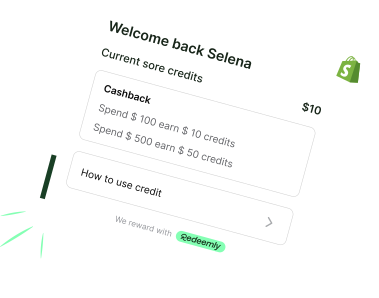
Ready to replace confusing points and margin-killing discounts with a powerful, native Shopify store credit program? See how Redeemly can help you implement these reciprocity strategies in minutes to boost LTV and AOV. Explore Redeemly and start building a more profitable loyalty system today.


Join 7000+ brands using our apps