10 Retention Marketing Strategies to Boost LTV in 2025
Dec 1, 2025
|
Published
In e-commerce, the real prize isn't the first sale; it's the second, third, and tenth. Yet, many Shopify brands are stuck in a cycle of margin-eroding discounts and confusing points systems, chasing loyalty that never truly sticks. This approach trains customers to wait for sales, shrinking your profits and devaluing your brand. It’s a costly race to the bottom, where the only thing you build is a dependency on the next promotional code.
But what if there was a better way? A way to increase customer lifetime value (LTV) and average order value (AOV) while protecting your bottom line? There is, and it starts by rethinking the tools we use to build loyalty. The game has changed, particularly with the rise of simpler, more effective tools like Shopify-native store credit, which offers a powerful alternative to complex apps and constant discounting.
This article explores 10 powerful retention marketing strategies designed for modern DTC brands. We will move beyond the obvious, comparing traditional tactics with newer, more profitable approaches. You'll get actionable steps for implementation, clear methods for measurement, and practical examples showing when to use each tactic. Forget generic advice; we’re focused on building genuine, profitable customer relationships that last. Let's explore the strategies that create repeat customers who buy at full price, not just when there's a sale.
1. Loyalty Programs and Rewards
Forget the old model of endless discount codes that erode your margins. Modern loyalty programs are sophisticated retention marketing strategies designed to forge deep, emotional connections with your customers. They incentivise repeat purchases not by simply slashing prices, but by offering tangible value and a sense of exclusivity, directly boosting customer lifetime value (LTV).

The core idea is to reward customers for their continued business. Let's compare the impact: a one-off 10% discount encourages a single, often smaller purchase and trains customers to expect sales. In contrast, a structured program offering store credit encourages a future purchase at full price and often leads to a higher average order value (AOV) as customers treat it like "free money" and spend more. This shift from discounts to value-added rewards is a game-changer for profitability and maximizing lifetime value. To deepen customer relationships, effective ecommerce loyalty program strategies often blend different reward types to keep engagement high.
How to Implement a Modern Loyalty Program
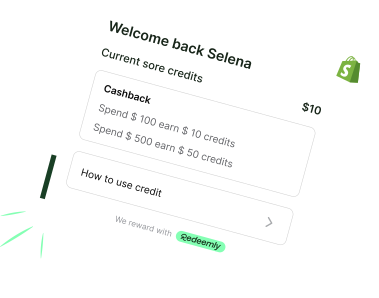
For Shopify merchants, the rise of native store credit functionality presents a massive opportunity. It sidesteps the complexity and confusion of traditional points systems, which often feel transactional and require customers to do mental math (e.g., "100 points = $1?").
Choose a Margin-Friendly Model: Prioritise store credit or early access to new products over blanket discounts. This protects your margins and makes customers feel like true insiders. Store credit has a direct cash value customers understand, making it a more powerful motivator than abstract points.
Create Tiers: Implement a tiered system (e.g., Bronze, Silver, Gold) based on annual spend. Each tier unlocks better perks, motivating customers to increase their spending to reach the next level. Sephora's Beauty Insider program is a masterclass in this, offering exclusive products and events to its highest-spending VIB Rouge members.
Communicate Clearly: Ensure the rules for earning and redeeming rewards are incredibly simple. With store credit, the value is clear: "$10 in credit is $10 to spend." Use email and SMS to notify customers of their balance, new rewards, and exclusive opportunities. Transparency builds trust and encourages participation.
When to Use This Strategy
A loyalty program is ideal when you have a base of repeat customers and want to accelerate LTV growth. It’s particularly powerful for brands with consumable products or those in competitive markets, as it creates a significant switching cost. By rewarding loyalty with tangible value like store credit, you’re not just securing the next sale; you’re building a community of advocates who feel valued and invested in your brand’s success, driving higher lifetime value.
2. Personalized Email Marketing
Moving beyond generic, one-size-fits-all email blasts is one of the most powerful retention marketing strategies available. Personalised email marketing delivers hyper-relevant content, product recommendations, and offers directly to the customer based on their unique behaviour, purchase history, and lifecycle stage. This approach transforms your inbox from a sales channel into a personal-shopper experience, fostering genuine connection and driving repeat purchases.
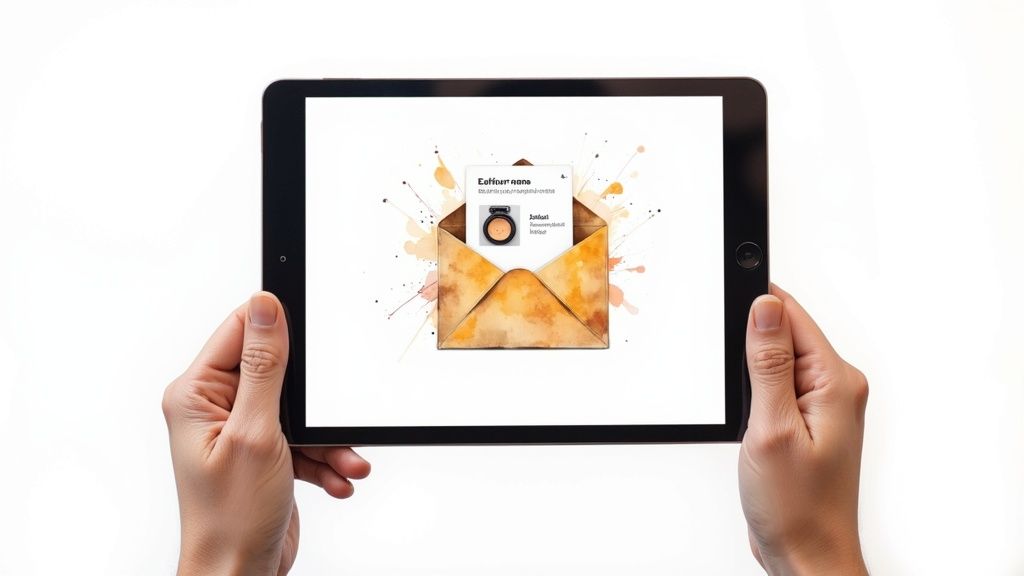
The goal is to make each customer feel seen and understood. Instead of sending a store-wide discount, you might send a replenishment reminder for a product they bought 30 days ago, complete with a small store credit incentive to encourage the reorder. Compare this to a generic "20% Off" blast: the store credit approach is surgical, protecting margins on other products and directly encouraging a specific, profitable action. This targeted method dramatically increases engagement and reinforces the value your brand provides, directly boosting customer lifetime value (LTV). Netflix's tailored "what to watch next" emails are a prime example, using viewing history to keep subscribers engaged and reduce churn.
How to Implement Personalised Email Marketing
Platforms like Klaviyo and Mailchimp have made sophisticated personalisation accessible to Shopify merchants. The key is to leverage customer data to create automated, value-driven communication flows.
Segment Your Audience: Group customers based on behaviour (e.g., first-time buyers, high-LTV customers, at-risk customers) and purchase history. This allows you to send highly relevant campaigns that drive higher average order values instead of generic newsletters.
Implement Triggered Emails: Set up automated emails for key actions. Abandoned cart reminders, post-purchase follow-ups with care tips or complementary product suggestions, and "we miss you" campaigns for inactive customers are all powerful retention tools.
Use Dynamic Content: Personalise subject lines with the customer's name and populate the email body with products they've previously viewed or purchased. This level of detail shows you’re paying attention and builds a much stronger relationship than a simple discount code ever could, fostering long-term lifetime value.
When to Use This Strategy
Personalised email marketing is essential for any DTC brand looking to build a sustainable business. It is particularly effective for brands with a diverse product catalogue, as it allows you to showcase the right products to the right people at the right time. By shifting focus from mass promotions to individualised conversations, you move beyond transactional interactions to build a loyal community that feels genuinely connected to your brand, ensuring long-term profitability and a higher average order value per customer.
3. Customer Success Management
Move beyond reactive customer support and embrace proactive Customer Success Management (CSM). This isn't about just solving problems when they arise; it's a strategic, long-term approach where dedicated teams actively guide customers to achieve their desired outcomes with your product. This ensures they realise the maximum value, dramatically reducing churn and paving the way for expansion revenue.
For DTC brands, this translates into helping customers get the most out of their purchases. A skincare brand might offer personalised routine advice, while a tech gadget company could provide proactive tips for advanced features. This level of personalised guidance is one of the most powerful retention marketing strategies because it transforms a simple transaction into a supportive partnership, directly increasing customer lifetime value. Compare this to a standard FAQ page: proactive success management is personal and forward-looking, while reactive support is impersonal and backward-looking. The former builds LTV; the latter just prevents immediate loss.
How to Implement Customer Success Management
While CSM is often associated with SaaS, DTC brands can adapt its principles to create a superior post-purchase experience that builds unbreakable loyalty.
Define Success Metrics: What does success look like for your customer? For a coffee subscription, it might be brewing the perfect cup. For a fitness apparel brand, it could be completing a workout programme. Align your outreach with these goals.
Segment and Personalise: Tier your customers based on LTV or purchase frequency. High-value cohorts could receive one-to-one check-ins or exclusive consultations, while others receive automated yet highly personalised email or SMS flows with tips and tutorials.
Establish Proactive Check-ins: Don’t wait for a customer to complain. Schedule automated check-ins post-purchase to ask how they’re enjoying the product and offer assistance. This simple act shows you care about their experience beyond the initial sale. HubSpot excels at this with regular reviews and best practice guidance.
When to Use This Strategy
Customer Success Management is a vital strategy for brands with products that have a learning curve, require a specific routine, or offer ongoing value. It is particularly effective for high-consideration purchases or subscription models where continuous engagement is key to preventing churn. By investing in your customer’s success, you shift their focus from price to value, creating advocates who are less likely to be swayed by competitors, thereby maximizing their lifetime value.
4. Community Building and Engagement
Beyond transactional relationships lies one of the most powerful retention marketing strategies: building a genuine community. This isn't about creating another marketing channel; it's about fostering a space where customers connect with each other, share experiences, and develop a real emotional investment in your brand. This sense of belonging transforms customers into advocates, dramatically increasing their lifetime value (LTV) by making the thought of switching to a competitor feel like leaving a circle of friends.

The goal is to move from a one-to-many broadcast model to a many-to-many conversation. Compare this to a traditional social media strategy focused on follower count; a community strategy focuses on engagement depth. Instead of just pushing products, you facilitate connections around shared interests related to your brand. Peloton’s community, for example, thrives on social features and leaderboards, turning solo workouts into shared experiences. This collective energy and peer support create a powerful incentive to stay subscribed, far more effective than any discount code for building long-term LTV.
How to Implement a Community Strategy
Building a community doesn't require a massive budget, but it does demand authenticity and consistent effort. Platforms like Slack, Circle, or even a dedicated Facebook Group can serve as the central hub.
Establish Clear Guidelines: Set the tone from day one with clear community values and rules of engagement. This ensures the space remains positive, supportive, and on-brand.
Spark Conversations: Don't just wait for users to talk. Host regular events, Q&As, or challenges to maintain momentum. Encourage user-generated content by featuring customer stories and photos.
Recognise and Reward: Acknowledge your most active members. This could be through special titles, early access to products, or even store credit rewards, creating a virtuous cycle of engagement and future purchases with a higher average order value.
Listen and Adapt: Use the community as a real-time focus group. The insights you gather on product usage, pain points, and desires are invaluable for informing product development and marketing.
When to Use This Strategy
A community-building strategy is perfect for brands whose products inspire passion, solve a complex problem, or cater to a specific lifestyle or hobby. It is especially effective in markets where customers seek advice, support, and validation from peers. While it requires a longer-term commitment than a simple promotional campaign, the payoff is a deeply loyal customer base that is less price-sensitive and more invested in your brand's long-term success and lifetime value.
5. Subscription and Membership Models
Move beyond chasing one-off sales and embrace the ultimate retention marketing strategy: creating a predictable, recurring revenue stream. Subscription and membership models transform your customer relationship from transactional to continuous, fundamentally shifting your business towards guaranteed income and dramatically higher customer lifetime value (LTV). This isn't just about selling a product; it's about selling an ongoing experience and convenience.
The power of this model lies in its ability to lock in future revenue while deepening customer loyalty through consistent value delivery. Instead of hoping a customer returns, you create a system where repurchasing is the default. This is a crucial comparison: a one-time buyer's LTV is capped at their single purchase until they decide to return, whereas a subscriber's LTV is projected to grow with each billing cycle. Brands like Dollar Shave Club built empires on this principle, turning a mundane purchase into an effortless, automated experience. Explore how you can transition from single purchases to sustainable growth with robust Subscription and Membership Models tailored for DTC brands.
How to Implement a Subscription Model
For DTC brands, especially those with consumable products, implementing subscriptions can be a game-changer. Shopify's ecosystem makes this more accessible than ever, allowing you to seamlessly integrate recurring payments into your checkout process.
Offer Compelling Incentives: Provide a clear reason to subscribe, such as a "subscribe and save" discount (e.g., 10% off each recurring order) or exclusive access to members-only products. This initial incentive is key to overcoming purchasing inertia and boosting lifetime value from the start.
Prioritise Flexibility: Give customers full control over their subscriptions. Allow them to easily pause, skip a delivery, or change the frequency. This flexibility builds trust and reduces churn, as customers feel empowered rather than trapped.
Communicate Ongoing Value: Don't just set it and forget it. Use email and SMS to remind subscribers of upcoming shipments, highlight the value they're receiving, and introduce new products they can add to their next order, boosting their average order value (AOV).
When to Use This Strategy
A subscription model is a perfect fit for brands with products that customers need to replenish regularly, such as coffee, vitamins, skincare, or pet food. It’s also incredibly effective for creating exclusive membership communities that offer perks like free shipping, early access to sales, and unique content. By automating the repeat purchase, you build a stable revenue foundation and turn casual buyers into your most loyal, high-LTV customers.
6. Retargeting and Win-Back Campaigns
Losing a customer is far more costly than acquiring a new one. Retargeting and win-back campaigns are precision-guided retention marketing strategies designed to reignite relationships with customers who have gone dormant. Instead of letting valuable past purchasers fade away, these campaigns strategically pull them back into your ecosystem, directly recovering revenue and boosting long-term customer lifetime value (LTV).
The goal is to re-engage lapsed customers before they churn for good. Compare a standard "we miss you" email with a 15% off coupon to one offering a $10 store credit. The discount devalues your product, while the store credit feels like a gift and encourages a higher average order value (AOV) as customers often spend more than the credit amount. This isn’t about generic blasting; it’s about using customer data to deliver a personalised, compelling reason for them to return and make another purchase.
How to Implement Effective Win-Back Campaigns
For DTC brands, the key is leveraging past purchase history and engagement data to create hyper-relevant outreach that feels personal, not desperate. The focus should be on reminding customers of the value you offer.
Segment Your Lapsed Customers: Don’t treat all inactive customers the same. Create segments based on their last purchase date (e.g., 60, 90, 180 days) and their historical LTV. High-value lapsed customers might warrant a more generous or personalised offer.
Offer Value, Not Just Discounts: While a small discount can be effective, consider offering store credit instead. This encourages a future purchase and often increases the average order value (AOV) as they spend beyond the credit amount. You can also highlight new products or features they’ve missed.
Use Multiple Touchpoints: An effective campaign isn't just one email. Create an automated flow that might include a sequence of emails, SMS reminders, and even targeted social media ads using platforms like Klaviyo or AdRoll to maximise visibility.
When to Use This Strategy
This strategy is essential for any brand with a subscription model or a natural repurchase cycle. If you notice a segment of your customer base has not purchased within your typical buying window, it’s time to activate a win-back campaign. By carefully monitoring the ROI of these efforts and testing different incentives, you can turn potential churn into a powerful source of recurring revenue and prevent valuable customer relationships from slipping away, thus increasing overall lifetime value.
7. Personalized Product Recommendations
Moving beyond generic marketing, personalized product recommendations use customer data to create a bespoke shopping experience that feels intuitive and helpful. This isn't just about showing related items; it's a sophisticated retention marketing strategy that uses behavioural data and purchase history to anticipate needs, making customers feel understood and valued. This increases engagement and directly drives up average order value (AOV) and customer lifetime value (LTV).
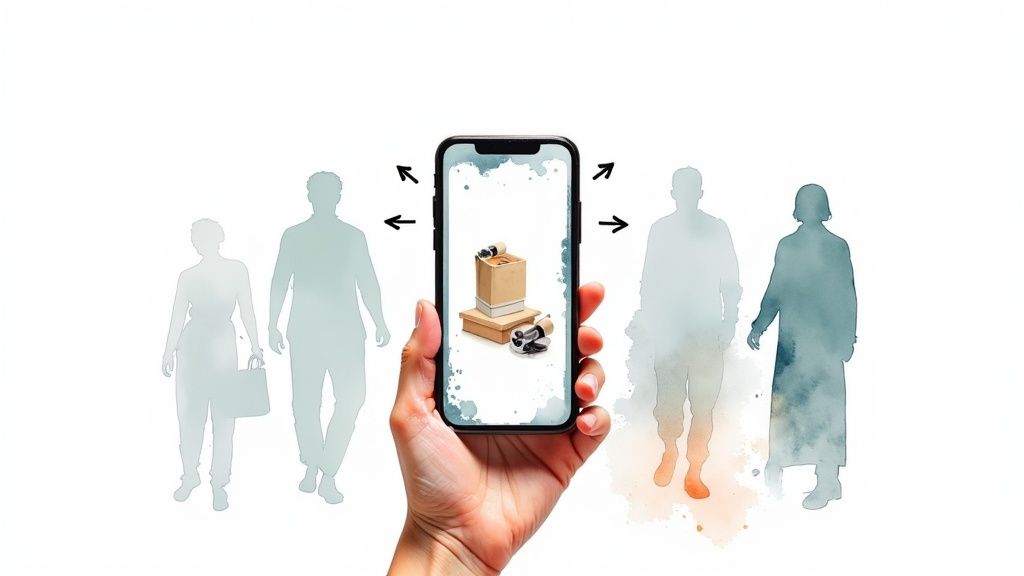
The core principle is to make the shopping journey frictionless and relevant. Compare a generic "New Arrivals" section to a "Picked for You" carousel based on past purchases. The generic approach is a shot in the dark, while the personalized approach significantly increases conversion and AOV. By showing customers what they are likely to want next, you not only increase the immediate sale size but also build a reputation as a trusted curator, encouraging them to return.
How to Implement Personalised Recommendations
For Shopify merchants, apps like Rebuy or LimeSpot make it easy to integrate powerful recommendation engines without needing a data science team. The key is to be strategic with placement and logic.
Deploy Multiple Strategies: Don't rely on a single algorithm. Use a mix of "frequently bought together" on product pages, "you might also like" on the cart page, and "trending products" on the homepage to cater to different stages of the buying journey.
Balance Personalisation and Discovery: While showing customers what they'll likely love is effective, also use recommendation slots to introduce them to new or complementary product categories. This prevents their experience from becoming too narrow and can increase their overall spend with your brand.
Leverage Post-Purchase Emails: Use order confirmation and shipping update emails to recommend products that complement their recent purchase. This is a high-engagement channel perfect for suggesting the next logical buy and starting the countdown to their repeat purchase, directly influencing lifetime value.
When to Use This Strategy
Personalised recommendations are a must-have for brands with a diverse product catalogue or items that are frequently bought together. It's particularly powerful for increasing AOV and essential for any brand looking to compete on customer experience rather than price. By making your store smarter and more attuned to individual tastes, you create a powerful incentive for customers to shop with you again and again, solidifying their loyalty and maximizing their lifetime value.
8. Proactive Customer Communication
Effective retention marketing strategies extend far beyond the moment of purchase. Proactive communication transforms a transactional relationship into a continuous dialogue, keeping your brand top-of-mind and reinforcing its value long after the initial sale. This isn't about bombarding customers with sales pitches; it's about delivering consistent, valuable content that educates, inspires, and builds genuine affinity, nurturing them towards their next purchase.
The goal is to demonstrate that you care about your customer's success with your product. Compare only reaching out when you want a sale versus sending tips on how to best use a recent purchase. The first approach is self-serving and transactional; the second is value-additive and builds relationship equity. This value-first approach positions your brand as a trusted expert, which is crucial for increasing customer lifetime value (LTV) and fostering a community around your products.
How to Implement Proactive Customer Communication
A successful communication strategy is planned, segmented, and consistently valuable. It anticipates customer needs and provides solutions before they even have to ask, creating a seamless post-purchase experience.
Create a Content Calendar: Plan your communications in advance. Schedule post-purchase tips, best practice guides, company updates, and exclusive content to ensure a steady stream of non-promotional touchpoints.
Segment Your Audience: Don't send the same message to everyone. Segment your customers based on their purchase history, engagement level, or interests. A customer who bought skincare gets a guide on building a routine, while a fashion customer sees a lookbook of new arrivals. This personalisation makes communication feel relevant, not robotic.
Focus on Education and Value: Prioritise content that helps customers get the most out of your products. HubSpot excels at this by providing a wealth of free educational resources, solidifying their authority and keeping users engaged with their ecosystem. This builds trust far more effectively than a simple sales message.
When to Use This Strategy
Proactive communication is a foundational strategy that should be implemented by nearly every DTC brand. It's especially powerful for products with a learning curve, a long usage lifecycle, or those that are part of a broader ecosystem. Think of Apple's emails that share tips on using new iOS features; they reinforce the value of the product and encourage deeper engagement.
By consistently providing value outside of direct sales efforts, you build a relationship that transcends price. This makes customers less likely to be swayed by competitors' discounts and more likely to return to your brand when they're ready to buy again, directly supporting long-term LTV growth.
9. Feedback Loops and Customer Listening
Many brands treat customer service as a cost centre, but the most successful retention marketing strategies reframe it as a powerful engine for growth. By systematically collecting, analysing, and acting on customer feedback, you transform passive buyers into active partners. This approach goes beyond simply solving problems; it demonstrates that you value your customers' opinions, making them feel heard and invested in your brand's journey.
The core principle is to create a continuous cycle of listening, learning, and improving. Compare a brand that ignores negative reviews to one that responds publicly and offers a solution. The first loses a customer and suffers reputational damage. The second not only saves the customer—often increasing their lifetime value—but also shows potential buyers that they stand behind their product. Acting on this data not only improves your products and services but also deepens customer loyalty.
How to Implement a Customer Listening System
Building an effective feedback loop doesn’t require complex tools; it requires a commitment to listening and a clear process for taking action. The goal is to make providing feedback easy for customers and acting on it a priority for your team.
Systematise Collection: Use post-purchase email surveys (like Net Promoter Score or NPS), website pop-ups, and social media polls to gather structured feedback. Make surveys short, focused, and mobile-friendly to maximise completion rates. Ask specific questions that lead to actionable insights.
Monitor Unsolicited Feedback: Actively track social media mentions, review sites, and community forums. This unsolicited feedback is often more candid and reveals issues or opportunities you might not have considered. Airbnb famously uses guest reviews and social listening to drive platform improvements.
Close the Loop: The most critical step is communicating back to customers how their feedback was used. Send a follow-up email saying, "You asked, we listened," detailing the changes made. This validates their effort and reinforces their connection to your brand, turning a one-time critic into a long-term advocate.
When to Use This Strategy
Implementing a robust feedback loop is a foundational strategy that benefits every business, regardless of size or industry. It is particularly crucial when you are launching new products, entering new markets, or noticing a dip in customer satisfaction metrics. By embedding customer listening into your company culture, you move from making assumptions to making data-informed decisions that directly boost customer lifetime value and strengthen your brand reputation.
10. Surprise and Delight Initiatives
Moving beyond structured programs, surprise and delight initiatives are one of the most powerful retention marketing strategies because they create genuine emotional connections. This approach involves delivering unexpected, personalised gestures that exceed customer expectations, turning a standard transaction into a memorable, positive experience. It’s not about predictable rewards; it’s about creating a moment of pure joy that fosters deep-seated loyalty.
Unlike a predictable discount which trains customers to wait for the next sale, a surprise gesture builds emotional capital. Compare a "10% off your next order" email to unexpectedly upgrading a loyal customer's shipping to overnight for free. The discount is transactional and forgettable. The upgrade is memorable and creates a story they are likely to share. The return on investment isn't measured in immediate AOV, but in unparalleled long-term customer lifetime value.
How to Implement Surprise and Delight
Success here hinges on authenticity and personalisation, not budget. You can leverage customer data to create moments that feel genuinely thoughtful and relevant.
Focus on Emotion Over Monetary Value: A handwritten thank-you note in a second order, a small free gift relevant to their purchase history, or a personal check-in email can have more impact than a coupon. The goal is to show you see them as a person, not a transaction.
Empower Your Team: Train your customer service team to identify opportunities. Give them the autonomy and a small budget to act on them, whether it’s upgrading shipping for a loyal customer or including an extra item for someone who had a previous issue. Zappos built its legendary reputation on this principle.
Use Data to Personalise: Note a customer's birthday, their anniversary with your brand, or a milestone like their 10th purchase. Use these data points to trigger unexpected rewards, like a small amount of store credit or a shout-out on social media. This reinforces their value and encourages future purchases that add to their lifetime value.
When to Use This Strategy
Surprise and delight is a versatile strategy that can be used at any stage of the customer lifecycle, but it’s especially potent for nurturing your most valuable customers. It’s perfect for brands that want to build a strong community and differentiate themselves through exceptional service rather than price competition. By creating these memorable moments, you transform satisfied customers into enthusiastic evangelists who drive powerful, organic word-of-mouth marketing for your brand.
10 Retention Marketing Strategies Compared
Strategy | Implementation complexity 🔄 | Resource requirements & scalability ⚡ | Expected outcomes & impact 📊 | Ideal use cases & key advantages 💡⭐ |
|---|---|---|---|---|
Loyalty Programs and Rewards | High 🔄 — program design, integrations, redemption ops | High ⚡ — loyalty platform, fulfillment, analytics; moderate scaling effort | 📊 ↑ repeat purchases 25–35%, ↑ LTV & AOV; long-term retention gains | 💡 Retail, apps, brands with repeat purchases — Builds LTV, zero‑party data, advocacy |
Personalized Email Marketing | Medium 🔄 — segmentation, templates, automation setup | Low–Medium ⚡ — ESP, data hygiene, templates; highly scalable | 📊 3–5× ROI; higher open/conversion when personalized; measurable | 💡 E‑commerce & SaaS lifecycle campaigns — Cost‑effective, automatable, highly measurable |
Customer Success Management | High 🔄 — processes, onboarding, ongoing touchpoints | High ⚡ — dedicated teams, CS tools, tracking; scaling requires automation | 📊 Can reduce churn up to ~50%, increases expansion revenue & LTV | 💡 B2B / enterprise SaaS — Drives retention, upsell, deep customer relationships |
Community Building and Engagement | Medium–High 🔄 — moderation, content, engagement strategy | Medium ⚡ — community managers, platform tools; scale depends on organic growth | 📊 Strong emotional loyalty, UGC, lower support costs; higher lifetime value | 💡 Niche brands, lifestyle & product communities — Peer support, product insights, advocacy |
Subscription and Membership Models | Medium–High 🔄 — billing, tiering, ongoing value delivery | High ⚡ — billing systems, customer success, product ops; scalable with ops investment | 📊 Predictable recurring revenue, higher LTV when value is clear | 💡 Media, SaaS, membership retail — Revenue predictability, easier forecasting |
Retargeting and Win‑Back Campaigns | Medium 🔄 — segmentation, creative, multi‑channel setup | Medium ⚡ — ad/SMS/email spend, data integration; scalable per channel | 📊 Cost‑effective recovery; faster revenue lift than new acquisition, boosts AOV | 💡 Lapsed customers, churn recovery — Lower CAC to recover revenue, quick ROI potential |
Personalized Product Recommendations | High 🔄 — ML models, real‑time engines, data pipelines | High ⚡ — data science, compute, instrumentation; scales well with data | 📊 ↑ AOV 15–30%, higher conversion and engagement | 💡 Large catalogs, e‑commerce, streaming — Scalable personalization, increases basket size |
Proactive Customer Communication | Medium 🔄 — content cadence, segmentation, channel mix | Medium ⚡ — content creators, automation tools; scalable with templates | 📊 Improves engagement and reduces churn; supports higher LTV opportunities | 💡 SaaS/product‑led companies — Educates users, maintains brand relevance, drives adoption |
Feedback Loops and Customer Listening | Medium 🔄 — survey design, listening, action workflows | Medium ⚡ — survey tools, analysts, product integration; moderate scaling | 📊 Identifies churn risk, informs product roadmap, measurable LTV impact | 💡 Product development, UX optimization — Actionable insights, validates priorities |
Surprise and Delight Initiatives | Low–Medium 🔄 — creative execution, personalization | Low ⚡ — small budget, personalization data; limited scalability if fully custom | 📊 High emotional impact, strong word‑of‑mouth; indirect but powerful LTV driver | 💡 Premium brands, key moments (anniversary, milestone) — Memorable experiences, differentiation |
Building a Profitable Future, One Customer at a Time
We've explored a powerful arsenal of retention marketing strategies, moving far beyond the conventional wisdom of one-off discounts and generic campaigns. The common thread weaving through loyalty programmes, personalised email, community building, and proactive communication is a fundamental shift in focus: from the high cost of acquisition to the immense, untapped value of retention. For too long, direct-to-consumer brands have been caught in a race to the bottom, sacrificing margins for fleeting customer attention. The future of sustainable e-commerce growth lies not in attracting more customers, but in building deeper, more profitable relationships with the ones you already have.
The path forward is about creating a symbiotic relationship where customers feel valued and your business thrives. It’s about understanding that a 5% increase in customer retention can boost profitability by 25% to 95%. This isn't just a statistic; it's a strategic mandate. By implementing the tactics discussed, you are not just improving metrics; you are building a more resilient, predictable, and profitable business engine focused on lifetime value.
Key Takeaways: From Tactic to System
Moving from theory to practice requires a holistic view. It's not about picking one strategy, but about creating an interconnected system where each element reinforces the others.
Prioritise Profitability Over Promotion: The most critical takeaway is the need to abandon margin-eroding discounts. Instead, embrace value-additive incentives like store credit. Unlike a 20% off coupon that vanishes after a single use, store credit acts like cash in a customer's digital wallet, creating a powerful psychological pull to return and spend more, boosting both AOV and LTV.
Embrace Native Solutions for a Seamless Experience: The rise of Shopify's native store credit functionality is a game-changer. It eliminates the friction and confusion of third-party points systems. Customers understand cash value instantly. This simplicity translates into higher engagement with your loyalty programme and a smoother path to their next purchase, boosting repeat purchase rates and average order value (AOV).
Data is Your Compass: Personalisation is no longer optional. From tailored product recommendations to segmented win-back campaigns, every successful retention effort is built on a foundation of customer data. Use it to understand behaviour, anticipate needs, and deliver moments of genuine relevance that make customers feel seen and appreciated, maximizing their lifetime value.
Your Actionable Next Steps
Mastering these retention marketing strategies is an ongoing journey, not a final destination. Begin by auditing your current efforts. Where are you overly reliant on discounts? Where are the communication gaps in your customer lifecycle? For a broader perspective on strengthening customer loyalty and building a profitable future, explore these 8 effective strategies to improve customer retention.
Then, identify one or two high-impact strategies to implement first. Perhaps it’s launching a streamlined, store-credit-based loyalty programme or refining your post-purchase email sequence. Start small, measure the impact on key metrics like customer lifetime value (LTV) and repeat purchase rate, and then iterate. By consistently investing in the post-purchase experience, you cultivate a loyal customer base that not only buys more but also becomes your most powerful marketing asset. You're not just selling products; you're building a community of advocates who will champion your brand for years to come.
Ready to replace confusing points and margin-killing discounts with a powerful, native Shopify loyalty solution? Redeemly uses Shopify's own store credit system to create simple, cash-like rewards that customers love and actually use. Start building a more profitable retention strategy today by visiting Redeemly to learn more.


Join 7000+ brands using our apps