8 Powerful Example of Scarcity Tactics to Boost LTV in 2026
Feb 13, 2026
|
Published
Stop eroding your margins with endless discounts and confusing points systems. The secret to sustainable growth lies in a principle as old as commerce itself: scarcity. But this isn't just about 'limited time only' banners; it's a powerful psychological trigger that, when paired with a modern loyalty solution like Shopify native store credit, can dramatically increase your customer lifetime value (LTV) and average order value (AOV). This powerful combination creates genuine urgency without sacrificing your brand's integrity or profitability.
This article provides a playbook for Shopify merchants by breaking down eight real-world examples of scarcity. We'll move beyond theory and dissect the specific tactics that make each example successful. You will learn precisely how to replicate these strategies to motivate customers, encourage repeat purchases, and build a fiercely loyal following, boosting your LTV.
We will focus on replacing costly discount codes with profit-friendly store credit, using a native Shopify solution like Redeemly. You'll gain actionable steps to implement scarcity marketing that drives immediate sales and fosters long-term customer relationships. Forget chasing one-off transactions; it's time to build a retention engine fueled by intelligent, margin-friendly incentives that customers truly value and directly contribute to higher AOV.
1. Limited Edition Product Releases
The "Limited Edition" model is a classic and powerful example of scarcity, creating an environment where demand dramatically outstrips supply. By intentionally limiting the quantity of a product or the window of time it's available, brands transform a simple purchase into an exclusive event. This manufactured rarity elevates the item's perceived value, turning it from a commodity into a collectible.
Think of Supreme's legendary weekly drops or Nike's exclusive releases on the SNKRS app. These aren't just product sales; they are cultural moments. The fear of missing out (FOMO) triggers an immediate psychological response, compelling customers to buy now rather than risk permanent loss. This urgency bypasses traditional price sensitivity and fuels impulse purchases, significantly boosting short-term revenue and initial order value.
Strategic Application for Shopify Merchants
For Shopify merchants, this tactic is incredibly effective for increasing both average order value (AOV) and customer lifetime value (LTV) without resorting to margin-killing discounts. Instead of just launching a limited product, you can amplify its appeal by replacing confusing points systems with straightforward store credit offers.
Pro Tip: Combine a limited-edition product drop with an escalating store credit bonus. For example, offer a 2x store credit multiplier on the total purchase for the first 24 hours. This encourages customers to not only buy the limited item but to add more to their cart to maximize their future spending power, directly increasing AOV.
Actionable Takeaways with Redeemly
Here’s how to implement this strategy using a Shopify native store credit solution like Redeemly:
Launch with Urgency: Announce a "Limited Edition Launch Bonus." Use a countdown timer on your product page indicating that a special store credit multiplier (e.g., 1.5x credit on their entire order) is only available for the first 48 hours. This locks in the next purchase and boosts LTV.
Build a Pre-Launch Hype Cycle: Use email and social media to tease the limited product and the exclusive credit offer, building a list of eager buyers ready to act the moment it goes live. Highlight the value of the store credit over a one-time discount.
Segment and Reward: Create an exclusive "VIP Early Access" segment for past purchasers, giving them a 12-hour head start on the drop. This reinforces their loyalty and makes them feel valued. This approach aligns perfectly with building sustainable customer relationships, a core principle explored in many successful examples of loyalty programs.
2. Natural Resource Depletion
While many scarcity tactics are manufactured, the depletion of natural resources is a powerful real-world example of scarcity with critical lessons for merchants. Finite resources like water, oil, and rare minerals have inherent supply limits. As global demand rises, their value increases, forcing a shift towards sustainable consumption and responsible management. This principle directly mirrors the financial health of a business; just as a planet has finite resources, a store has finite margins.

The core insight for merchants is that rewards, like resources, are not infinite. Traditional points systems or steep discounts can deplete profit margins just as overuse depletes a water table. A Shopify native store credit system, however, functions as a managed resource, directly linking rewards to actual purchases and ensuring every incentive contributes positively to lifetime value. This genuine example of scarcity teaches the importance of creating a sustainable rewards ecosystem.
Strategic Application for Shopify Merchants
This concept is crucial for designing a store credit program that boosts customer lifetime value (LTV) without becoming an unsustainable liability. Instead of offering unlimited or overly generous points that confuse customers and drain profits, you must manage your store credit like a precious resource. The goal is to create a closed-loop system where the credit you issue drives profitable repeat purchases.
Pro Tip: Treat your store credit budget as a finite resource. Set a clear "payout ratio" for your program, such as issuing 5% back in credit on every purchase. This ensures your customer acquisition and retention costs remain predictable and sustainable, directly preserving the margins that allow for long-term LTV growth.
Actionable Takeaways with Redeemly
Here’s how to build a sustainable, resource-conscious store credit program with Redeemly:
Implement Sustainable Payouts: Use Redeemly to automatically issue a fixed percentage of an order's value (e.g., 5-10%) as store credit. This creates a predictable cost structure, far simpler and more transparent than complex point systems, ensuring you never over-issue rewards beyond what your margins can support.
Prevent Unlimited Accumulation: Set expiration dates on store credit to create urgency and manage your outstanding liability. For instance, credit earned from a purchase could expire in 90 days, encouraging customers to return and spend it sooner, which directly increases purchase frequency and LTV.
Monitor Program Health: Use Redeemly’s analytics to track your credit liability and redemption rates. This data acts as your resource management dashboard, allowing you to adjust your strategy to ensure the program remains a profitable driver of repeat business, not a financial drain.
3. Concert and Event Ticket Sales
The live event model is a powerful real-world example of scarcity driven by fixed supply and singular timing. Concerts and festivals, like Taylor Swift's Eras Tour or Coachella, have a finite number of seats and happen only once, creating an intense, time-sensitive rush. This natural scarcity creates immense FOMO (fear of missing out), pushing consumers to make immediate purchase decisions regardless of price.
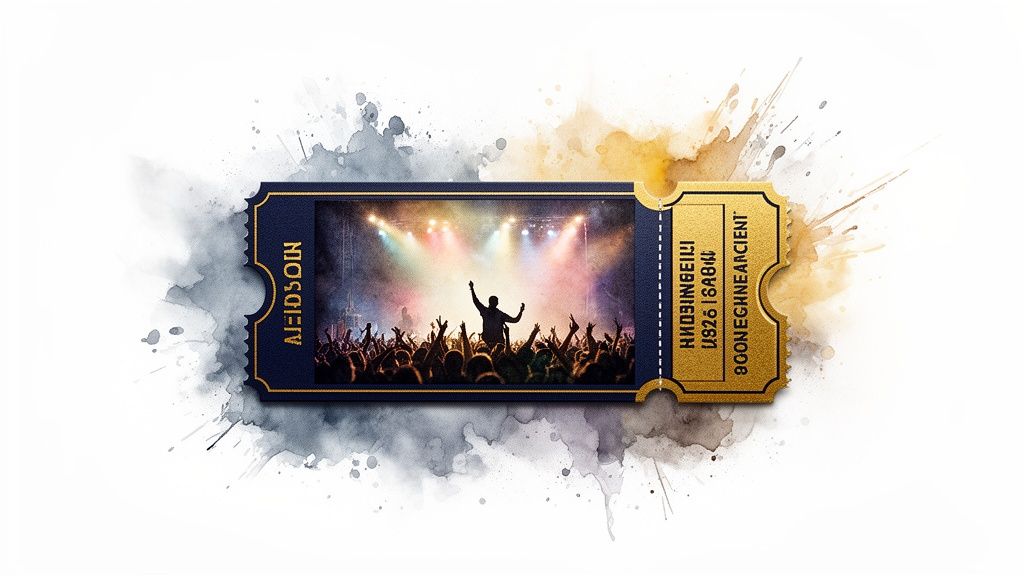
This model, mastered by giants like Ticketmaster, relies on creating an "unmissable" experience. The urgency isn't manufactured with a marketing gimmick; it's inherent to the product itself. For Shopify merchants, this teaches a valuable lesson about anchoring a promotion to a specific, non-recurring event to drive immediate action and maximize revenue without devaluing the core product.
Strategic Application for Shopify Merchants
You can replicate the urgency of a ticket drop by tying a powerful incentive to a fleeting event, like a new collection launch or a flash sale. Instead of offering a simple discount coupon that trains customers to wait for sales, offer a high-value store credit bonus that rewards swift action and guarantees a future purchase, boosting both AOV and LTV.
Pro Tip: Create an "Early Bird" bonus for a new product launch. Offer a 2x store credit multiplier on the total cart value for the first 12 hours of the launch. This not only drives initial sales velocity but also locks in a second purchase from your most eager customers, directly building your LTV from day one.
Actionable Takeaways with Redeemly
Here’s how to implement this strategy using a Shopify native store credit solution like Redeemly:
Launch an "Early Access Pass": Announce your next product drop and offer an "Early Access Pass" credit bonus. Customers who buy within the first 24 hours receive 1.5x their purchase value in store credit, giving them first dibs and extra spending power for their next order.
Build a Waitlist: For high-demand items, create a waitlist. When the product is back in stock, email the waitlist with a limited-time "VIP Restock" offer, such as a special store credit multiplier, to reward their patience and prompt an immediate sale. This is far more effective for LTV than a simple discount.
Tiered Timing Rewards: Structure your rewards to mimic tiered ticketing. The first 100 customers get a 2x credit bonus, the next 200 get 1.5x, and so on. This gamifies the purchase and encourages immediate action. This method is a fantastic way to increase customer engagement by making the shopping experience more dynamic.
4. Real Estate and Prime Location Properties
Perhaps the most visceral example of scarcity is real estate in a prime location. Land is finite, and desirable locations, like Manhattan or London's Mayfair, are even more so. This geographic limitation means supply is inherently capped, creating a natural and powerful form of scarcity that drives immense value. The price of a property is determined not just by the building itself, but by its exclusive location.
This principle translates directly to ecommerce by treating your high-value customer segments as "prime real estate." Just as a developer cannot simply create more beachfront property, you cannot instantly create more top-tier customers. Their loyalty is a scarce, high-value asset that must be cultivated and rewarded. By offering exclusive benefits, you build a hierarchy that directly increases the lifetime value of your best customers.
Strategic Application for Shopify Merchants
Instead of one-size-fits-all promotions, merchants can use this concept to build a tiered loyalty system based on customer value. The goal is to make your most valuable customer segments feel like they have access to an exclusive club, boosting retention and increasing their average order value (AOV) as they take advantage of their privileged status, all powered by clean and simple store credit.
Pro Tip: Create geo-targeted store credit offers that feel exclusive. For instance, run a "New York VIP Weekend" campaign offering customers in that specific region a 1.5x store credit multiplier on all purchases. This not only drives sales but also makes that segment feel uniquely recognized, enhancing their long-term value.
Actionable Takeaways with Redeemly
Here’s how to implement this strategy using a Shopify native store credit solution like Redeemly:
Create 'VIP Location' Tiers: Use customer tags in Shopify to segment your top spenders (e.g., "VIP" or "Diamond Tier"). Create an exclusive Redeemly campaign offering them a permanently higher store credit earning rate, such as 15% back on every purchase versus the standard 5%. This directly incentivizes higher LTV.
Develop Geographic Exclusivity: Launch region-specific credit multipliers for your most profitable markets. Announce a "California Sunshine Bonus" where customers with California shipping addresses get double store credit for a limited time, driving regional sales spikes and rewarding loyalty.
Build 'Neighborhood' Loyalty: Use your customer data to identify clusters of loyal buyers. Create a special store credit campaign for a specific city or state, rewarding them for their concentrated loyalty and fostering a sense of community that drives repeat purchases and higher lifetime value.
5. Pharmaceutical Patent Exclusivity
The pharmaceutical industry provides a powerful, legally enforced example of scarcity through patent exclusivity. When a company develops a new drug, a patent grants it the sole right to manufacture and sell that medication for a set period, typically 20 years. This creates an artificial monopoly, allowing companies like Pfizer or Merck to command premium prices without competition, justifying the massive R&D investment.
Once the patent for a blockbuster drug like Lipitor expires, the market dynamics shift dramatically. Generic versions flood the market, and the price can plummet by over 50%. This demonstrates how temporary, high-stakes scarcity can generate immense revenue and brand dominance. The lesson for merchants is clear: establishing a period of exclusivity for a new product, rewarded with future value like store credit, can create significant pricing power and customer loyalty.
Strategic Application for Shopify Merchants
For Shopify merchants, the principle isn't about legal patents but about creating a "first-mover advantage" for new product launches. Instead of competing on price with discount coupons, you can use store credit to build a moat around your early customer base, increasing switching costs and rewarding early adoption. This strategy is key for boosting customer lifetime value (LTV) before competitors can replicate your offer.
Pro Tip: When launching a new product line, create a "Founder's Credit" bonus. Offer the first 100 customers a 1.5x store credit multiplier on their purchase, with the credit specifically designated for future products in that same line. This locks them into your new ecosystem and builds long-term LTV.
Actionable Takeaways with Redeemly
Here’s how to implement this strategy using a Shopify native store credit solution like Redeemly:
Create a "First-Mover" Bonus: Announce your new product with an exclusive launch offer. For example, "Be one of the first 200 to buy and get 25% of your purchase value back as bonus store credit for your next order." This rewards early adopters and secures a future sale, instantly increasing LTV.
Build Switching Costs with Credit: Before a competitor enters your niche, run a campaign that awards customers store credit that accumulates over time. This makes it financially unattractive for them to switch to a new brand, as they would forfeit their earned credit with you.
Implement Expiring Credit: Mirror the time-limited nature of a patent by setting an expiration date on promotional store credit. This creates urgency and encourages customers to return and spend their balance, keeping them engaged within your brand's "exclusivity window" and driving purchase frequency.
6. Luxury Brand Limited Collections
Luxury brands masterfully use scarcity not just as a tactic but as a core tenet of their brand identity. By intentionally capping production and creating exclusive collections, companies like Hermès and Rolex transform their products into assets. This controlled supply chain ensures that demand perpetually exceeds availability, cementing their status and justifying premium price points. This is a powerful example of scarcity at its most refined.

The Hermès Birkin bag, with its multi-year waitlist, isn't just a handbag; it's a symbol of status earned through patience and loyalty. Similarly, the limited availability of Rolex sports watches fuels a booming secondary market where prices often exceed retail. This strategy cultivates an aura of exclusivity that customers aspire to, making the eventual purchase feel like an achievement rather than a simple transaction. It shifts the entire customer dynamic from one of cost to one of access and prestige.
Strategic Application for Shopify Merchants
For Shopify merchants, this model is key to building a high-value brand that doesn't compete on price. You can cultivate a similar sense of exclusivity by making access to limited products a reward for loyalty. Store credit can become the "key" that unlocks these exclusive opportunities, directly boosting customer lifetime value (LTV) by encouraging repeat engagement.
Pro Tip: Create a members-only "Vault" of limited-edition products accessible only to customers with a certain store credit balance. This gamifies purchasing and encourages customers to accumulate credit, increasing their average order value to gain access to exclusive items.
Actionable Takeaways with Redeemly
Here’s how to implement this strategy using a Shopify native store credit solution like Redeemly:
Create Tiered VIP Access: Set up an automated system where your highest LTV customers receive exclusive pre-order links for limited collections. Reward their past loyalty with first-dibs access, making them feel like true insiders.
Implement a "Credit-to-Unlock" System: Announce a future limited drop and offer a 1.5x store credit multiplier on all purchases in the weeks leading up to it. Frame the accumulated credit as the currency needed to purchase the exclusive item, driving up AOV on current orders.
Build a Waitlist with Credit Rewards: For a highly anticipated product, create a waitlist. Periodically reward customers on the list with small bonus store credits for their patience. This keeps them engaged and primed to purchase, and is a perfect use case for the flexibility offered by a Shopify native store credit system over confusing points.
7. Skilled Labor Shortage
The economic principle of a skilled labor shortage is a powerful, real-world example of scarcity. In sectors like software engineering, nursing, or specialized trades, the demand for qualified professionals far exceeds the available supply. This imbalance forces companies to compete fiercely for a limited talent pool, driving up salaries, signing bonuses, and benefits to attract and retain top performers. This isn't just about jobs; it’s a lesson in valuing rare and essential assets.
This economic reality provides a crucial insight for Shopify merchants: not all customers are created equal. Just as a senior software engineer is more valuable than an intern, your top 10% of customers who drive a disproportionate amount of revenue are a scarce and vital resource. Treating these high-value, repeat buyers like commodities is a surefire way to lose them. Instead, they must be recognized and rewarded to maximize their lifetime value.
Strategic Application for Shopify Merchants
Instead of one-size-fits-all discounts, merchants should mirror the labor market by creating a tiered incentive structure that rewards their scarcest customer segments. The goal is to make your most valuable customers feel as sought-after as a cybersecurity expert with a six-figure signing bonus. This is achieved by offering premium, margin-friendly incentives like store credit, which increases both their status and their future spending power.
Pro Tip: Identify your top 5-10% of customers based on lifetime value and create an exclusive, invitation-only VIP program for them. Grant them a permanent, higher store credit multiplier on all future purchases. This makes them feel uniquely valued and locks in their long-term loyalty, securing a massive portion of your revenue.
Actionable Takeaways with Redeemly
Here’s how to implement this strategy using a Shopify native store credit solution like Redeemly:
Identify Your Scarce Segment: Use your Shopify analytics to create a customer segment for your top spenders (e.g., customers with an LTV over $1,000). This is your high-value, scarce audience whose loyalty you must retain.
Create a VIP Credit Tier: With Redeemly, create an automation rule that applies a special tag (e.g., "VIP_Credit_Member") to this segment. Set up a campaign that grants these tagged customers a 1.5x store credit multiplier on every purchase they make, directly incentivizing the behavior that grows their LTV.
Communicate Exclusive Value: Send a personalized email campaign to this segment, welcoming them to the exclusive program. Frame it not as a promotion, but as recognition of their status, highlighting their value to your brand and rewarding them with a clear, simple benefit—more store credit.
8. Digital Domain Names and Social Media Handles
Online real estate, such as premium domain names and social media handles, is a powerful example of scarcity driven by a first-come, first-served reality. Because each address is unique and cannot be duplicated, highly desirable names become incredibly rare digital assets. This scarcity transforms a simple identifier into a valuable commodity, creating an inherent sense of exclusivity and authority.
Think of the value tied to domains like Sex.com, which sold for $13 million, or the instant recognition of a short handle like @Jack on Twitter. These aren't just addresses; they are digital landmarks. This dynamic demonstrates that scarcity in digital spaces mirrors physical rarity, teaching merchants that a unique 'digital presence' is a significant asset. The extreme value of digital addresses is evident in the market for 3 letter domains, where their inherent scarcity and strategic importance are paramount.
Strategic Application for Shopify Merchants
For Shopify merchants, this concept of digital identity can be powerfully translated into a tiered loyalty system that boosts both average order value (AOV) and customer lifetime value (LTV). Instead of generic points, you can create exclusive digital identities or "handles" for your most loyal customers, turning their status into a scarce and desirable asset within your brand community.
Pro Tip: Gamify your store credit program by assigning exclusive tier names that act as digital status symbols. Customers will spend more to unlock the next level—increasing their AOV—not just for the tangible rewards but for the recognition and exclusivity associated with that "handle."
Actionable Takeaways with Redeemly
Here’s how to implement this strategy using a Shopify native store credit solution like Redeemly:
Create Aspirational Tiers: Structure your program with exclusive names (e.g., "Founders Circle," "Platinum Insider," "Diamond Ambassador"). Use Redeemly to automatically segment customers into these tiers based on their lifetime spend or credit balance, creating a clear path for progression.
Assign Exclusive "Handles": Grant your top-tier customers unique digital identifiers or badges they can see in their account profiles. This creates a powerful form of social proof and exclusivity, encouraging others to increase their spending to achieve the same status and boost their LTV.
Unlock Community Access: Use customer tags in Shopify to grant your highest-tier members access to a private community, like a "Diamond Ambassador" Discord channel or a private Facebook group. This reinforces the value of their digital status and fosters deeper brand loyalty.
8 Examples of Scarcity Compared
Item | 🔄 Implementation Complexity | ⚡ Resource Requirements | ⭐ Expected Outcomes | 💡 Ideal Use Cases | 📊 Key Advantages |
|---|---|---|---|---|---|
Limited Edition Product Releases | 🔄🔄 Medium — inventory timing, launch coordination | ⚡⚡ Medium — limited stock, marketing, logistics | ⭐⭐⭐ Urgency → higher AOV & quick conversions | 💡 Short-term drops, product launches, store-credit boosts | 📊 Immediate revenue spikes, social buzz |
Natural Resource Depletion | 🔄🔄🔄 High — systemic constraints and long-term planning | ⚡⚡ Medium — monitoring, analytics, conservative payouts | ⭐⭐ Sustainable margins and predictable liabilities | 💡 Long-term loyalty design; sustainable payout ratios | 📊 Preserves profitability; prevents over-issuance |
Concert and Event Ticket Sales | 🔄🔄🔄 Medium‑High — capacity, dynamic pricing, waitlists | ⚡⚡⚡ Medium — ticketing tech, demand management | ⭐⭐⭐ Strong urgency, premium pricing, sellouts | 💡 Time-limited offers, early-bird credit tiers, waitlists | 📊 Predictable revenue for high-demand items |
Real Estate and Prime Location Properties | 🔄🔄🔄🔄 High — regulatory, long timelines, exclusivity rules | ⚡⚡⚡⚡ Very High — capital, development, legal | ⭐⭐⭐ Stable appreciation; premium pricing power | 💡 VIP/location-based tiers; region-specific offers | 📊 Long-term value, strong premium positioning |
Pharmaceutical Patent Exclusivity | 🔄🔄🔄🔄 Very High — legal/regulatory complexity | ⚡⚡⚡⚡ Very High — R&D, legal, regulatory resources | ⭐⭐⭐⭐ Temporary monopolies → sustained premium margins | 💡 Time-limited launch bonuses; first-mover rewards | 📊 Strong pricing power; funds innovation |
Luxury Brand Limited Collections | 🔄🔄🔄 High — brand control, allocation and waitlists | ⚡⚡⚡ High — craftsmanship, curation, PR | ⭐⭐⭐⭐ Elevated brand prestige and willingness to pay | 💡 VIP pre-orders, exclusive credit redemptions | 📊 Maintains exclusivity and repeat engagement |
Skilled Labor Shortage | 🔄🔄🔄 High — recruitment and retention challenges | ⚡⚡⚡ High — wages, training, benefits | ⭐⭐⭐ Higher costs but stronger retention for scarce talent | 💡 Reward high-value/rare customer segments with premium credit | 📊 Retains top customers; reduces churn of valuable cohorts |
Digital Domain Names & Social Handles | 🔄🔄 Low‑Medium — acquisition and portfolio management | ⚡⚡⚡ Variable — acquisition cost for premium names | ⭐⭐⭐ Long-term brand authority and recognition | 💡 Exclusive digital IDs, VIP badges, gamified tiers | 📊 Strong branding, durable competitive advantage |
Transform Scarcity from a Tactic into a Profitable Strategy
Throughout this exploration of scarcity, we've journeyed far beyond simple countdown timers and low-stock alerts. We've dissected everything from the frantic demand for concert tickets and luxury fashion to the inherent value of prime real estate and unique digital domain names. The common thread is clear: scarcity isn't just a marketing trick, it is a fundamental driver of perceived value and human action. Each example of scarcity we analyzed demonstrates that when an asset is limited, desirable, and exclusive, its value skyrockets.
For ambitious Shopify merchants, the most critical takeaway is to shift your mindset from short-term promotions to long-term value creation. The old model of slashing prices with discount codes or confusing customers with complex point systems is a race to the bottom that erodes profit margins. True brand loyalty isn't built on the cheapest price; it's built on a feeling of being part of something special, valuable, and exclusive. This feeling is what drives higher lifetime value.
Your Action Plan: From Theory to Profit
Mastering scarcity requires a strategic toolkit, not just a single tactic. It's about orchestrating a customer experience that feels premium and urgent. By replacing generic, margin-killing coupons with a flexible, Shopify native store credit system, you unlock a more sophisticated way to implement the principles we've covered.
Here are your next steps:
Audit Your Incentives: Are you relying too heavily on discount codes that cheapen your brand? Identify where you can swap a percentage-off coupon for a store credit-based reward that encourages a second purchase and boosts AOV.
Segment Your 'Scarce' Audience: Identify your most valuable customers. Use a tool like Redeemly to create an exclusive VIP tier, offering them early access to limited edition drops or bonus store credit rewards, making them feel like the scarce resource they are.
Manufacture Strategic Scarcity: Use store credit to create time-sensitive offers. For example, offer a "$15 store credit bonus on your next purchase if you buy in the next 48 hours." This expiring reward drives immediate action without devaluing your products.
This approach transforms the entire customer relationship. Instead of a one-time transaction, you create a value loop. A customer buys, receives store credit (a tangible asset in their account), and now has a compelling, cash-based reason to return. This directly fuels higher lifetime value (LTV) and average order value (AOV) by building a loyal base of repeat purchasers who feel genuinely invested in your brand's ecosystem. For those looking to see these principles in action, the strategies for creating urgency and scarcity in crowdfunding campaigns offer powerful, real-world examples of how to motivate a dedicated audience.
Ultimately, harnessing scarcity is about building a brand that commands loyalty, not just chases sales. It’s the difference between a fleeting transaction and a lasting customer relationship.
Ready to replace costly discounts and build a profitable loyalty program with store credit? See how Redeemly can help you implement these advanced scarcity strategies directly within Shopify to boost LTV and AOV. Explore Redeemly today and turn scarcity into your most powerful growth engine.


Join 7000+ brands using our apps