Shopify Native Store Credit: The Smart Path to Higher LTV and AOV
Dec 14, 2025
|
Published

For years, Shopify merchants have been stuck in a cycle of endless discount coupons and confusing point systems. It's a race to the bottom, training customers to wait for the next 20% off sale while profit margins shrink. But there's a smarter way to build loyalty. Shopify native store credit flips the script, transforming customer rewards and returns from cost centers into a powerful engine for boosting lifetime value (LTV) and average order value (AOV).
Instead of eroding your brand with constant discounts, you can offer tangible, cash-like value that keeps customers invested in your ecosystem. This guide will show you how to ditch the coupon clutter and embrace a more profitable, sustainable growth strategy.
Why Discount Coupons and Points Systems Are Quietly Killing Your LTV

Picture your business's revenue as a bucket of water. Every time you issue a cash refund or blast out a discount code, you're punching another hole in that bucket. Your hard-earned cash drips out, gone for good. This constant discounting feels necessary to drive sales, but it's quietly draining profitability and teaching your customers that your products are only worth buying on sale.
And those complicated points systems? They're often worse. Customers get lost trying to figure out what "500 points" are actually worth. The result is low engagement and a "loyalty" program that builds no real loyalty at all. It feels more like a confusing game than a genuine reward, creating friction where you want to build a connection and increase lifetime value.
The Problem with Short-Term Thinking
The fundamental problem with discounts and points is that they create a one-way street where value only flows out of your business. This approach trains customers to become bargain hunters, not brand loyalists. Their goal isn't to build a relationship with your brand; it's to get the lowest possible price on a single transaction. This mindset is the enemy of high LTV.
This is where thinking in terms of a closed-loop economy really changes things. What if, instead of letting that value escape, you could redirect it right back into your store?
Shopify native store credit acts as the ultimate patch for your leaky revenue bucket. It keeps cash inside your business, transforming a potential loss from a return into guaranteed future revenue and a higher lifetime value for that customer.
It's a simple shift, but it changes the entire dynamic. You're no longer just processing a refund and saying goodbye. Instead, you're giving that customer a compelling reason to come back and shop again, directly fueling the repeat purchases that are the bedrock of high LTV.
Boosting AOV and LTV: The Core Focus
The true power of Shopify native store credit is its direct impact on two of the most critical eCommerce metrics: Average Order Value (AOV) and Customer Lifetime Value (LTV). When a customer sees store credit in their account, it feels like they just found free money. This simple psychological shift drives powerful purchasing behaviors.
Higher AOV: People are far more likely to spend more than their credit balance. That $20 credit from a return can easily convince them to make a new $70 purchase they might have otherwise postponed, instantly boosting your AOV.
Higher LTV: Store credit is a constant, gentle nudge to visit your store again. It shortens the time between purchases, increases purchase frequency, and keeps customers engaged with your brand—all key ingredients for maximizing LTV.
Enhanced Loyalty: You're moving the relationship away from one-off discounts. By offering retained value, you build a stronger foundation for loyalty, which is a cornerstone of modern retention marketing strategies.
By stepping off the discount treadmill and moving towards a store credit model, you're not just protecting your margins. You’re building a more resilient, profitable business focused on long-term customer value.
So, What Exactly Is Shopify Native Store Credit?
Think of Shopify native store credit as a digital gift card that’s permanently tied to a customer's account in your store. The most important word here is native. This isn't some clunky third-party app or a confusing points system you have to manage. It's a feature that lives and breathes right inside your Shopify admin, making the whole process incredibly smooth for you and your customers.
Let's put you in the merchant's shoes. A customer wants to return something. Instead of processing a cash refund and watching that money walk out the door for good, you can issue the value back to them as store credit with a few clicks. It’s clean, it’s fast, and it’s all handled in the same place you manage your orders. No extra logins, no syncing errors, no headaches.
How It Works for You and Your Customers
The real magic of a native solution is how simple it is in practice. And it's not just for returns. This is your new multi-purpose tool for building customer goodwill and lifetime value. Shipment a little late? A small credit is a great way to say sorry. Have a VIP customer you want to thank? Surprise them with a little something in their account. These are immediate, tangible gestures that show you care.
Now, flip the coin and look at it from the customer’s side. They log into their account and see a clear store credit balance waiting for them. It feels like free money. When they go to check out, that balance is right there, ready to be applied as a payment method. There's no need to hunt for a coupon code or remember a complex points conversion.
Store credit changes the entire dynamic of a refund. It’s no longer the end of the road. Instead, it’s the starting line for the customer's next purchase, inviting them back to find something else they'll love and increasing their LTV.
This seamless checkout experience is where a native feature really proves its worth. The credit is just there—visible and easy to use. It removes friction, cuts down on cart abandonment, and gives customers a great reason to complete their purchase right then and there. This is a huge advantage over confusing points systems that feel disconnected from the shopping experience.
The Power of Keeping Money in Your Ecosystem
When you choose Shopify native store credit, you're essentially creating your own closed-loop economy. The money from that return never actually leaves your business; it just gets earmarked for a future purchase. This has a massive positive effect on your cash flow and overall profitability.
The numbers don't lie. Brands that use an integrated store credit system see 47% less revenue leakage from refunds compared to those who stick to cash-only returns. You're not just processing a loss; you're securing a future sale and keeping that hard-earned revenue circulating within your brand. If you want to dive deeper into the data, you can read the full report on eCommerce Fastlane.
Ultimately, this isn't just a clever accounting move. It's a strategic play to reinvest in your customer relationships, increase lifetime value, and build a more financially resilient business right on the Shopify platform.
How Store Credit Drives Higher AOV and LTV
Linking your loyalty strategy directly to your bottom line is the only thing that really matters. Vague promises of "brand affinity" don't pay the bills. You need to see real, measurable results. This is where Shopify native store credit truly shines, turning a simple operational tool into a powerhouse for boosting your most important growth metrics: Average Order Value (AOV) and Customer Lifetime Value (LTV).
The psychology behind it is deceptively simple but incredibly powerful. When a customer gets store credit, it doesn't feel like a flimsy coupon they have to use before it expires. It feels like cash sitting in their digital wallet—money they can only spend with you. This creates a compelling reason for them not just to come back, but to spend more when they do.
Unlocking the "Found Money" Effect to Boost AOV
Put yourself in the customer's shoes for a moment. A $25 store credit from a recent return is burning a hole in their virtual pocket. They aren't just looking to spend exactly $25; they're looking to use that credit on something they really want.
More often than not, this journey ends with a cart total of $60, $80, or even higher. The credit becomes the perfect excuse to treat themselves, effectively subsidizing a larger purchase they might have put off otherwise.
This "found money" effect is a direct catalyst for a higher AOV. Customers are far more willing to toss extra items into their cart to "make the most" of their balance. It completely flips the script from bargain-hunting to value-adding, a critical shift away from the margin-killing mindset that constant discounts tend to create.
This entire process is baked right into the native Shopify workflow. The diagram below shows just how smoothly credit flows from a merchant's action in the admin, to the customer's account, and finally into their next checkout.

This seamless integration keeps the credit top-of-mind and dead simple to apply, removing any friction and encouraging its use on those bigger, more profitable orders.
From Cost Center to LTV Engine
A cash refund is a total loss. The sale is gone, the revenue walks out the door, and often, so does the customer. Issuing store credit instead transforms this classic cost center into a reliable source of repeat business and guaranteed future revenue. You aren’t just saving a sale; you're locking in the next one, which is the first step to building a higher LTV.
The numbers don't lie. Stores that lean into store credit systems see a stunning 3.2x increase in repeat purchases. This isn't just about retaining revenue; it's about creating a powerful growth loop that directly boosts customer lifetime value.
Impact on Customer Value Discount vs. Store Credit
Let's break down the real-world financial impact when you're deciding between a one-off discount and issuing store credit. The choice you make directly affects your AOV and LTV.
Metric | 15% Discount Coupon | Shopify Native Store Credit |
|---|---|---|
Immediate Impact | Erodes your profit margin on a single sale. Often attracts one-time bargain hunters with low LTV potential. | Retains 100% of the revenue from a return, keeping the cash inside your business to fund future growth. |
Customer Behavior | Trains customers to wait for sales, delaying future purchases and devaluing your products. | Encourages an immediate return visit to the store to use their credit, shortening the purchase cycle. |
AOV Impact | Provides no real incentive to spend more; the customer's main goal is to spend less. | Customers frequently spend more than their credit balance to "use it up" on a better item, directly increasing AOV. |
LTV Impact | Can cheapen the brand over time and weaken the loyalty of your best customers, lowering overall LTV. | Directly funds the next purchase, boosting purchase frequency and building true, measurable LTV. |
As you can see, store credit wins by focusing on long-term value. A coupon is a fleeting transaction, but a store credit balance creates a lasting, tangible connection that keeps customers coming back and spending more over time.
By shifting your returns policy from cash refunds to Shopify native store credit, you create a closed-loop system where customer value is continuously reinvested back into your business, fueling a cycle of repeat purchases and higher spending.
Of course, store credit is just one piece of the puzzle. A truly holistic growth strategy involves exploring various general e-commerce solutions to find what works for your specific business. But starting with a native, integrated tool like this gives you a powerful and immediate lift with minimal complexity—the perfect foundation for sustainable growth.
Creative Ways to Use Store Credit Beyond Returns

If you're only using Shopify native store credit for returns, you're leaving money on the table. The real magic happens when you shift from using credit reactively (for refunds) to using it proactively as a core part of your marketing and retention strategy.
Instead of devaluing your brand with another 15% off coupon, you can get creative with how you issue credit to forge stronger customer relationships, encourage high-value actions, and drive new sales.
Think about it: store credit feels less like a transaction and more like a gift. A surprise credit in a customer's account feels personal and valued, which is exactly the feeling that turns one-time buyers into loyal fans with a much higher lifetime value.
Reward Your Best Customers to Maximize LTV
Your top customers are the lifeblood of your business. Why wait for them to buy again to show your appreciation? Surprising them with a "just because" credit is a knockout way to reinforce their loyalty and make them feel like the VIPs they truly are.
Here's how it works: A customer just made their fifth purchase in the last six months.
What you do: Jump into their Shopify customer profile and manually add a $15 store credit.
How you tell them: Send a personal email with a subject like, "A little something for you, [Customer Name]!" In the email, say something like, "To thank you for being one of our most loyal customers, we've just added a $15 credit to your account. We truly appreciate you!"
This single, unexpected gesture builds incredible goodwill and often brings them back to your store faster than any automated marketing campaign ever could. It's a direct investment in the lifetime value of your most important asset: your best customers.
Turn Customer Service Wins into Sales
Every customer support ticket is a chance to turn a potentially bad experience into a memorable, positive one. When a shipment is delayed or there's a minor product hiccup, a fast, generous resolution can make all the difference. This is where native store credit shines as a tool for increasing LTV.
Issuing a small credit is often faster and feels more sincere than just an apology. It shows you respect their time and value their business, instantly diffusing any frustration. More importantly, it gives them a great reason to come back and shop again. This approach transforms your support team from a cost center into a powerful customer retention engine.
A simple $10 goodwill credit can prevent a frustrated customer from leaving a negative review and, instead, nudge them to place a new $50 order. The ROI on these small, strategic gestures is massive, protecting your brand and boosting LTV.
Incentivize High-Value Actions
Want more product reviews or user-generated content (UGC)? Stop asking and start rewarding. Offering store credit for actions that help your business creates a clear, compelling reason for customers to participate. It's a simple value exchange where everyone wins.
Product Reviews: Offer $5 in store credit for every verified review that includes a photo. You get powerful social proof, and the customer gets a discount on their next purchase.
UGC Campaigns: Launch a social media campaign asking customers to share photos with your product. Give $20 in credit to the best submissions, effectively turning your audience into an authentic marketing force.
Take-Back Programs: If you sell durable items, offer credit for returning old products for recycling or refurbishment. This boosts your sustainability cred and locks in their next purchase with you.
These tactics are far more effective than a basic points system. For more ideas, you can always explore different examples of loyalty programs that drive deep engagement. By using Shopify native store credit, you create a perfect closed-loop system where customer actions directly fuel your future revenue.
How to Set Up and Manage Native Store Credit in Shopify
Thinking about implementing store credit? The good news is, Shopify has made it surprisingly simple. It's not buried in some obscure settings menu; it’s baked right into the workflows you and your team use every day.
The most common way you'll use this is during the returns process. When you're handling a return for a customer, you'll see a "Refund to store credit" option right there on the order page. With a single click, you turn what could have been lost revenue into a guaranteed future purchase. The money stays in your business, ready for the customer's next order. No extra apps, no hoops to jump through. It just works.
Keeping Track of Customer Credit
Once you issue store credit, it's automatically linked to that customer's account. This means you can see any customer's balance just by pulling up their profile in your Shopify admin. It's a single, centralized view that gives your support team all the information they need to answer questions or even add a little extra credit as a goodwill gesture.
Let's say a shipment gets delayed. Instead of just apologizing, you can pop over to the customer's profile, click "Issue store credit," and add a small amount as a way of saying sorry. This small act can completely reframe a negative experience, turning a potential complaint into a moment that actually strengthens their loyalty and makes them eager to shop with you again.
It's this kind of seamlessly integrated functionality that has helped fuel Shopify's growth. In Q2 2025, their merchant solutions revenue hit a staggering $2.02 billion. That number reflects how much value over 1.85 million merchants are getting from native features like store credit that make their lives easier and their businesses stronger. You can get a closer look at these trends and more insights on eCommerce Fastlane.
Moving Off Third-Party Loyalty Apps? Here’s How.
If you're currently wrestling with a clunky, third-party points system, making the switch to Shopify's native functionality is a game-changer. Using Shopify native store credit means you can finally ditch those extra monthly fees and confusing reward structures. More importantly, it gives your customers a much smoother experience. A clean migration is the key to making this work without a hitch.
Here’s a simple game plan to guide you through the process:
Export Your Data: First things first. Before you touch anything, get a complete export of all your customers and their current point or credit balances from your old app. This file is gold.
Prep Your Customer Comms: Write a clear, friendly email explaining the change. Don't just announce it—sell it! Frame it as an upgrade that makes their rewards easier to use right at checkout.
Manually Import Key Balances: For your VIPs and top customers, take the time to manually issue their equivalent store credit balance in Shopify. It's a high-touch gesture that shows them you care.
Announce the Switch: Send your email out, giving everyone a firm date for when the old system will shut down and the new, improved store credit will be ready to go.
Pull the Plug: Once you've confirmed everything is running smoothly and have fielded any customer questions, it's time to confidently deactivate and uninstall that old app.
By moving to Shopify’s native system, you’re not just simplifying your tech stack. You're eliminating a potential point of failure, speeding up your site, and giving customers a genuinely frictionless way to redeem their rewards. It's a smart move for your brand's reputation and your bottom line.
Measuring the Success of Your Store Credit Program
A great strategy is only as good as the results it delivers. To truly understand the power of your Shopify native store credit program, you need to focus on the key performance indicators (KPIs) that prove it’s driving real, sustainable growth in AOV and LTV.
This isn't about vanity metrics. It’s about getting hard evidence that keeping value inside your brand's ecosystem is paying off. By tracking the right data, you can move from hoping store credit works to knowing its precise impact on your bottom line. This data-driven approach is what allows you to make smarter decisions and see exactly how store credit outperforms simple discounts.
Key KPIs to Track for Store Credit
To get a clear picture of your program's health, you need to monitor a few core metrics. Think of these KPIs as telling a story about customer behavior, profitability, and long-term loyalty. Each one gives you a different piece of the puzzle, showing you exactly how store credit is influencing the way your customers shop.
Here are the essentials you should be watching:
Store Credit Redemption Rate: This is your starting point. It's the percentage of issued credit that actually gets used. A high redemption rate is a fantastic sign—it means customers see real value in the credit and are coming back to spend it.
Repeat Purchase Rate: This is where you see the direct impact on loyalty. How often do customers with store credit come back to buy again, compared to those without it? This delta is a direct measure of LTV growth.
Average Order Value (AOV) with Credit: What happens to the final cart value when someone uses store credit? Tracking this shows whether that "found money" feeling is encouraging them to add more to their cart and increase their overall spend, boosting AOV.
Diving Deeper into Lifetime Value
While those metrics are crucial, the ultimate measure of success is the impact on Customer Lifetime Value (LTV). LTV is the total revenue you can reasonably expect from a single customer over their entire relationship with you. A strong store credit program should create a clear, measurable lift in this number for participating customers.
The logic is simple: store credit encourages the very behaviors that build high LTV. It drives repeat purchases, shortens the time between orders, and often increases the average spend per order. Each of these components contributes directly to a customer's total value. If you're new to this metric, our guide offers a complete breakdown of how to calculate customer LTV and why it's so vital for your business.
By focusing on LTV, you shift your perspective from short-term sales to long-term relationships. Store credit becomes a tool not just for managing returns, but for actively building a more valuable and loyal customer base.
The Financial Impact of Retained Revenue
The data powerfully supports this strategy. Studies show that when paired with a 47% reduction in revenue leakage, repeat purchase rates can soar to 3.2 times higher for stores using store credit. This isn't just about plugging a hole; it's about transforming potential losses into a reliable income stream.
Imagine a $144 order (a typical global e-commerce average) refunded as credit instead of cash. Instead of a one-and-done transaction, you've created an opportunity for multiple future buys from a customer who is now locked into your ecosystem. This shift doesn't just save a sale; it multiplies its future potential.
Common Questions About Shopify Native Store Credit
So, you're thinking about moving away from the usual discount treadmill and into a Shopify native store credit strategy. It's a smart move, but it's natural to have questions. Getting these answers sorted is the key to feeling confident that you’re building a more profitable system—one that genuinely grows both your average order value and customer lifetime value.
Let's dive into the most common questions we hear from merchants just like you.
Does Native Shopify Store Credit Expire?
Nope. Out of the box, store credit issued directly through Shopify never expires. This is a massive win for the customer experience and builds a ton of trust.
Think about it: you’re removing the pressure of a ticking clock. Customers can use their balance when they're truly ready to shop again, which turns a simple credit into a lasting reason to come back to your store. It feels less like a fleeting coupon and more like real money waiting for them, strengthening that all-important brand relationship and LTV.
Can Customers Use Store Credit and a Discount Code?
Yes, and this is where the magic really happens for boosting AOV. Shopify native store credit functions like a payment method, not a promotion. It works just like a gift card at checkout.
This means a customer can pop a discount code into their cart first, see the price drop, and then use their store credit to pay for the rest. This stacking ability makes for a seamless, feel-good checkout experience that can seriously boost conversion rates.
Is Native Store Credit on All Shopify Plans?
The ability to issue store credit for a return is a core feature baked right into Shopify’s order management system on most plans, including Basic, Shopify, and Advanced. It's a fundamental tool for handling returns smoothly and keeping customers happy.
Because it's a built-in feature, you get to sidestep the cost and clutter of third-party points apps. That said, it's always a good idea to double-check the specifics of your current plan in your Shopify admin to make sure you can take full advantage of its power to grow LTV.
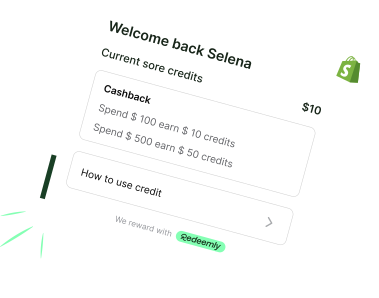
Ready to stop discounting and start growing with a smarter loyalty strategy? Redeemly helps you implement a cash-like store credit rewards program that’s fully native to Shopify. Drive higher AOV and LTV without complex points or margin-killing coupons.



Join 7000+ brands using our apps