10 Proven Strategies for Increasing Customer Engagement with Store Credit
Feb 21, 2026
|
Published
In the competitive world of e-commerce, the old tactics of deep discounts and confusing points systems are leading to margin erosion and customer burnout. Sustainable growth isn't about one-time transactions; it's about building lasting relationships. This requires a fundamental shift in strategy, focusing on increasing customer engagement in a way that boosts both lifetime value (LTV) and average order value (AOV).
This article reveals 10 powerful, profit-centric strategies that replace margin-killing discounts with genuine value. We'll explore how modern Shopify brands are using native store credit to increase lifetime value (LTV) and average order value (AOV), creating a loyal customer base that chooses to come back again and again. They return not because they have a coupon, but because they feel genuinely valued and connected to your brand.
Forget generic advice. You will find actionable steps to implement these strategies immediately, from setting up gamified store credit rewards to building exclusive VIP programs and fostering a thriving brand community. Each tactic is designed to create meaningful interactions that turn casual shoppers into dedicated brand advocates.
Prepare to move beyond the transactional mindset and discover how to build a more resilient, profitable, and engaging brand. Let's dive into the new playbook for sustainable customer loyalty.
1. Store Credit Rewards Programs
Move beyond the endless cycle of discount codes and confusing point systems. A store credit rewards program offers a more direct and valuable incentive for your customers. Instead of earning abstract points, customers accumulate a cash-like balance directly in their Shopify account with every purchase, which they can apply to future orders. This approach reframes rewards from a simple discount into a tangible asset they've earned, making them feel like a valued part of your brand.
For DTC brands focused on long-term growth, this model is a powerful tool for increasing customer engagement and retention without eroding profit margins. By using Shopify's native store credit function, you simplify the customer experience, eliminating the need to calculate point conversions or hunt for coupon codes and creating a frictionless path to their next purchase.
Why It Drives Engagement and LTV
Store credit builds a sticky ecosystem where customers are continuously incentivized to return. Seeing a balance in their account acts as a powerful psychological nudge, turning a one-time buyer into a repeat customer. Because store credit is a brand-specific currency, it locks in future revenue and directly boosts lifetime value and average order value. Unlike a 10% off coupon that encourages a one-off bargain hunt, a $10 store credit encourages a lasting relationship and a higher AOV on the redemption order.
Key Insight: Store credit feels like earned money, not a promotional gimmick. This perception shift is crucial for building genuine brand loyalty and encouraging higher-value repeat purchases.
Actionable Implementation Steps
To get started, focus on making your store credit program visible, valuable, and easy to use.
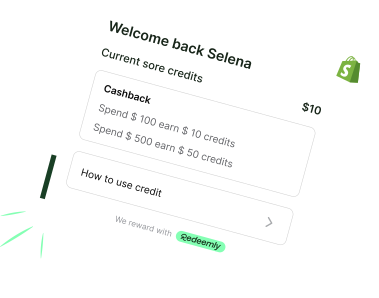
Set Generous Ratios: Offer clear earning rates, such as $5 in credit for every $100 spent. This encourages customers to increase their average order value to reach the next reward tier.
Promote Balances Everywhere: Use a floating wallet widget to keep their credit balance top-of-mind as they browse. Prominently display their available credit on the cart and checkout pages to encourage redemption.
Automate Communication: Trigger immediate post-purchase emails that confirm the credit they just earned. Send automated reminders about expiring credits to create urgency and drive them back to your store. Platforms like Redeemly integrate directly with Shopify's native store credit function to automate this entire process.
By implementing a well-structured store credit system, you can build a more sustainable model for growth. To dig deeper into how this works, you can learn more about building customer loyalty with modern retention strategies.
2. Personalized Behavioral Triggers and Reminders
Generic, batch-and-blast marketing emails no longer cut it. To truly capture attention, you must communicate with customers at the precise moment they are most likely to act. Personalized behavioral triggers use customer data-like purchase history, browsing activity, and reward balances-to send hyper-relevant messages that guide them back to your store. This strategy turns marketing automation into a one-on-one conversation.
For DTC brands, this is a cornerstone of increasing customer engagement and building a community of repeat buyers. Instead of waiting for customers to remember you, you can proactively nudge them with information they find genuinely useful, like a reminder about the store credit they just earned or a heads-up that their balance is about to expire.
Why It Drives Engagement and LTV
Behavioral triggers work because they are inherently relevant and timely. An abandoned cart email that also highlights the customer's available store credit is far more persuasive than a generic "you left something behind" message. These nudges reduce friction in the buying process and make customers feel understood. By consistently reminding them of the value they have waiting in your store, you build a powerful habit of returning.
This consistent, value-driven communication directly impacts lifetime value by preventing customer churn and encouraging the next purchase. Each triggered message is an opportunity to reinforce your brand's value and keep your store top-of-mind, turning passive subscribers into active, engaged customers.
Key Insight: The most effective marketing feels like a helpful service. Reminding customers about their earned credit isn't just a sales tactic; it's a valuable notification that improves their experience and respects the loyalty they've shown.
Actionable Implementation Steps
To implement effective triggers, focus on timing, relevance, and clarity. The goal is to be helpful, not intrusive.
Segment by Inactivity: Create audience segments based on the number of days since a customer's last purchase (e.g., 30, 60, 90 days). Send re-engagement campaigns that prominently feature their available store credit as the primary incentive to return.
Highlight Credit in Subject Lines: Increase open rates by making the value clear from the start. A subject line like "You have $15 in store credit waiting for you" is far more compelling than a generic promotional offer.
Automate Post-Purchase Nudges: As soon as a customer earns credit, send an automated email confirming their new balance. This immediately reinforces the value of shopping with your brand and sets the expectation for future rewards. Marketing automation platforms like Klaviyo can be used to build these behavioral flows.
3. Gamification and Milestone-Based Rewards
Turn shopping into an engaging journey by incorporating game-like mechanics into your customer retention strategy. Gamification adds a layer of psychological motivation, celebrating customer achievements with milestones, badges, and exclusive perks. Instead of just earning credit, customers are encouraged to reach the next level, transforming transactional behavior into a rewarding experience that builds momentum toward their next purchase.
For DTC brands, this approach is a powerful method for increasing customer engagement by making loyalty feel fun and interactive. It taps into our natural desire for achievement and progress, creating a compelling reason for customers to consolidate their spending with your brand.
Why It Drives Engagement and LTV
Milestone-based rewards give customers clear, attainable goals, which creates a powerful feedback loop. Each achievement, whether it's unlocking a "VIP Tier" or earning a "5-Time Buyer" badge, provides a dopamine hit that reinforces their connection to your brand. This system motivates customers to increase their purchase frequency and average order value to unlock the next status level or reward.
Brands like Sephora and Starbucks have perfected this, building communities around tiered statuses (e.g., VIB Rouge) that offer exclusivity and recognition. This strategy drives lifetime value by turning repeat purchases into a status symbol, not just a transaction.
Key Insight: Progress is a powerful motivator. Visualizing the path to the next reward creates a sense of investment that makes customers less likely to shop with competitors.
Actionable Implementation Steps
To implement this, focus on creating clear, achievable goals that celebrate customer loyalty and encourage specific actions.
Design Attainable Milestones: Structure your program with milestones that customers can reach within 3-6 purchases. For example, offer a bonus $10 store credit after their third order or when their lifetime spend crosses $500.
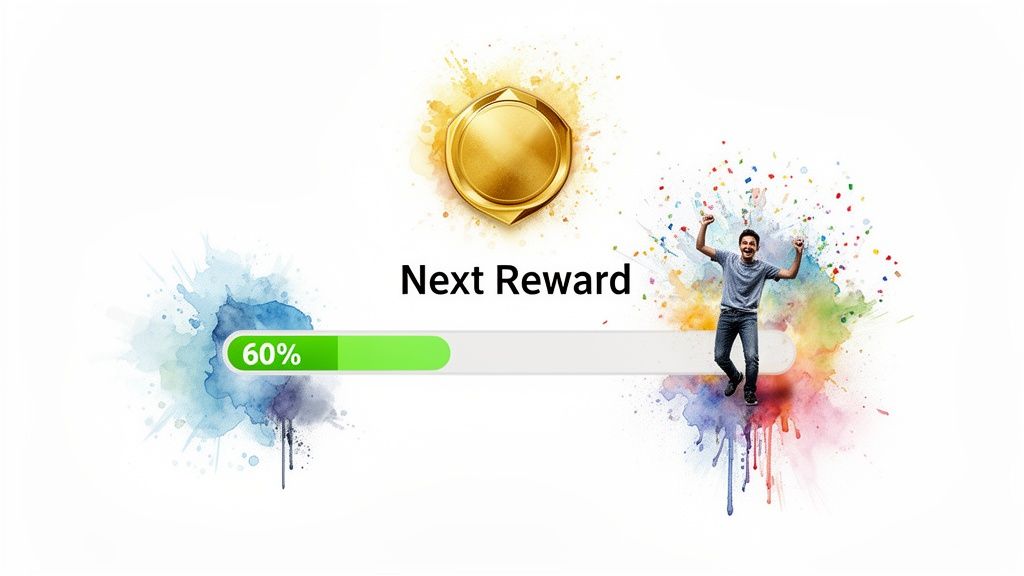
Visualize the Journey: Use progress bars in customer account pages to clearly show how close they are to their next reward. This visual cue keeps the goal top-of-mind and encourages them to close the gap.
Celebrate Every Achievement: Trigger automated emails and on-site notifications congratulating customers when they unlock a new tier or milestone. This recognition makes them feel seen and valued, strengthening their emotional connection to your brand. Platforms like Redeemly can complement this strategy by seamlessly issuing the store credit rewards tied to these achievements.
4. VIP/Exclusive Early Access Programs
Go beyond universal rewards and create a sense of exclusivity that your best customers crave. A VIP program segments your audience based on their loyalty, offering status-based perks like early access to new products and special events. This strategy shifts the focus from purely transactional rewards to emotional ones, making your top spenders feel recognized and valued for their commitment to your brand.
For DTC brands, this is a powerful method for increasing customer engagement by building an aspirational ladder for customers to climb. Instead of just earning discounts, customers strive for a higher status that unlocks unique experiences, turning brand affinity into a tangible achievement and a reason to consolidate their spending with you.
Why It Drives Engagement and LTV
Exclusivity is a powerful motivator. When customers know that a higher tier unlocks early access to a sought-after collection or a VIP-only event, they are more likely to increase their purchase frequency and average order value to qualify. This creates a virtuous cycle: top customers are rewarded, feel special, and spend more, which in turn solidifies their loyalty and significantly boosts their lifetime value.
Key Insight: Status-based rewards and early access create a powerful sense of belonging and recognition. This emotional connection is often more compelling than a simple discount, fostering long-term loyalty among your most valuable customer segment.
Actionable Implementation Steps
To launch a successful VIP program, clearly define the tiers, communicate the benefits, and make the status feel exclusive and rewarding.
Define Clear Tiers: Structure your program with clear spending thresholds, such as Silver, Gold, and Platinum tiers based on annual spend. This provides a clear path for customers to follow and an incentive to level up.
Offer Exclusive Access: Grant top-tier members 48-hour early access to new product drops or seasonal sales. Use platforms like Redeemly to issue VIP-only store credit bonuses, like double credit earnings on all purchases for your best customers.
Promote VIP Status: Make tier status highly visible within the customer’s account dashboard. Send targeted email campaigns announcing new VIP perks or congratulating members on reaching a new tier, reinforcing their special status and keeping them engaged.
5. Interactive Content and Shoppable Experiences
Transform passive browsing into an active, guided journey with interactive content. Instead of just showing products, you can immerse customers in experiences like quizzes, product configurators, or augmented reality (AR) try-ons. These tools don't just entertain; they help shoppers make confident decisions, effectively guiding them to the perfect purchase while capturing valuable preference data.
This strategy is a powerful method for increasing customer engagement because it turns the shopping process into a personalized consultation. For DTC brands, this means fewer returns, higher satisfaction, and a memorable experience that sets you apart. When a customer uses a style quiz to find the right bundle, they are more invested and more likely to complete the purchase with a higher average order value.
Why It Drives Engagement and LTV
Interactive experiences create a two-way conversation that builds trust and provides immense value. A customer using Sephora’s Virtual Try-On isn’t just looking at a product; they are validating its fit for them, drastically increasing their purchase confidence. This deep level of interaction keeps them on your site longer and builds a strong emotional connection to your brand.
By collecting zero-party data through quizzes or configurators, you can personalize future marketing efforts with incredible accuracy. This creates a positive feedback loop: the more a customer engages, the better you can serve them, leading directly to higher lifetime value. Each interaction is an opportunity to learn and refine their journey.
Key Insight: Interactive content shifts the customer from a passive observer to an active participant in their own shopping experience, leading to more intentional and satisfying purchases.
Actionable Implementation Steps
Start by identifying where an interactive element could solve a key customer pain point, like choice paralysis or uncertainty about product fit.
Create Value-Driven Quizzes: Develop quizzes that help customers discover their ideal product, like a "Find Your Perfect Skincare Routine" quiz. Use the results to recommend specific products and capture preference data for future email personalization.
Integrate Store Credit Incentives: Offer a small store credit reward for completing a quiz or trying an AR feature. Display the credit earning potential next to quiz-recommended bundles to boost AOV and encourage immediate purchase.
Use AR to Build Confidence: For apparel, beauty, or home goods brands, implement AR try-on features. This reduces a major friction point in online shopping, decreases return rates, and makes the buying decision easier.
Track and Personalize: Monitor how customers interact with these tools. Use platforms like Octane AI or Jebbit to build quizzes and feed the data back into your marketing stack, ensuring every subsequent touchpoint is more relevant than the last.
6. Community Building and User-Generated Content
Turn your customers into your best marketers by creating a space where they can connect, share experiences, and create content with your products. This approach fosters a deep emotional investment in your brand, generates authentic marketing assets, and cultivates a powerful sense of belonging. Instead of just selling a product, you’re building a movement that people want to be a part of.
For brands focused on sustainable growth, a strong community is a cornerstone of increasing customer engagement. It transforms the transactional relationship into a collaborative one, where customers feel seen and heard. Members of a brand community often exhibit significantly higher lifetime value and become vocal advocates, driving organic growth far more effectively than paid ads.
Why It Drives Engagement and LTV
A vibrant community creates a self-sustaining ecosystem of engagement. Customers share tips, answer each other's questions, and showcase how they use your products, providing endless social proof and inspiration. This user-generated content (UGC) is not only authentic but also builds a library of marketing material that resonates deeply with potential buyers. Seeing real people love and use your products is far more persuasive than any polished ad campaign.
Key Insight: When customers become content creators, their loyalty shifts from transactional to emotional. They are no longer just buying a product; they are contributing to a shared identity, which directly increases their lifetime value.
Actionable Implementation Steps
To get started, focus on making it easy and rewarding for customers to participate and share their content.
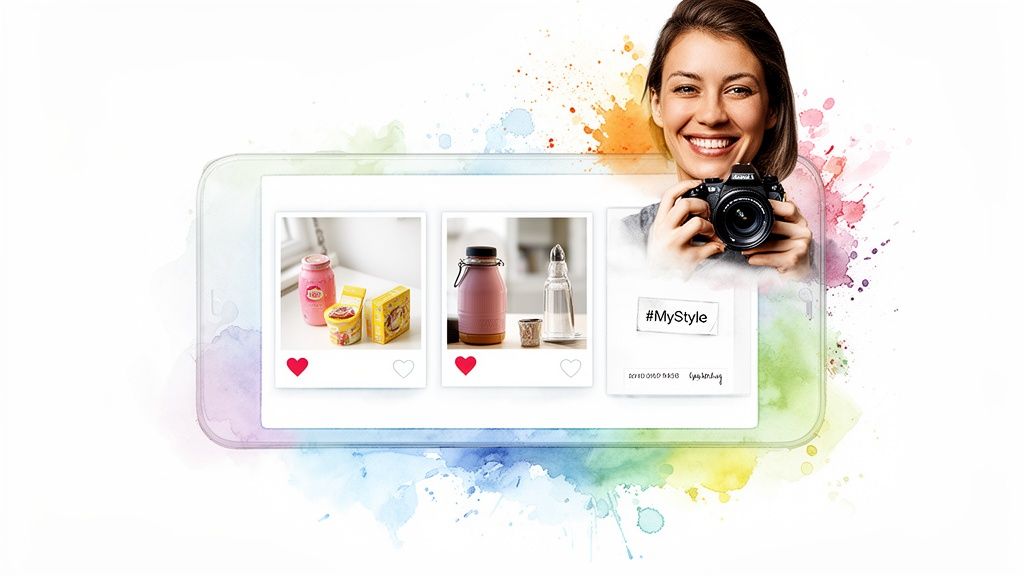
Create a Branded Hashtag: Establish a unique and simple hashtag (like Glossier’s #GlossierGirl) to track and curate UGC across social media platforms. Promote it on your packaging, in emails, and on your website.
Reward Submissions with Store Credit: Instead of one-off discounts, offer store credit for high-quality UGC submissions. This encourages repeat purchases and makes the reward feel like earned money, strengthening their connection to your brand.
Run Content Contests: Host monthly or quarterly contests with store credit prize pools to generate a surge of fresh content. Feature the winning submissions prominently on your homepage, product pages, and social channels. Platforms like Redeemly can help you seamlessly issue store credit rewards to contest winners, automating the process.
Feature Your Community: Dedicate a section of your website to a "Community Gallery" showcasing customer photos and stories. This provides powerful social proof and makes your customers feel like valued partners in your brand's journey.
7. Omnichannel Engagement and Seamless Experiences
Your brand doesn't just exist on your website; it lives in your customers' inboxes, text messages, social feeds, and even physical retail spaces. An omnichannel strategy unifies these touchpoints into one cohesive conversation, ensuring your brand experience is consistent and connected everywhere a customer interacts with you. Instead of treating each channel as a silo, they work together to create a single, seamless journey.
This approach is critical for increasing customer engagement because it meets customers where they are, on their preferred channels, with a relevant and contextual message. For example, a customer can earn rewards in-store, check their balance in your mobile app, and get an email reminder to redeem their store credit online. This interconnectedness makes interacting with your brand feel effortless and intuitive.
Why It Drives Engagement and LTV
An omnichannel approach builds a persistent and valuable relationship with your customers. By being present and consistent across channels, you increase the frequency of positive brand interactions without being intrusive. When a customer’s loyalty status and store credit balance are visible on your website, in emails, and via SMS, it reinforces their connection to your brand and keeps you top-of-mind.
This strategy directly impacts lifetime value by making it easier for customers to engage and purchase again. To ensure a consistent brand experience across all touchpoints, integrating strong omnichannel marketing strategies is essential for turning fragmented interactions into a unified customer journey that promotes loyalty and repeat business.
Key Insight: A customer's relationship with your brand is a single, ongoing conversation. An omnichannel strategy ensures every touchpoint, from an SMS alert to an in-app notification, feels like a natural continuation of that dialogue.
Actionable Implementation Steps
Start by mapping your customer journey and identifying key touchpoints where you can create a more integrated experience.
Prioritize High-Impact Channels: Use SMS for time-sensitive messages like store credit expiration reminders and push notifications for instant confirmations when credit is earned or redeemed. These direct channels are powerful for driving immediate action.
Sync Customer Data: Connect browsing behavior on your website with your email marketing platform. Send follow-up emails featuring products a customer viewed but didn't purchase, creating a personalized and relevant retargeting loop.
Centralize Your Loyalty Program: Make loyalty status and store credit balances accessible everywhere. Integrate your program with Shopify's native functions so customers can earn and redeem rewards seamlessly, whether they are shopping on their desktop or mobile device.
Offer Channel Preferences: Create a preference center where customers can choose how often and on which channels they want to hear from you. This gives them control and makes your communications feel more like a service and less like an interruption.
8. Referral and Advocacy Incentive Programs
Transform your most loyal customers into your best marketing channel. A referral program incentivizes existing customers to advocate for your brand by rewarding them for bringing in new shoppers. This strategy taps into the power of word-of-mouth, acquiring high-quality customers who arrive with pre-built trust and positive sentiment.
Instead of spending heavily on acquiring cold traffic, this approach fosters a community of brand advocates. By offering valuable rewards like Shopify-native store credit for both the referrer and the new customer, you create a powerful, self-sustaining growth loop. This model is exceptionally effective for increasing customer engagement because it gives people a direct stake in your brand's success.
Why It Drives Engagement and LTV
Referral programs build a powerful connection between your brand and its customers by turning a simple transaction into a shared experience. When a customer refers a friend, they are personally vouching for your quality, which deepens their own loyalty. The new customer, acquired through a trusted source, is more likely to convert and have a higher lifetime value. A store credit incentive further boosts LTV by ensuring both parties return to your store to spend their reward.
Key Insight: A "give and get" structure, where both the referrer and the new customer receive a reward, feels fair and generous. This reciprocity is key to motivating action and making the referral feel like a genuine recommendation, not a sales pitch.
Actionable Implementation Steps
To launch a successful referral program, focus on making the process seamless, transparent, and rewarding for everyone involved.
Offer Mutual Store Credit Rewards: Provide a clear "Give $10, Get $10" store credit offer. This is margin-friendly and encourages both the new and existing customer to make a future purchase, directly boosting LTV.
Simplify the Sharing Process: Generate a unique, one-click referral link for each customer in their account dashboard. Provide pre-written templates they can easily share on social media or via email.
Automate Tracking and Rewards: Customers should see their pending and successful referrals in real-time. Use a platform like Redeemly to automatically issue store credit to both parties once the new customer's first purchase is complete, eliminating manual work and building trust in the program.
A well-executed referral system can become one of your most efficient and profitable acquisition channels. To explore different reward structures, you can find more referral program ideas and examples that fit your brand.
9. Progressive Profiling and Behavioral Segmentation
Stop treating your entire customer base as a monolith. Progressive profiling is the strategy of gradually collecting customer data over time through multiple interactions, rather than demanding it all at once in a lengthy signup form. This approach respects the customer journey while building rich, actionable profiles for highly effective behavioral segmentation.
By layering preference data (like style choices from a quiz) with behavioral data (like purchase history and browsing activity), you can create specific audience segments. This enables hyper-personalized communication that feels relevant and valuable, directly increasing customer engagement by showing customers you understand their individual needs.
Why It Drives Engagement and LTV
Generic, one-size-fits-all marketing is a recipe for low open rates and customer churn. When you segment your audience, you can tailor your messaging, offers, and even store credit incentives to resonate with specific groups. A high-value VIP segment might receive exclusive early access, while a segment of at-risk customers could get a special win-back offer to reignite their interest.
This targeted approach makes customers feel seen and valued, fostering a stronger connection to your brand. By delivering the right message to the right person at the right time, you not only boost immediate conversion rates but also build the kind of loyalty that significantly increases lifetime value and average order value.
Key Insight: Personalization isn't just about using a customer's first name. True personalization is about understanding their behavior and intent, then responding with relevant content and offers that solve their problems or meet their needs.
Actionable Implementation Steps
To begin, focus on collecting data frictionlessly and using it to create meaningful audience groups.
Gather Data Incrementally: Instead of a long signup form, ask for a single preference in your welcome email. Use post-purchase surveys to ask about product usage or style choices, which provides context for their next purchase.
Segment by Customer Value: Use Recency, Frequency, and Monetary (RFM) analysis to identify your best customers. Create segments in platforms like Klaviyo for "High AOV Shoppers," "Frequent Buyers," or "Dormant Customers" who haven't purchased in 90 days.
Target with Precision: Send exclusive, higher-value store credit offers to your VIP segment to reward their loyalty and encourage big-ticket purchases. For an 'at-risk' segment showing declining engagement, trigger an automated campaign with a compelling reason to return.
By systematically building customer profiles, you create a powerful engine for personalized marketing. You can learn more about market segmentation to refine your strategy further.
10. Predictive Analytics and Smart Retention Automation
Move beyond reactive win-back campaigns and start proactively preventing churn before it happens. Predictive analytics uses historical customer data and machine learning to forecast future behavior, such as which customers are at risk of leaving, when they are likely to purchase again, and what kind of incentive will be most effective. This allows you to automate highly targeted interventions, turning data into decisive action.
For DTC brands aiming to maximize lifetime value, this data-driven approach is essential for increasing customer engagement with precision. Instead of blasting generic offers to your entire list, you can deliver the right message to the right customer at the perfect moment, significantly improving retention rates and protecting your bottom line from involuntary churn.
Why It Drives Engagement and LTV
Predictive automation creates a personalized experience that makes customers feel seen and valued. When an at-risk customer receives a perfectly timed, relevant offer, it rebuilds their connection to your brand. This proactive strategy prevents the slow fade of customer loyalty that often goes unnoticed until it's too late.
By identifying high-LTV customers who are showing signs of disengagement, you can prioritize your retention spend where it will have the greatest impact. This focus on smart, automated retention directly boosts long-term profitability by keeping your best customers active and purchasing more frequently.
Key Insight: Proactive retention is far more effective and cost-efficient than reactive recovery. By using data to anticipate needs, you build a stronger, more resilient customer relationship that isn't dependent on last-ditch "we miss you" emails.
Actionable Implementation Steps
Start with simple models and gradually build complexity as you gather more data. The goal is to create automated, intelligent retention workflows.
Implement RFM Segmentation: Begin with Recency, Frequency, and Monetary (RFM) analysis to identify your best customers, at-risk segments, and lost customers. This is a foundational step before adopting more complex machine learning models.
Automate 'At-Risk' Workflows: Create automated sequences that trigger when a customer enters a high-risk segment. For example, if a customer hasn't purchased within twice their average buying cycle, trigger a workflow that offers them a personalized store credit bonus to entice them back.
Vary Your Incentives: Not all at-risk customers are equal. Use predictive LTV scores to offer more valuable incentives, like a larger store credit bonus, to customers who have historically been more profitable.
Track and Refine: Continuously monitor the performance of your predictive models by comparing the behavior of customers who received an intervention against a control group. While predictive analytics helps identify at-risk customers, a complete approach requires a broader framework; these 10 Essential Member Retention Strategies can help boost overall engagement and loyalty.
Top 10 Customer Engagement Strategies Comparison
Strategy | Implementation Complexity 🔄 | Resource Requirements ⚡ | Expected Outcomes 📊 | Ideal Use Cases 💡 | Key Advantages ⭐ |
|---|---|---|---|---|---|
Store Credit Rewards Programs | Medium — Shopify-native setup plus accounting/redemption tracking | Medium — platform setup, minor theme/customization, bookkeeping | Higher LTV & AOV, increased retention, predictable unit economics | DTC merchants replacing discounts; brands prioritizing LTV over promo-driven growth | Protects margins, simple to understand, visible wallet drives redemption |
Personalized Behavioral Triggers & Reminders | Medium‑High — requires automation flows and accurate event tracking | Medium — email/SMS platform + data integration and testing | Increased redemption, reduced cart abandonment, higher email engagement | Brands with existing customer data and automation stacks | Delivers timely relevance, boosts redemption rates, low friction |
Gamification & Milestone-Based Rewards | Medium‑High — UX/design work and ongoing content updates | Medium — front‑end dev, creative assets, maintenance | Higher emotional engagement, repeat purchases, increased AOV | Brands seeking habit formation and status-driven loyalty | Motivates repeat buys, creates viral/status effects, increases affinity |
VIP / Exclusive Early Access Programs | High — tier logic, benefits orchestration, inventory/operations | Medium‑High — CX support, inventory planning, exclusives management | Strong retention of top customers, higher LTV among VIPs | Brands with identifiable high‑value segments and premium offers | Concentrates ROI on top customers, creates aspirational status |
Interactive Content & Shoppable Experiences | High — AR/configurators and seamless commerce integration | High — development, content production, performance optimization | Longer sessions, better product fit, reduced returns, higher AOV | Product-heavy categories (beauty, apparel, configurable goods) | Improves purchase confidence, captures rich preference data |
Community Building & User‑Generated Content | Medium‑High — platform and moderation effort, long ramp to scale | Medium — community management, incentives, content curation | Increased LTV, authentic marketing assets, stronger advocacy | Lifestyle and aspirational brands focused on brand culture | Produces scalable authentic content, lowers CAC via advocacy |
Omnichannel Engagement & Seamless Experiences | High — cross‑channel data sync and unified profiles | High — integrations, privacy/compliance, ongoing ops | Consistent CX, higher conversion rates, cross‑channel redemption | Multi‑channel retailers and enterprise merchants | Captures customers on preferred channels, reduces journey friction |
Referral & Advocacy Incentive Programs | Medium — tracking, fraud controls, and reward flows | Low‑Medium — referral tooling and monitoring | Lower CAC, high‑quality customer referrals, viral growth potential | Growing brands seeking cost‑efficient acquisition | Efficient acquisition, dual‑sided incentive clarity, high trust |
Progressive Profiling & Behavioral Segmentation | High — data collection strategy and dynamic segmentation | High — analytics tooling, data hygiene, ongoing model maintenance | Higher personalization, improved open/click/conversion rates | Data‑driven brands aiming for hyper‑personalized outreach | Enables precise targeting, reduces unsubscribes, improves ROI |
Predictive Analytics & Smart Retention Automation | Very High — ML models, scoring, and automated interventions | Very High — historical data, data science team, tooling | Proactive churn prevention, optimized retention spend, higher LTV | Brands with substantial historical data and scale | Prevents churn before it occurs, personalizes incentive intensity |
Building Your Engagement Engine for Long-Term Growth
You’ve explored ten powerful strategies for increasing customer engagement, moving far beyond the temporary high of a discount code. From the foundational shift to store credit rewards to the precision of predictive retention, each tactic offers a distinct way to build stronger, more profitable customer relationships. The common thread connecting them all is a commitment to delivering genuine, tangible value that keeps customers returning, not because of a gimmick, but because they feel understood and appreciated.
The path to exceptional engagement isn't about implementing every single strategy at once. It’s about building a sturdy, reliable system piece by piece. The most effective starting point for any Shopify brand is to rethink the very nature of its incentives. By swapping margin-eroding discounts for a Shopify-native store credit program, you fundamentally change the customer dynamic from a transactional one to a relational one. Store credit is not a one-off bribe; it's a built-in reason for a customer's next visit, a direct investment in their future loyalty that protects your bottom line.
Key Takeaways for Immediate Action
To turn these ideas into results, focus on a phased approach. Start with a strong foundation and build from there.
Prioritize Margin-Safe Incentives: The single most impactful change you can make is moving away from the discount-driven model. Store credit is a powerful alternative that encourages repeat purchases and boosts average order value without sacrificing your profit margins on every transaction.
Layer Engagement Tactics Over Time: Once your store credit system is in place, begin layering in other tactics. Introduce personalized behavioral triggers for cart abandonment. Launch a simple VIP tier that rewards your best customers with early access. The goal is progress, not perfection.
Measure What Matters: True engagement is quantifiable. Keep a close eye on your Lifetime Value (LTV), repeat purchase rate, and Average Order Value (AOV). These are the north-star metrics that prove your efforts in increasing customer engagement are directly contributing to sustainable business growth.
The True Value of Genuine Connection
Ultimately, increasing customer engagement is about more than just numbers on a dashboard. It’s about creating a brand that customers want to be a part of. It’s the difference between a customer who buys from you once and an advocate who tells their friends about your brand for years. This connection is built through consistent, valuable interactions that respect the customer’s time and investment.
By adopting a store-credit-first mentality and thoughtfully integrating the strategies we've covered, you are not just acquiring customers; you are building a community. You are creating an engagement engine that runs on genuine loyalty, not fleeting discounts, paving the way for predictable revenue and long-term, profitable success.
Ready to replace discounts with a powerful, Shopify-native store credit solution that boosts LTV and AOV? See how Redeemly makes it simple to launch and manage a world-class rewards program that customers love. Explore what Redeemly can do for your brand today.


Join 7000+ brands using our apps