Ecommerce Rewards Programs: Boost LTV and AOV with Store Credit
Feb 8, 2026
|
Published
Let's be honest: most ecommerce rewards programs are built on a shaky foundation. They're usually just a mix of temporary discounts and confusing points that don't create any real, lasting loyalty. It's a race to the bottom, where you end up sacrificing your profit margins for a quick sales spike that does nothing for long-term growth or customer lifetime value.
Why Traditional Rewards Programs Are Failing Your Store
For years, the standard playbook for keeping customers coming back has been pretty simple: throw discount coupons at them or get them tangled up in a complex point system. And sure, these tactics can sometimes nudge a customer to click "buy," but they often create a nasty cycle that slowly eats away at your brand's value and profitability, ultimately hurting your ability to increase lifetime value.
This old-school approach trains your customers to do one thing: wait for the next sale. It conditions them to believe they should never pay full price for your products. It's all about the transaction, not the relationship.
The real goal of a loyalty program isn't just to give stuff away. It should be a strategic tool you use to increase two of your most important metrics: Average Order Value (AOV) and Customer Lifetime Value (LTV). The smarter play is to move beyond one-off deals and start building a customer relationship model that's both profitable and sustainable, with a focus on Shopify native store credit.
The Problem With Discount-Driven Loyalty
When your rewards program is just a constant stream of discounts, you're not building loyalty to your brand; you're building loyalty to the deal. Customers quickly learn to wait for that 20% off coupon to land in their inbox before they even think about making a purchase. This behavior sends a dangerous message: your products aren't actually worth their full price.
This creates a few predictable, and painful, outcomes for your store:
Margin Erosion: Every single discount is a direct hit to your profit margin on that sale. No exceptions.
Decreased AOV: Shoppers often buy just enough to qualify for the coupon, instead of exploring other products they might love.
Damaged Brand Perception: Non-stop sales can make even a premium brand feel cheap or, even worse, desperate.
Ultimately, this whole cycle just attracts bargain hunters, not true brand advocates. These are the kinds of customers who will ditch you in a heartbeat for a competitor offering a slightly better deal, leaving you with a low customer lifetime value.
The Confusion Of Complex Point Systems
On the other end of the spectrum, you have point-based systems. The idea—gamifying the shopping experience—sounds great in theory. But in practice? It's often a confusing mess. Customers are left scratching their heads, asking, "So, what's a point actually worth? How many thousands do I need to get something real?"
This mental math is a huge roadblock to engagement.
When a loyalty program requires a calculator to understand, it's already failed. Simplicity is the key to engagement, and customers instantly grasp the value of '$10 in your account' far more easily than '1,000 points'.
This confusion leads directly to low engagement and even lower redemption rates. One study found that while 73% of shoppers actively want to redeem rewards, they give up on programs that are just too complicated to figure out.
If your customers don't see the value or a clear path to a reward, your program just becomes background noise. It fails to influence their buying habits or build any kind of meaningful connection to your brand. You end up with a system that costs you time and money without delivering any real, measurable increase in LTV or AOV.
How Store Credit Redefines Customer Loyalty
Think of it this way: what if you could give your best customers a branded gift card they could only spend with you? That’s the simple, powerful idea behind a store credit rewards program. It completely changes the game, shifting the customer's mindset from a one-off transaction to owning a real, tangible asset in your brand.
Unlike a discount code that just lops a percentage off at checkout, store credit feels like actual money sitting in a customer’s account. This perception shift is everything. When a shopper sees a $10 store credit balance, it’s not some flimsy coupon; it feels like something they own, an asset just waiting to be spent. That small change transforms a first-time buyer into a returning investor in your brand.
This psychological pull is a direct line to higher customer lifetime value (LTV). You're no longer just chasing the next sale with another margin-slashing promo. Instead, you're building a bank of committed shoppers who already have a reason to come back.
The Power of a Tangible Asset
The real magic of store credit is how tangible it feels. Abstract systems with "1,000 points" force customers to do mental math, trying to figure out what those points are actually worth. It’s confusing, and confusion leads to people just giving up. Store credit, on the other hand, is dead simple and universally understood.
Store credit is a promise of future value. It tells the customer, "We value you, and we've already set aside this money for your next purchase." The reward instantly becomes less of a discount and more of a relationship-building tool.
This approach is also fantastic for nudging shoppers to increase their average order value (AOV). Someone with a $15 credit is far more likely to toss an extra item in their cart to "use it up," often spending well beyond their original budget. That credit is the perfect little push to get them over the finish line.
Protecting Your Margins While Driving Repeat Business
Here’s where store credit really shines for your bottom line. A flat 20% discount is a guaranteed, immediate hit to your margin on that sale. You're giving away profit right now, with your fingers crossed that they might come back later.
A 10% store credit reward, however, is a strategic investment. You protect your full margin on the first sale and only "pay" for the reward when that loyal customer returns to make their next purchase. This model achieves several critical goals at once:
It basically guarantees a second sale. The customer has to come back to your store to use their credit.
You don't sacrifice profit on the first purchase. The initial sale remains fully profitable.
It builds a sustainable growth loop. Every purchase helps fund the next one, creating a powerful cycle of repeat business and higher LTV.
This is just a more profitable and sustainable way to run a loyalty program. To get a broader view of building these kinds of strong customer bonds, it's worth exploring the wider world of Shopify loyalty programs for more strategic ideas. If you want to dive deeper into the mechanics, we've broken it all down in our guide on what is store credit.
Turning Loyalty into Measurable Growth
At the end of the day, a great rewards program isn't just a nice-to-have; it's a growth engine for LTV and AOV. The numbers don't lie: over 60% of loyalty programs make shoppers more loyal, and a whopping 79% of customers say they're more likely to recommend brands that have them.
With average annual activity rates hitting 59%, a well-built program means more than half your members will return year after year, directly boosting your LTV. By simplifying your reward down to something as clear as cash, store credit eliminates friction and gets more people to actually participate. This clarity makes it easier to sell the value of your program, turning more customers into your biggest fans.
The Financial Impact of a Smarter Rewards Strategy
Moving away from the usual discount-heavy rewards programs isn't just about changing a few offers. It's a completely different way of thinking about your store's finances, with a laser focus on increasing customer lifetime value. Every time you hand out a discount code, you're taking a guaranteed, immediate hit to your profit margin. With a Shopify native store credit program, that reward becomes less of a cost and more of an investment in future sales.
It’s a subtle but powerful shift in focus. You stop obsessing over the cost of a single transaction and start looking at the long-term value of each customer. A discount is a one-and-done expense. But store credit? That’s a growth engine that keeps the conversation going long after that first purchase.
The Clear Math Behind Store Credit and Profit
Let's run the numbers with a simple, real-world example. Say a customer is about to spend $100 in your store, and your products have a healthy 50% gross margin.
Scenario A (The Discount): You offer a 20% discount code. They pay $80. Your $50 profit instantly shrinks by $20, leaving you with just $30. You’ve just sacrificed 40% of your margin for one sale, with your fingers crossed that they might come back.
Scenario B (The Store Credit): You offer a 10% store credit reward on their purchase. They pay the full $100, and you bank your entire $50 profit. Now, they have $10 sitting in their account—a powerful little nudge pulling them back for another visit.
The difference is night and day. The store credit model protects your profit on that first critical sale. The "cost" of the reward only comes into play when a happy customer returns to make a second purchase, effectively locking in that repeat business and increasing their LTV.
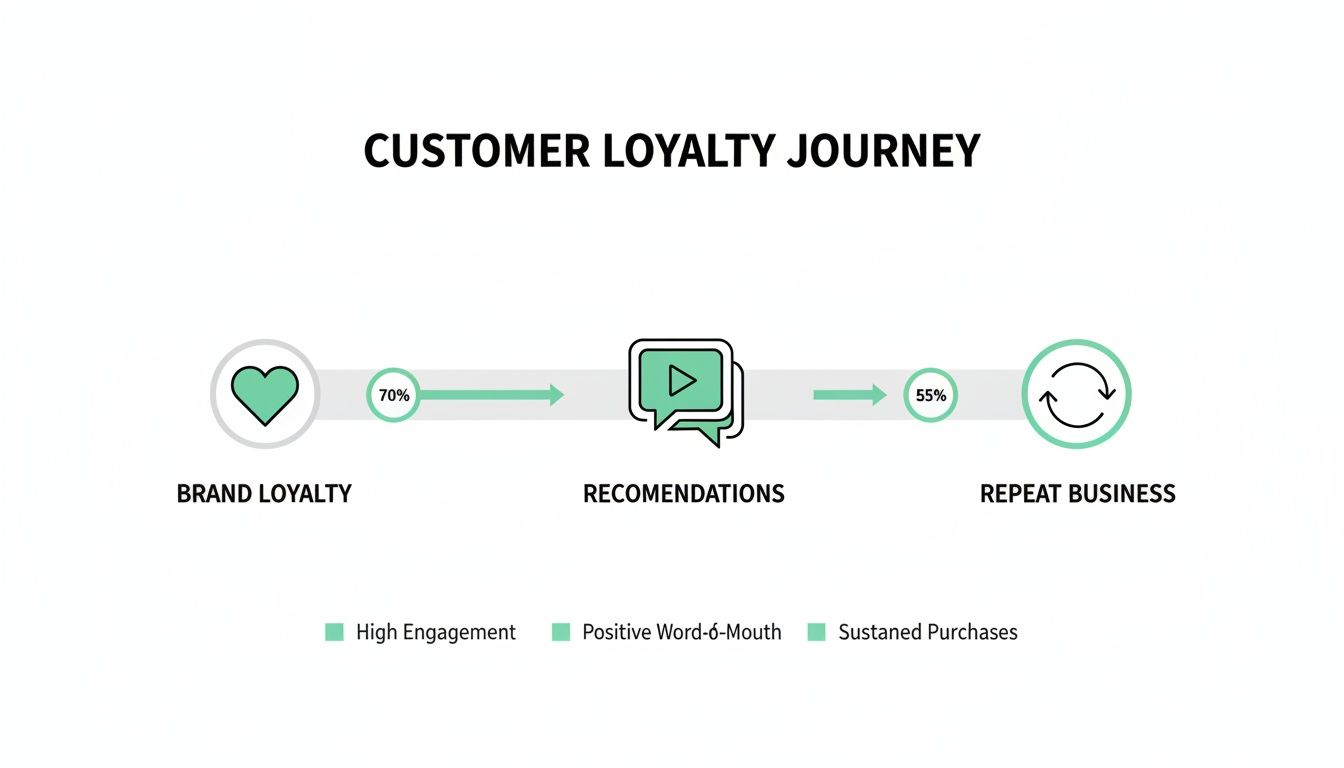
This isn't just about getting one more sale; it's about kicking off a positive loop of engagement and profit that can sustain your business.
From One-Time Sales to Lifetime Value
Let's follow that customer from Scenario B. They come back to use their $10 credit. Human nature kicks in, and they almost never spend just the credit amount. They'll likely make another $100 purchase, which nets you another $50 in gross profit. After applying the $10 credit, you're left with $40 profit on that second sale.
Now, let's look at the total profit from this one customer across two transactions:
Discount Model: Total Profit = $30 (from that single, discounted sale) Store Credit Model: Total Profit = $50 (first sale) + $40 (second sale) = $90
That’s 3x more profit from the same exact customer. This isn't a fluke; it's a repeatable system for boosting your Customer Lifetime Value (LTV).
Financial Impact Analysis: Discount vs. Store Credit
This table breaks down the financial journey of a single customer under both scenarios, showing just how differently these two strategies impact your bottom line.
Metric | Scenario A: 20% Discount Code | Scenario B: 10% Store Credit Reward |
|---|---|---|
Initial Purchase Amount | $100 | $100 |
Discount/Credit Applied | $20 | $0 |
Customer Pays (Sale 1) | $80 | $100 |
Your Profit (Sale 1) | $30 (50% margin on $80, minus COGS) | $50 (50% margin on $100, minus COGS) |
Repeat Purchase Rate | Uncertain, no built-in incentive | High, driven by the $10 credit |
Your Profit (Sale 2) | $0 (if they don't return) | $40 (after applying the $10 credit) |
Total Profit Over 2 Sales | $30 | $90 |
As you can see, the store credit model is designed from the ground up to protect your margins while systematically encouraging the repeat business that truly builds a brand and increases lifetime value.
By encouraging customers to come back, you build a much more predictable and profitable revenue stream. If you want to get really granular on this, check out our guide on how to calculate customer LTV and see how it all connects.
A smart rewards strategy is one of the most direct ways to improve your store's financial health. When you have a system that rewards loyalty without bleeding margin, you'll see exactly how to increase customer lifetime value and turn your rewards program from a necessary evil into a genuine growth driver.
How to Launch a Native Store Credit Program in Shopify
Ready to move on from profit-killing discounts and clunky points systems? Switching to a native Shopify store credit program is one of the smartest things you can do for your brand's bottom line and customer loyalty. Here’s a practical, step-by-step guide to launching a high-performing ecommerce rewards program that protects your margins and boosts lifetime value.
One of the biggest wins with this approach is pure performance. Native Shopify apps are built right into Shopify’s core. That means they’re incredibly lightweight. You won't find any heavy, external scripts slowing down your site speed, which is a massive deal for keeping the user experience snappy and conversions high.
This native integration also creates a completely seamless checkout. Your customers see and use their credit right inside the Shopify checkout they already know and trust. There’s no friction, no confusion—just a smooth path to purchase that encourages higher average order value.
Let's walk through the three key stages to get your own program off the ground.
Stage 1: Define Your Reward Structure
When it comes to rewards, simplicity is your superpower. Your goal is to create a structure that people instantly "get" and feel motivated by, pushing them to spend more right now. Forget about complicated tiers or confusing rules, especially when you're just starting out.
A simple spend-and-get model is a fantastic place to start. Think along these lines:
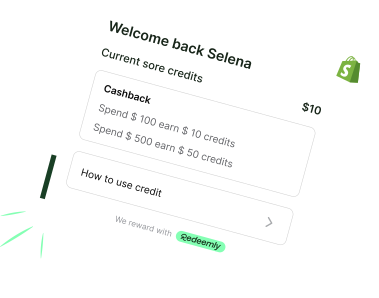
Spend $100, get $10 in store credit.
Spend $150, get $20 in store credit.
This kind of offer is crystal clear. It gives shoppers a tangible goal to hit. They can see that by tossing just one more item into their cart, they can unlock a real reward for their next visit. That direct incentive is way more powerful at lifting your Average Order Value (AOV) than some abstract points system.
Stage 2: Customize Your On-Site Communication
Your rewards program can't be a secret hidden on some forgotten page. You need to weave it into the very fabric of the shopping experience, constantly reminding customers of the value they have waiting for them.
The best ecommerce rewards programs aren't just an afterthought; they're part of the journey. When a customer can always see their credit balance, they feel a gentle, constant pull to come back and spend it.
To make this happen, you’ll want to put these key elements in place:
A Floating Wallet Widget: This is a small, persistent icon that sits in the corner of every page, proudly displaying the customer's store credit balance. It’s a constant, friendly nudge.
Product Page Nudges: Display subtle messages on product pages like, "Earn $10 credit with this purchase." This reinforces the program's value right when they're making a buying decision.
Cart and Checkout Reminders: Show their available credit right in the cart and at checkout. This makes redemption totally frictionless and can be the final push they need to complete the order.
For a deeper dive into the nuts and bolts of setting this up, check out our complete guide on how to give store credit on Shopify.
Stage 3: Automate Your Redemption Reminders
Getting a customer to earn store credit is only half the battle. The real magic happens when they come back to spend it. This is where automated email and SMS reminders become your secret weapon for driving up Lifetime Value (LTV).
You can set up simple, automated flows that trigger based on a customer's credit balance. A friendly email a week after their purchase saying, "Hey, you still have $10 waiting for you!" is ridiculously effective at locking in that critical second sale. This isn't nagging; it's proactive communication that turns earned credit into repeat business.
This is where a native solution really shines for DTC brands on Shopify. Tools like Redeemly use these floating wallets and automated reminders to pull customers back for their second, third, and fourth purchases, all without ever slowing down your store.
When you consider that 76% of consumers use brand apps more often when rewards are involved, it's clear that amplifying retention through simple, automated communication is a surefire path to growth. You can discover more insights about loyalty program statistics on emarsys.com. By following these steps, you’ll be well on your way to launching a powerful, margin-friendly loyalty system that turns one-time buyers into lifelong fans.
Driving Adoption and Measuring Program Success
Getting your store credit program live is a fantastic first step, but it's just that—the first step. The real magic happens when customers start using it, loving it, and coming back for more. This means you need a smart plan to get the word out and a sharp eye on the numbers that truly matter to your business.
A splashy launch feels great, but a program that consistently drives up your Average Order Value (AOV) and Lifetime Value (LTV) is what builds a brand that lasts. Let's break down how to promote your new program effectively and track the KPIs that will prove its value.
Promoting Your New Store Credit Program
Your program's success lives and dies by its visibility. If shoppers don't know it exists, they can't fall in love with it. You need to shout about the benefits of store credit from every rooftop—or, in this case, every customer touchpoint. Make it an obvious, can't-miss part of their shopping journey.
Here are a few tactics to get you started:
Email Campaigns: Don't just bury this in a newsletter. Send a dedicated email announcing the new, simpler way to get rewarded. Frame the store credit as what it is: cash in their account, ready for their next haul.
Social Media Announcements: Go visual. Create clean, eye-catching posts and stories that show how easy it is to earn. A simple "spend X, get Y" graphic can cut through the noise and make the value proposition instantly clear.
Prominent On-Site Banners: Slap a bold banner right on your homepage announcing the new program. This should link directly to a simple, clean landing page that spells out exactly how it works and how they can start earning.
And remember, this isn’t a one-and-done deal. Weave reminders into your regular marketing emails, sprinkle them into your abandoned cart flows, and use on-site pop-ups to keep your program front and center.
Tracking the KPIs That Actually Matter
Data is your best defense when someone asks if the new program is really working. But you have to track the right data. Forget the vanity metrics and focus on the KPIs that have a direct line to your profitability and customer loyalty, like AOV and LTV.
When you switch from discounts to store credit, your measurement focus shifts from transaction volume to customer value. You're no longer just tracking sales; you're tracking the growth of profitable, long-term relationships.
Here are the four big ones to watch like a hawk:
Repeat Purchase Rate: This is loyalty in its purest form. What percentage of customers come back for a second, third, or fourth purchase? If this number is climbing, your store credit is doing its job and pulling people back in.
Average Order Value (AOV): Pit program members against non-members. You should see that your members—especially those cashing in their credit—are spending more per order. They're either trying to burn through their balance or pushing to hit that next reward threshold.
Customer Lifetime Value (LTV): This is the holy grail. LTV tells you the total profit a customer brings to your business over their entire relationship with you. A successful program will create a massive LTV gap between members and your average shopper.
Reward Redemption Rate: A healthy redemption rate means customers see value in your program and find it easy to use. You’re not aiming for 100%, but a rate between 12% and 20% is a great sign of engagement. It shows the rewards are compelling enough to drive that next purchase.
Common Pitfalls That Can Derail Your Rewards Program
Rolling out a rewards program is a fantastic move for building a healthier, more sustainable business. But even the smartest strategies can hit a snag if you're not watching out for a few common traps. Getting ahead of these issues from day one is the key to making sure your program actually works to increase AOV and LTV.
One of the first places merchants stumble is getting the reward thresholds wrong. If you make it nearly impossible for customers to earn anything meaningful (think, "Spend $500 to get $5"), they'll just see it as a gimmick and won't even try. You've lost them before you even started.
But swing too far the other way, and you'll torch your margins. Giving away too much, too easily, completely undermines the reason you moved away from constant discounts in the first place. You’re looking for that magic number—a reward that feels valuable and just within reach, nudging shoppers to add that one extra item to their cart to get it.
The Great Misunderstanding of "Breakage"
Here’s a surprisingly common mistake: thinking that unredeemed store credit—what the industry calls reward breakage—is a good thing. Some brands look at that pile of unused credit and see it as free money, a win-win where they got the sale without having to pay out the reward.
That thinking is a trap. The entire point of a store credit program isn't for customers to sit on their balance. It's for them to spend it.
Unredeemed credit isn’t profit; it’s a missed opportunity for a repeat purchase. The goal is a high redemption rate, because that’s the clearest sign your program is working and driving real lifetime value.
Every time a customer redeems their credit, it means a loyal shopper came back. That's the whole game. You should be doing everything you can to get them to use that credit, because that’s what fuels the flywheel of profitable repeat business and increases LTV.
If You Don’t Promote It, It Doesn’t Exist
You could build the most brilliant, margin-friendly rewards program in the world, but if your customers don't know about it, it will fail. You can't just quietly turn it on and hope people stumble upon it. You have to shout it from the rooftops and weave it into the entire shopping experience.
Here’s how to fix the most common communication breakdowns:
The Problem: Your program is basically invisible.
The Fix: Announce the launch with a dedicated email blast and splash it all over your homepage with banners. Make it completely unmissable.
The Problem: Customers have credit but forget it exists.
The Fix: Set up automated email reminders. Better yet, use on-site widgets that constantly show customers their available balance. Keep that "free money" top of mind.
The Problem: The value isn't obvious when it matters most—at checkout.
The Fix: Make their store credit balance crystal clear in the cart and at checkout. Give them a simple, one-click way to apply it and feel the instant win of a discount they truly earned.
By sidestepping these traps and focusing on clear, constant communication, you can build a rewards program that actually drives the numbers you care about—AOV and LTV—without falling for the same old mistakes.
Got Questions About Store Credit? Let's Talk.
Moving away from the constant grind of discount codes is a big decision, but it's one of the smartest things you can do for your brand's long-term health. It’s totally normal to have questions. Here are the most common ones I hear from merchants, and why a native Shopify store credit program is a better path to growth.
Isn't This Just More Expensive Than Running Discounts?
This is the number one myth I have to bust, but the math is pretty clear: store credit programs almost always come out ahead on profitability. Think about it—a 20% discount is a guaranteed, immediate hit to your margin on that one sale. You're just giving away profit, hoping they might come back.
But a 10% store credit reward? That's a future cost, not a current one. You protect your full margin on the first sale, and you only "pay" for the reward when a happy customer comes back to spend more money with you. This isn't just a sale; it's a built-in mechanism for repeat business and a higher lifetime value.
A discount is a pure expense. Store credit is an investment in a future, profitable transaction. It shifts your focus from the cost of one sale to the long-term value of a customer relationship.
Will My Customers 'Get' Store Credit Instead of Points?
Yes, and honestly, they'll probably thank you for it. Store credit is just simpler. People immediately understand what ‘$10 in your account’ means. There’s no mental gymnastics involved in trying to figure out how many points they need or what ‘1,000 points’ is actually worth in real money.
That cash-like value feels real and immediate. It cuts through the noise and confusion that makes so many people ignore typical ecommerce rewards programs. The result? People actually use their rewards, which is the entire point.
What's the Big Deal About a 'Native' Shopify App?
A native Shopify app is built to live and breathe inside Shopify's own system. That means it’s incredibly fast, light, and stable because it's not relying on a bunch of clunky external code that can slow your site down or break when you get a rush of traffic.
For your customer, the experience is buttery smooth. They earn credit and spend it right at checkout without ever feeling like they've left your store. Non-native platforms often struggle to match that seamless feel, which can add friction, hurt your site speed, and ultimately cost you sales. A native app keeps things fast, simple, and reliable.
Ready to build a loyalty program that actually protects your profits and drives real growth? Redeemly helps you launch a native Shopify store credit program that boosts AOV and LTV without the complexity of points or the margin-erosion of discounts. Get started with Redeemly today and turn one-time buyers into lifelong fans.


Join 7000+ brands using our apps