10 Proven Customers Retention Strategies To Maximize LTV In 2025
Dec 9, 2025
|
Published
In the competitive world of e-commerce, customer acquisition is just the start. The real challenge, and the engine of profitable growth, lies in transforming that first-time buyer into a repeat purchaser. For too long, brands have relied on a race-to-the-bottom strategy, throwing discount codes and confusing point systems at customers. This approach not only eats into your margins but often fails to build genuine, lasting loyalty. It's time for a smarter approach.
This guide outlines 10 powerful customers retention strategies designed for modern Shopify and DTC brands. We will move beyond the temporary fix of discounts and focus on a more sustainable, margin-friendly alternative: Shopify native store credit. This is your playbook for building a retention engine that drives significant, long-term value.
Inside, you will find actionable tactics to:
Increase Lifetime Value (LTV): Cultivate relationships that encourage customers to return again and again.
Boost Average Order Value (AOV): Give customers flexible, cash-like incentives they want to spend.
Simplify Your Loyalty Program: Ditch confusing points and coupons for the straightforward appeal of store credit.
Each strategy provides concrete implementation steps, key performance indicators (KPIs) to track success, and a clear example of how to use a store credit solution like Redeemly to amplify your results. Get ready to build a loyal customer base that strengthens your brand and your bottom line.
1. Loyalty Programs and Rewards
Loyalty programs are structured initiatives that reward customers for their repeat business, transforming transactional relationships into long-term partnerships. Instead of relying on margin-eroding discounts or confusing point systems, modern DTC brands are embracing a simpler, more effective approach: native Shopify store credit rewards. This strategy incentivizes customers to come back by offering them a tangible cash-like value to spend on future purchases, directly fostering repeat business and emotional connection.
This method stands out among customers retention strategies because it creates a powerful psychological incentive. When a customer has store credit, it feels like found money waiting to be spent, significantly reducing the friction for their next purchase. This approach is particularly effective for Shopify brands looking to build a sustainable, high-value customer base without constantly resorting to sitewide sales. It's a direct investment in your most valuable asset: your existing customers.
How to Implement a Store Credit Loyalty Program
Keep It Simple & Transparent: Clearly communicate how customers earn store credit. For example, "Get $5 in store credit for every $100 you spend." Avoid complex rules that create confusion and diminish participation.
Offer Tiered Benefits: Create escalating rewards for your best customers. A tiered system (e.g., Bronze, Silver, Gold) encourages higher spending to unlock better perks, like a higher store credit earning rate or exclusive access.
Personalize the Experience: Award bonus store credit on a customer's birthday or for trying a product in a new category. This shows you value their individual journey with your brand.
Key Insight: Store credit programs are inherently margin-friendly. Unlike a 20% off coupon that applies to the entire cart, store credit is a fixed value that encourages customers to spend more to use it, often leading to a higher average order value (AOV).
How Redeemly Supercharges This Strategy
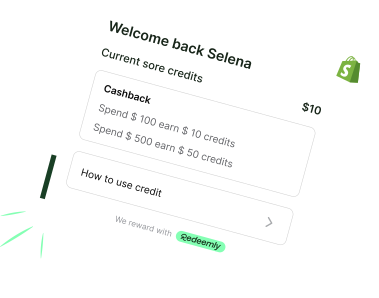
Redeemly makes implementing a native Shopify store credit program effortless. You can automate credit rewards based on customer spending, specific product purchases, or even for leaving a review. For example, a customer who spends $150 could automatically receive a $10 store credit in their account, encouraging them to return and spend that "free money" on their next order. This simple, effective loop is fundamental to increasing customer lifetime value. Discover how store credit can transform your retention marketing on redeemly.ai.
2. Personalization and Customization
Personalization is the art and science of tailoring customer experiences based on their individual data, including purchase history, browsing behavior, and stated preferences. Instead of treating your audience as a monolith, this strategy allows DTC brands to deliver hyper-relevant product recommendations, communications, and offers that resonate on a one-to-one level. This makes customers feel seen and understood, transforming a generic shopping journey into a uniquely personal one.
This approach is one of the most powerful customers retention strategies because it directly addresses the modern consumer's expectation for relevance. When a customer receives an email featuring products they actually want or sees a homepage curated to their tastes, the connection to the brand deepens. This level of detail builds trust and demonstrates that you are paying attention to their needs, making them far more likely to return.
How to Implement Personalization and Customization
Collect Zero-Party Data: Use quizzes, surveys, and preference centers to ask customers directly about their needs and interests. This first-hand information is a goldmine for creating accurate, high-impact personalized experiences.
Segment Your Audience: Start by grouping customers based on shared characteristics like purchase history (e.g., first-time buyers, VIPs) or browsing behavior. You can then tailor marketing campaigns specifically for these segments.
Leverage Dynamic Content: Use tools that can change website banners, product recommendations, and email content in real-time based on who is viewing it. For instance, show winter coats to a customer in a cold climate and swimwear to one in a warm region.
Key Insight: Effective personalization goes beyond using a customer's first name in an email. It's about using data to anticipate needs and reduce friction in the buying process, which directly boosts engagement and increases customer lifetime value.
How Redeemly Supercharges This Strategy
Redeemly enhances personalization by allowing you to award store credit based on specific customer actions and segments. For example, you can create an automated campaign that gives a surprise $10 store credit to customers who have purchased from a specific product category three or more times. The accompanying email can say, "We noticed you love our skincare line! Here's $10 to try our new serum." This hyper-targeted reward feels personal and valuable, powerfully encouraging that next purchase and boosting average order value.
3. Exceptional Customer Service
Exceptional customer service is the art of creating positive, memorable interactions that build deep-rooted trust and loyalty. It goes beyond simply resolving issues; it’s about providing responsive, empathetic, and solution-oriented support that makes customers feel valued and understood. This human-centric approach transforms a transactional purchase into a relational partnership, turning satisfied buyers into vocal brand advocates.

In a competitive DTC landscape, superior service is a powerful differentiator and one of the most effective customers retention strategies available. When a customer knows they can count on quick, helpful support, they are far more likely to return. A holistic approach to providing this level of care involves understanding the entire customer journey; a concept thoroughly explored in guides covering What is Customer Experience Management. This commitment to excellence ensures every touchpoint reinforces a customer's decision to choose your brand.
How to Implement Exceptional Customer Service
Empower Your Frontline Team: Give your support agents the autonomy to resolve issues without rigid scripts or constant escalations. Empowered employees, like those at Zappos, can make decisions that delight customers and build lasting goodwill.
Implement Comprehensive Training: Train your team not just on products, but on empathy, active listening, and problem-solving. A well-trained team can de-escalate friction and turn negative experiences into positive outcomes.
Be Proactive & Accessible: Offer support across multiple channels (chat, email, social media) and use tools to anticipate problems. Monitor social media for service issues and respond quickly to show you are listening.
Key Insight: A single positive service interaction can salvage a customer relationship and secure future revenue, often proving more valuable than any marketing campaign. Investing in service is a direct investment in your brand's reputation and customer lifetime value.
How Redeemly Supercharges This Strategy
Redeemly allows you to weaponize exceptional service by turning it into a tangible reward. When a support agent resolves a tricky issue or goes above and beyond, they can be empowered to instantly issue native Shopify store credit as a "thank you" or a "sorry." Instead of a generic discount code, this gesture feels personal and immediately encourages the customer to return and have a better experience, directly fueling your retention loop.
4. Community Building and Engagement
Community building transforms your customer base from a list of transactions into a network of brand advocates. This strategy involves creating dedicated spaces, like social media groups or online forums, where customers can connect with each other and your brand, fostering a deep sense of belonging. This emotional bond turns one-time buyers into loyal members who feel invested in your brand’s success, making it one of the most powerful customers retention strategies available.

This approach creates a powerful feedback loop where engaged customers provide valuable insights, generate user-generated content, and offer peer-to-peer support. For DTC brands, a strong community acts as a competitive moat, making it harder for rivals to poach your customers. It shifts the focus from price to shared values and experiences, building a foundation for long-term loyalty that discount codes alone cannot achieve.
How to Implement Community Building and Engagement
Establish a Dedicated Space: Create an exclusive Facebook group, a Discord server, or a dedicated forum on your website. This gives customers a clear place to gather, share, and interact.
Recognize and Reward Top Contributors: Identify your most active community members and reward their participation. Acknowledge their posts, feature their content, or offer them exclusive perks.
Facilitate Meaningful Connections: Host regular Q&A sessions, virtual events, or customer-led discussions. Encourage members to share their stories and experiences related to your products to strengthen peer-to-peer bonds.
Key Insight: A strong community generates authentic social proof and user-generated content that is far more persuasive than traditional marketing. These brand advocates organically attract new customers while reinforcing the loyalty of existing ones, directly boosting customer lifetime value.
How Redeemly Supercharges This Strategy
Redeemly can be used to directly fuel community engagement by rewarding valuable actions with store credit. You can automatically issue store credit to customers who join your community, participate in a challenge, or have their content featured. For example, reward your "Member of the Month" with a $25 store credit, giving them a tangible incentive to not only stay active but also to make their next purchase, creating a virtuous cycle of engagement and repeat business. Learn more about how store credit can strengthen customer relationships on redeemly.ai.
5. Proactive Customer Engagement
Proactive customer engagement is the art of reaching out to customers before they encounter a problem or think about leaving. Instead of waiting for them to contact support, this strategy involves initiating meaningful conversations, offering timely advice, and demonstrating your brand's ongoing value. It shifts the dynamic from reactive problem-solving to proactive value-building, which is crucial for long-term customer retention.
This approach is one of the most powerful customers retention strategies because it reinforces the customer’s purchase decision long after the initial transaction. By sending usage tips, educational content, or personalized check-ins based on their behavior, you keep your brand top-of-mind and show that you are invested in their success. This consistent, value-added communication builds trust and significantly reduces churn by addressing potential issues before they arise.
How to Implement Proactive Customer Engagement
Map Key Journey Moments: Identify critical points in the customer lifecycle, such as 30 days post-purchase or after their second order. Use these milestones as triggers for automated, personalized outreach that offers help or introduces new products.
Use Behavioral Triggers: Move beyond simple calendar-based emails. Send messages based on customer actions, like browsing a specific category multiple times without purchasing or reaching a certain spending threshold.
Educate and Add Value: Don’t just sell. Send content that helps customers get more value from their purchases, such as a video tutorial for a new skincare product or a style guide for a piece of apparel they bought.
Key Insight: Proactive engagement turns one-time buyers into repeat customers by maintaining a relationship between purchases. A simple, well-timed message can prevent a customer from forgetting about your brand and seeking alternatives for their next purchase.
How Redeemly Supercharges This Strategy
Redeemly enhances proactive engagement by giving you a compelling reason to reach out. Instead of a generic "checking in" email, you can send a personalized message notifying a customer they've just earned a surprise store credit reward for their loyalty. For example, you could proactively gift $5 in store credit to customers who haven't purchased in 60 days, giving them a powerful, margin-friendly incentive to return. This creates a positive touchpoint that drives immediate action and a higher average order value on their next purchase. Explore more ways to build a strong client engagement strategy on redeemly.ai.
6. Feedback Loops and Continuous Improvement
Actively listening to your customers and acting on their input is one of the most powerful customers retention strategies available. A systematic feedback loop involves collecting, analyzing, and implementing customer suggestions, which demonstrates that you value their partnership beyond the transaction. This process turns customers into co-creators, fostering a deep sense of loyalty and commitment to your brand’s success.
This strategy builds immense trust by showing customers their voices directly shape your products and services. Brands like LEGO with its LEGO Ideas platform and Salesforce with its IdeaExchange have proven that involving the community in product development creates an unbreakable bond. When customers see their suggestions come to life, they feel heard and respected, making them far more likely to remain loyal advocates for your brand.
How to Implement a Customer Feedback Loop
Establish Multiple Channels: Don't rely on a single method. Use a mix of post-purchase surveys, social media polls, customer interviews, and product reviews to gather diverse insights.
Close the Loop Publicly: It’s not enough to just collect feedback; you must communicate the changes you've made. Share updates via email newsletters or a public roadmap, explicitly stating, "You asked, we listened."
Prioritize and Act: Analyze feedback to identify common themes and prioritize changes based on customer impact and business goals. Involve customers in beta testing to validate new features before a full rollout.
Key Insight: A strong feedback loop turns customer service from a cost center into a value creation engine. Every piece of feedback is a free consultation on how to improve your product, reduce churn, and increase customer lifetime value.
How Redeemly Supercharges This Strategy
Redeemly helps you reward the valuable feedback that drives your business forward. Instead of generic thank-you notes, you can automatically issue Shopify native store credit to customers who complete a detailed survey or leave a product review. For instance, you can set up a rule to grant a $5 store credit to any customer who provides feedback via a post-purchase survey. This not only incentivizes participation but also gives them a tangible reason to return, turning their valuable insight directly into their next purchase. Explore how to build these reward cycles at redeemly.ai.
7. Strategic Account Management
Strategic account management involves dedicating specialized resources to your highest-value customers, transforming key accounts from simple transactions into strategic partnerships. While often associated with enterprise B2B models, DTC brands can adapt this concept to create a "VIP" or "Concierge" service for their top spenders. This approach ensures your most important customers receive personalized attention, proactive support, and a direct line of communication, solidifying their loyalty and maximizing their lifetime value.
This method is one of the most powerful customers retention strategies for brands with a distinct segment of high-revenue customers. Instead of generic marketing, these VIPs get a tailored experience that makes them feel truly valued. This could involve early access to new products, personalized styling advice, or exclusive event invitations, all designed to foster a deep, unbreakable connection that commodity competitors cannot replicate.
How to Implement Strategic Account Management
Define Your VIP Criteria: Clearly establish the threshold for what constitutes a high-value account. This could be based on lifetime spending (e.g., customers who have spent over $2,000), purchase frequency, or a combination of metrics.
Assign a Dedicated Contact: Give these customers a specific person to contact for any needs. This humanizes your brand and provides a seamless, high-touch service experience.
Create Account-Specific Growth Plans: Proactively engage VIPs with personalized recommendations and exclusive offers. Understand their purchase history and anticipate their future needs to guide them toward new products they will love.
Key Insight: Strategic account management fundamentally shifts the focus from acquiring many new customers to maximizing the potential of your existing best ones. The 80/20 rule often applies, where a small percentage of your customers drive a majority of your revenue, making them worthy of a disproportionate investment.
How Redeemly Supercharges This Strategy
Redeemly helps you operationalize a VIP program with ease. You can create a customer segment for your top spenders and automatically reward them with exclusive, high-value store credit that isn't available to other customers. For instance, a "Gold Tier" customer could automatically receive a $50 store credit bonus every quarter. This acts as a tangible, high-value perk that reinforces their elite status and keeps them actively engaged with your brand, driving both AOV and long-term loyalty. Learn how to build elite customer tiers at redeemly.ai.
8. Win-Back and Re-engagement Campaigns
Even the best brands lose customers. A win-back campaign is a targeted marketing initiative designed to re-engage inactive or churned customers and bring them back into the fold. Instead of letting this valuable segment drift away, you proactively reach out with personalized incentives, reminding them of the value you offer and making it easy for them to return. This is one of the most cost-effective customers retention strategies, as re-engaging a past customer is significantly cheaper than acquiring a new one.
This strategy works because it acknowledges the previous relationship and addresses the reasons for churn head-on. By segmenting your inactive audience, you can tailor your messaging, whether it's highlighting new product improvements or offering a compelling reason to make another purchase. For Shopify brands, this means turning potential lost revenue into a second wave of engagement and loyalty, directly boosting customer lifetime value.
How to Implement a Win-Back Campaign
Segment Your Inactive Audience: Don't treat all lapsed customers the same. Group them by their past purchase history, time since last purchase (e.g., 60, 90, 180 days), or engagement level to create highly relevant offers.
Personalize Your Outreach: Use their name and reference their past purchases. A message like, "We noticed you haven't restocked your favorite coffee blend" is far more effective than a generic "We miss you" email.
Offer a Compelling, Margin-Friendly Incentive: Avoid deep discounts that devalue your brand. A targeted store credit offer feels like a personal gift and encourages them to browse your store to spend their "free money."
Key Insight: The timing of your win-back campaign is crucial. Trigger automated campaigns based on specific inactivity milestones. This ensures you're reaching out at the optimal moment to reignite interest before the customer is lost for good.
How Redeemly Supercharges This Strategy
Redeemly can automate your win-back campaigns by issuing store credit to inactive customers. You can set up a rule to automatically send an email with a $15 store credit to any customer who hasn't made a purchase in 90 days. This creates a powerful, low-friction incentive for them to return and complete a new order, often spending more than the credit's value and increasing their AOV. Learn how to re-engage customers with automated store credit at redeemly.ai.
9. Value Delivery and Product Adoption
Effective customer retention begins the moment a customer makes their first purchase. Value delivery and product adoption focus on ensuring customers quickly and successfully experience the core benefits of your products. By guiding them through onboarding, providing education, and optimizing their initial usage, you prove your product's value immediately, which is one of the most powerful customers retention strategies for reducing early churn.
When customers understand how to get the most out of their purchase, they feel confident and satisfied, making them far more likely to become repeat buyers. This strategy, popularized by SaaS companies like Slack and HubSpot, is highly effective for DTC brands selling complex or multi-step products, like skincare routines or specialized hobby equipment. It transforms a simple transaction into a successful customer experience, laying the groundwork for long-term loyalty.
How to Improve Value Delivery and Product Adoption
Create Quick-Start Guides: Include simple, visually appealing guides with your products that highlight the first few critical steps. This could be a printed card, a QR code linking to a video, or an automated email sequence.
Offer Self-Service Resources: Develop a comprehensive knowledge base with tutorials, FAQs, and best practices. A customer who can find their own answers is an empowered and satisfied customer.
Track Time-to-First-Value: Measure how long it takes for a new customer to achieve their first "win" with your product. For a skincare brand, this might be completing their first full routine. Use this metric to optimize your onboarding process.
Key Insight: The goal is to shrink the time between purchase and gratification. The faster a customer experiences the "aha!" moment and sees the value you promised, the more invested they become in your brand, leading directly to higher lifetime value.
How Redeemly Supercharges This Strategy
Redeemly can incentivize and reward customers for engaging with your educational content. You can automatically award native Shopify store credit to customers who complete key adoption steps, such as watching a tutorial video or registering their product. For example, a customer who buys a coffee machine could receive $5 in store credit after watching the "Perfect First Brew" video guide. This encourages them to learn, ensures they have a great initial experience, and provides a compelling reason to return for their next purchase of coffee beans. Drive deeper product engagement at redeemly.ai.
10. Data-Driven Decision Making and Predictive Analytics
Relying on guesswork to retain customers is a costly mistake. Data-driven decision making uses customer analytics and machine learning to predict behavior, identify high-value segments, and proactively address churn risks. Instead of broad, reactive campaigns, this approach allows you to make precise, informed interventions that maximize your retention ROI and build a more resilient customer base.
This strategy is one of the most powerful customers retention strategies because it shifts you from reacting to problems to preventing them. By analyzing purchase history, browsing behavior, and engagement levels, you can identify customers who are likely to churn before they ever leave. This foresight allows you to deploy targeted offers or personalized outreach, turning a potential loss into a loyal, repeat buyer.
How to Implement a Data-Driven Retention Strategy
Start with Foundational Metrics: Before diving into complex models, master key metrics like purchase frequency, average order value (AOV), and customer lifetime value (LTV). These fundamentals provide the core data needed for more advanced predictions.
Segment Your Customer Base: Group customers based on their behavior and value. Create segments for "high-value loyalists," "at-risk but high-potential," and "new customers." This allows you to tailor your retention efforts for maximum impact.
Build Actionable Dashboards: Your data is only useful if it's easy to understand and act upon. Create simple dashboards that highlight key retention KPIs and flag at-risk segments, enabling your team to respond quickly and effectively.
Key Insight: Predictive analytics helps you allocate resources efficiently. Instead of offering a discount to every customer, you can focus your best incentives on segments with the highest predicted LTV or the greatest churn risk, protecting your margins while boosting loyalty.
How Redeemly Supercharges This Strategy
Redeemly bridges the gap between data insights and action. Once your analytics identify an "at-risk" customer segment, you can create an automated campaign that sends them a surprise store credit reward as a proactive incentive to return. For example, a customer who hasn't purchased in 60 days but previously had a high AOV could automatically receive a $15 credit, reigniting their engagement. This turns data into a direct, margin-friendly retention tool that drives both lifetime value and average order value. Learn more about how to calculate customer LTV and identify key segments on redeemly.ai.
Top 10 Customer Retention Strategies Comparison
Strategy | 🔄 Complexity | 💡 Resources | ⚡ Speed to impact | 📊 Expected outcomes | ⭐ Key advantages |
|---|---|---|---|---|---|
Loyalty Programs and Rewards | High — platform + ongoing ops | High — tech, incentives, marketing | ⚡ Medium — months to scale | 📊 Higher repeat purchases; measurable ROI | ⭐ Boosts LTV; captures customer data |
Personalization and Customization | High — AI, data pipelines | High — data infra + talent | ⚡ Medium — quick wins after setup | 📊 Higher conversion & engagement | ⭐ Relevance at scale; reduces churn |
Exceptional Customer Service | Medium–High — training & processes | Medium–High — staffing and training | ⚡ Fast — immediate impact on churn | 📊 Lower churn; stronger referrals | ⭐ Differentiator; builds trust & advocacy |
Community Building and Engagement | Medium — governance & moderation | Medium — community managers, platforms | ⚡ Slow — time to reach critical mass | 📊 Increased advocacy & UGC | ⭐ Deep emotional bonds; referral growth |
Proactive Customer Engagement | Medium — automation + triggers | Low–Medium — marketing automation tools | ⚡ Fast — timely triggers prevent churn | 📊 Higher adoption; fewer support tickets | ⭐ Cost-effective; preempts churn |
Feedback Loops and Continuous Improvement | Medium — collection + analysis | Low–Medium — survey/tools + analysts | ⚡ Medium — insights accumulate over time | 📊 Better product-market fit; prioritized fixes | ⭐ Builds trust; customer-driven improvements |
Strategic Account Management | High — bespoke plans & reviews | High — senior account teams | ⚡ Medium — relationship-led results | 📊 Higher retention & expansion for key accounts | ⭐ Maximizes enterprise revenue; early churn signals |
Win-Back and Re-engagement Campaigns | Low–Medium — targeted campaigns | Low–Medium — marketing & incentives | ⚡ Medium — campaigns can react quickly | 📊 Recovers lost revenue; variable retention | ⭐ Cost-effective vs new acquisition |
Value Delivery and Product Adoption | Medium–High — onboarding systems | Medium — content, training, analytics | ⚡ Fast — reduces early-stage churn quickly | 📊 Shorter time-to-value; higher feature adoption | ⭐ Improves retention by accelerating success |
Data-Driven Decision Making & Predictive Analytics | High — models & infra | High — data engineers & scientists | ⚡ Medium — model build & validation time | 📊 Early risk detection; optimized spend allocation | ⭐ Enables precise, ROI-driven interventions |
From Strategy to Action: Build Your Retention Engine Today
The journey from a single purchase to lifelong brand loyalty is paved with intentional, value-driven interactions. We've explored a comprehensive suite of customers retention strategies, from building personalized experiences and fostering vibrant communities to leveraging data for proactive engagement. Each approach, while distinct, points to a singular, powerful truth: sustainable growth for your Shopify store isn't about chasing the next new customer; it's about deeply investing in the ones you already have.
The most critical takeaway is the shift in mindset required for modern e-commerce success. Instead of relying on the short-term, margin-eroding rush of discount codes and complex point systems, the focus must be on creating genuine, lasting value. This is where the strategic use of native Shopify store credit becomes a game-changer. It transforms your rewards from a simple transaction into a tangible asset for the customer, encouraging them to return and reinvest in your brand. This simple switch directly fuels higher Lifetime Value (LTV) and Average Order Value (AOV), the two north-star metrics for any thriving DTC business.
Your Blueprint for Building a Retention Powerhouse
Viewing these ten strategies can feel overwhelming, but progress is about focused action, not simultaneous execution. The goal isn't to implement everything at once, but to build a robust retention engine, piece by piece. Start by identifying the biggest opportunity or pain point in your current customer journey.
Is your post-purchase experience lacking? Start with Exceptional Customer Service and implement a proactive feedback loop.
Do your customers feel disconnected? Focus on Community Building to create a space for shared identity and engagement.
Are you struggling with silent churn? Launch a targeted Win-Back and Re-engagement Campaign using store credit as a compelling, profit-safe incentive.
By choosing one or two areas to master, you create a foundation for more advanced tactics later. For additional insights on practical steps to retain customers, refer to these 10 actionable churn reduction strategies, which offer complementary perspectives on keeping your customer base engaged and loyal. Remember, every small improvement in your retention rate has an exponential impact on your bottom line.
The Future of Loyalty is Simple, Profitable, and Integrated
Ultimately, the most effective customers retention strategies are those that feel effortless for the customer and are profitable for your business. The elegance of a store credit-based system is its simplicity. It’s a clear, intuitive value proposition that removes friction and strengthens the customer's commitment to your brand ecosystem. It says, "We value you, and we want you to be a part of our future."
Don't let analysis paralysis hold you back. The strategies outlined in this guide are not just theories; they are actionable blueprints waiting to be customized for your brand. The tools are available, the path is clear, and your customers are waiting to be wowed. The time to start building deeper, more profitable relationships is now.
Ready to replace confusing points and margin-killing discounts with a powerful, native Shopify loyalty solution? Discover how Redeemly uses store credit to boost LTV and AOV, turning one-time buyers into lifelong fans. Start building your retention engine today with Redeemly.


Join 7000+ brands using our apps