10 Profit-First Account Retention Strategies for Shopify Brands in 2025
Dec 20, 2025
|
Published
In the competitive world of Shopify and DTC, acquiring a customer is just the beginning. The real challenge, and the greatest opportunity, lies in turning that first purchase into a long-term, profitable relationship. Many brands fall into the trap of using margin-eroding discounts and complex points systems, believing it's the only way to keep customers coming back. This endless cycle of promotions can train your audience to wait for sales, shrinking your profitability and lifetime value (LTV).
But what if there was a better, more sustainable way to foster genuine loyalty? This guide delivers a new playbook of 10 powerful, margin-safe account retention strategies designed to increase customer lifetime value (LTV) and average order value (AOV) without sacrificing your profits. We will move beyond the outdated model of points and coupons, placing a strong emphasis on tactics that build authentic customer relationships.
You will learn how to implement practical strategies that create real value, with a special focus on replacing confusing loyalty schemes with the simplicity and power of Shopify native store credit. This approach acts like cash in your customer's account, providing a clear, tangible incentive that encourages repeat business and boosts average order value.
Prepare to shift your focus from chasing one-off sales to building a resilient, profitable customer base that fuels predictable growth. These aren't just abstract ideas; they are actionable steps you can take today to transform your retention marketing and secure your brand’s future. Let's dive into the strategies that will help you keep the customers you worked so hard to win.
1. Shift from Discounts to a Store Credit Loyalty Program
Constant discounting trains customers to wait for sales, eroding your margins and brand value. A more sophisticated account retention strategy involves replacing coupon codes and confusing point systems with a cash-like store credit loyalty program. This system rewards customers with tangible credit based on their spending, which they can easily apply to future purchases, directly increasing lifetime value (LTV).
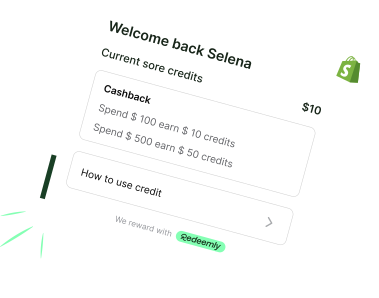
Instead of a complex points system (e.g., 100 points = $1), customers earn a straightforward dollar value, like "$10 in store credit for every $100 spent." This clarity makes the reward feel more immediate and valuable, encouraging shoppers to increase their cart size to reach the next reward threshold and driving up your average order value (AOV).
How to Implement a Store Credit Program
A store credit program is one of the most effective account retention strategies because it creates a powerful, built-in incentive for customers to return and spend more.
Automate the Process: Use a Shopify-native app like Redeemly to automate the entire workflow. These tools handle credit issuance, balance tracking, and redemption seamlessly within the Shopify checkout, creating a frictionless customer experience that boosts conversion.
Promote It Everywhere: Don't hide your loyalty program. Feature it prominently with a dedicated landing page and banners on your homepage. Use on-site widgets to show shoppers in real-time how much they've earned and how close they are to their next reward, gamifying the path to a higher AOV.
Integrate with Marketing: Use post-purchase emails to confirm the credit a customer just earned. Segment your email list to send targeted campaigns reminding customers of their available balance, turning a simple notification into a compelling reason to shop again and increase their LTV.
Pro Tip: Frame the reward as "cash" or "gift credit" in your marketing. This language enhances its perceived value and makes customers feel like they are using gifted money rather than a simple discount, protecting your brand's premium positioning.
2. Loyalty Programs and Rewards
Traditional loyalty programs, with their confusing points and tiered statuses, often feel complex and discount-driven. A more direct and profitable approach to customer loyalty is to offer structured incentives built around Shopify native store credit. This method provides tangible, immediate value, encouraging repeat engagement and higher spending without cheapening your brand with constant sales.
This strategy focuses on creating a sense of rewarded value. Instead of just offering a 10% off coupon that erodes margins, you provide members with a clear path to earning spendable credit. This non-discount reward system builds a stronger financial incentive to return, making customers feel valued for their loyalty and directly contributing to higher lifetime value.

How to Implement a Modern Loyalty Program
Building an effective loyalty program is one of the most powerful account retention strategies because it creates a clear reason for customers to choose your brand over competitors.
Simplify with Store Credit: Ditch confusing point conversions (e.g., "500 points = $5"). Implement a Shopify native store credit system where the value is clear: "$10 earned for every $100 spent." This transparency is key to driving participation and increasing average order value.
Offer Experiential Rewards Alongside Credit: Go beyond transactions. Provide value that can't be bought, like invitations to VIP events or a first look at new arrivals. Use store credit as the primary financial reward and experiential perks to deepen the emotional connection.
Create a Tiered Structure: Implement a tiered system (e.g., Bronze, Silver, Gold) that rewards higher spending with increasingly valuable benefits, such as a higher store credit earning rate. This gamifies the shopping experience, motivating customers to increase their lifetime value (LTV) to unlock the next level of rewards. For more inspiration, explore these powerful examples of loyalty programs.
Pro Tip: Use your store credit program as the foundation. Customers earn cash-like credit on every purchase, while higher tiers unlock exclusive non-monetary perks. This gives them both the tangible value of credit and the emotional connection of a VIP club, maximizing LTV and AOV.
3. Proactive Customer Support and Success
Reactive support solves problems as they happen, but proactive support prevents them from happening in the first place. This advanced approach involves anticipating customer needs and reaching out before they are forced to contact you. It transforms customer service from a cost center into a powerful retention engine, building deep loyalty and trust by demonstrating that you care about their success.
By monitoring customer behavior and providing timely educational resources, you can guide users toward achieving their goals with your product. This is common in SaaS with models like HubSpot’s dedicated success teams, but DTC brands can apply the same principles. For example, a skincare brand can send tips on building a routine after a first purchase, ensuring customers get the best results and are more likely to repurchase, thus boosting LTV.
How to Implement a Proactive Support System
Investing in proactive outreach is one of the most impactful account retention strategies because it directly addresses the root causes of churn and dissatisfaction, turning potentially negative experiences into positive brand interactions.
Implement Customer Health Scoring: Use your data to identify customers who may be at risk of churning. Look at factors like login frequency, purchase history, or support ticket submissions. Trigger automated, personalized check-in emails when a customer’s "health score" drops below a certain threshold.
Create Proactive Outreach Triggers: Set up automated messages based on key customer actions. For example, send a follow-up email with a video tutorial a week after a customer buys a complex product, or use a tool like Intercom to message a user who seems stuck on a specific page.
Invest in Team Training: Equip your support staff with the tools and training they need to be successful. This includes deep product knowledge and the soft skills required to understand customer goals. Platforms like Zendesk can help manage these interactions and track customer satisfaction over time.
Pro Tip: Use post-purchase surveys to gather initial feedback, but follow up with personalized outreach. If a customer gives a low Net Promoter Score (NPS), have a support specialist reach out personally to understand their issue. This high-touch approach can often turn a detractor into a lifelong advocate.
4. Regular Communication and Engagement
Staying top-of-mind is crucial for retention, but generic marketing blasts can quickly lead to unsubscribes. Effective communication involves delivering consistent, valuable content that educates, informs, and entertains your customers. This approach reinforces brand value and builds a relationship that extends beyond transactional interactions, turning one-time buyers into a loyal community.
Instead of just announcing sales, use channels like email and SMS to share user-generated content, behind-the-scenes stories, or helpful tips related to your products. This strategy makes customers feel like insiders, strengthening their connection to your brand and encouraging them to engage between purchases. Consistent, high-value contact is one of the most fundamental account retention strategies for driving repeat business and increasing lifetime value.
How to Implement Regular Communication and Engagement
A well-planned communication calendar transforms marketing from a cost center into a powerful retention engine that nurtures customer relationships and drives lifetime value (LTV).
Segment and Personalize: Use platforms like Klaviyo or Mailchimp to segment your audience based on purchase history, engagement levels, and browsing behavior. Send a targeted campaign to customers who bought a specific product with tips on how to use it, rather than a generic newsletter.
Create a Content Calendar: Plan your communications in advance to ensure a consistent schedule. Mix promotional content with non-promotional value, such as blog posts, tutorials, or industry news, to keep your audience engaged without causing fatigue.
Leverage Multiple Channels: Don't rely solely on email. Use SMS for time-sensitive alerts, like a reminder about expiring store credit, and social media to foster community and share dynamic content. This multi-channel approach keeps your brand visible wherever your customers are.
Pro Tip: Your communication should always have a clear purpose. Before sending any message, ask yourself: "What value does this provide the customer?" This focus ensures every touchpoint strengthens the relationship rather than just adding to the noise. For deeper insights into fostering loyalty, exploring client communication best practices can provide valuable strategies.
5. Turn Customer Feedback into Action
Listening to your customers is a start, but actively implementing their feedback is one of the most powerful account retention strategies available. This approach goes beyond simple surveys; it involves creating a system to collect, analyze, and visibly act on customer input. When customers see their suggestions shaping your products and services, they transform from passive buyers into loyal advocates who feel valued and invested in your brand's success.
This strategy builds a powerful emotional connection and a sense of co-creation. Brands like Figma and Notion have built cult-like followings by making their product roadmaps transparent and directly integrating community feedback. This demonstrates respect for the customer's experience, fostering a level of trust and loyalty that simple discounts can never achieve, which directly improves LTV.
How to Implement a Customer Feedback Loop
Building a feedback loop shows you value your customers' opinions more than just their wallets, making it a cornerstone of effective account retention.
Systematize Feedback Collection: Don't wait for customers to complain. Actively solicit feedback using multiple channels like post-purchase surveys, dedicated feedback portals (e.g., UserVoice), and social media polls. Make it easy and inviting for customers to share their thoughts.
Create a Transparent Roadmap: Share your product development or improvement plans publicly. Use a tool to show which features are being considered, which are in progress, and which have been launched based on customer requests. This transparency builds excitement and anticipation for future purchases.
Close the Loop: This is the most critical step. When you implement a change based on feedback, announce it publicly. Send targeted emails to the customers who requested that specific feature, thanking them for their contribution. This personal acknowledgment validates their input and reinforces their decision to shop with you.
Pro Tip: Prioritize feedback that aligns with your brand's strategic goals and has the potential for high impact. Focus on suggestions that can improve the experience for a large segment of your customer base to maximize the return on your development efforts.
6. Value-Added Content and Educational Resources
Beyond the transaction, the most durable brands build relationships by providing genuine value. One of the most effective account retention strategies is to become a trusted advisor through educational content. This involves creating resources like tutorials, webinars, and articles that help customers solve problems, master your products, and stay ahead of industry trends. By investing in their success, you create a powerful bond that transcends price.

This approach, popularized by B2B giants like HubSpot Academy and Salesforce Trailhead, is equally potent for DTC brands. Instead of just selling a product, you are selling an outcome. A skincare brand can offer tutorials on building a routine, while a coffee company can create guides on different brewing methods. This positions your brand as an indispensable resource, increasing lifetime value and making customers less likely to switch to a competitor.
How to Implement Value-Added Content
Educational content is a long-term play that nurtures a loyal community and elevates your brand above being a simple commodity.
Solve Customer Problems: Start by identifying the most common questions and pain points your customers face. Create a content calendar that addresses these issues directly through blog posts, video tutorials, or downloadable guides.
Use Multiple Formats: Cater to different learning styles by diversifying your content. Turn a popular blog post into a short video for social media or an in-depth webinar for your most engaged subscribers. This maximizes reach and impact.
Promote and Integrate: Make your resources easy to find with a dedicated "Learn" or "Resources" section on your website. Use post-purchase email flows to share relevant content that helps customers get the most out of their new purchase, reinforcing their decision and building confidence.
Pro Tip: Gate your most valuable, in-depth content (like an exclusive masterclass or e-book) and offer access as a loyalty perk. This creates a sense of exclusivity and rewards your best customers with knowledge, an asset far more valuable than a 10% discount.
7. Community Building and User Communities
Loyalty isn't just transactional; it's emotional. Building a dedicated community transforms your customer base from a collection of individual buyers into a cohesive network of brand advocates. This strategy creates a space where customers can connect, share experiences, and receive peer-to-peer support, fostering a powerful sense of belonging that traditional marketing can't replicate.

When customers feel like part of an exclusive group, their relationship with your brand deepens, leading to higher lifetime value (LTV) and organic word-of-mouth marketing. Communities like Salesforce's Trailblazer Community or dedicated brand subreddits prove that when you give customers a platform, they will build powerful connections that reinforce their purchasing decisions and insulate them from competitor offers.
How to Implement a User Community
A thriving user community is one of the most durable account retention strategies because it creates a valuable, self-sustaining ecosystem around your brand.
Choose the Right Platform: Start where your customers already are. This could be a private Facebook Group, a dedicated Slack or Discord server, or a forum built directly into your Shopify store. The key is to make it accessible and easy to join.
Establish Clear Guidelines: Hire or assign a dedicated community manager to set the tone, enforce rules, and facilitate conversations. Clear guidelines ensure the space remains positive, supportive, and on-brand, preventing it from becoming a channel for unmanaged complaints.
Offer Exclusive Perks: Drive engagement by providing community-only benefits. This can include early access to new products, exclusive content, or direct Q&A sessions with your founders. These perks make membership feel valuable and encourage active participation.
Pro Tip: Recognize and reward your most active members. Highlight user-generated content, create a "super user" or ambassador status, and offer them special perks. This not only rewards their loyalty but also encourages others to become more involved in the community.
8. Win-Back Campaigns for At-Risk Customers
Proactively re-engaging customers who are drifting away is far more cost-effective than acquiring new ones. A win-back campaign is a targeted marketing effort designed to reactivate customers showing signs of churn, such as a sudden drop in purchase frequency. By focusing on lifetime value, this strategy turns a potential loss into a renewed revenue opportunity.
Instead of waiting for an account to go cold, this approach uses data to identify at-risk customers early. By deploying personalized outreach with a compelling offer—like a surprise store credit—you can remind them of your brand's value and provide a strong reason to return. This is far more effective for increasing average order value than a simple discount code.
How to Implement a Win-Back Campaign
A well-executed win-back campaign is one of the most direct account retention strategies because it intercepts churn before it happens, protecting your customer base and revenue stream.
Identify At-Risk Segments: Define what "at-risk" means for your business. This could be customers who haven't purchased in 90 days or haven't opened your last five emails. Use your CRM or email platform to create dynamic segments based on these triggers.
Craft a Compelling, Personalized Offer: Avoid generic "We miss you!" emails. Use purchase history to personalize the message. Instead of a margin-killing discount, offer a fixed-dollar store credit (e.g., "$15 to come back and shop"). This cash-like incentive encourages a full-price purchase, protecting margins and boosting AOV.
Automate the Outreach: Set up an automated email or SMS flow that triggers when a customer enters your at-risk segment. A simple three-part series can be highly effective: an initial gentle nudge, a follow-up with the store credit offer, and a final survey asking for feedback if they still don't engage.
Pro Tip: For high-value customers, automate an internal alert for your customer service team to conduct personal outreach. A phone call or a personalized video message can be incredibly effective at retaining a top-tier account that a standard email might miss.
9. Pricing Flexibility and Account Customization
A rigid, one-size-fits-all pricing model can be a major source of churn. Customers whose needs change or budgets fluctuate may leave simply because there is no plan that fits them. Offering flexible pricing, custom plans, and adaptable service tiers is a powerful account retention strategy that meets customers where they are, accommodating their unique lifecycle stages and evolving requirements.
This approach, popularized by SaaS leaders like Slack and Salesforce, reduces friction and creates a scalable relationship. Instead of forcing customers into a box, you provide a clear path for them to upgrade, downgrade, or customize their experience as their needs change. This builds long-term loyalty by demonstrating that you value their business beyond a single transaction, directly impacting their lifetime value (LTV).
How to Implement Flexible Pricing
Implementing pricing flexibility is one of the most proactive account retention strategies because it addresses a core reason for churn before it happens: a mismatch between value and cost.
Create Clear Value Tiers: Structure your plans so the value proposition of each tier is obvious. A common model is a free or basic tier for entry-level users, a standard tier for the majority, and a premium or enterprise tier with advanced features and dedicated support.
Enable Self-Service Plan Management: Allow customers to easily switch between plans directly from their account dashboard without needing to contact support. This frictionless experience empowers customers and reduces administrative overhead.
Offer Usage-Based or "Pay-As-You-Go" Options: For certain products or services, a usage-based model like the one used by Amazon Web Services (AWS) can be highly effective. This ensures customers only pay for what they use, making your service feel fair and transparent.
Pro Tip: Use your pricing tiers to guide customers toward higher-value plans. Clearly highlight the benefits of upgrading, such as exclusive features, priority support, or access to new products, turning your pricing page into a powerful upsell tool that boosts AOV.
10. Long-Term Relationship Management and Account Growth
True customer loyalty isn't just about repeat transactions; it's about building a partnership that grows over time. Long-term relationship management shifts the focus from one-off sales to nurturing your most valuable customer accounts as strategic assets. This approach involves treating top customers like partners, proactively investing in their success to ensure they grow alongside your brand.
This strategy is one of the most powerful account retention strategies for high-value cohorts, transforming customers from passive buyers into brand advocates. By understanding their goals and aligning your offerings to help them achieve those goals, you create an unbreakable bond that competitors can't replicate with simple discounts. This deepens the relationship and significantly expands customer lifetime value.
How to Implement Long-Term Relationship Management
For DTC brands, this means identifying and investing in your VIP customers or B2B clients to foster mutual growth and loyalty.
Assign Dedicated Support: For your top 5% of customers or key wholesale accounts, assign a dedicated point of contact. This person acts as a concierge, providing personalized service, early access to products, and proactive support.
Conduct Regular Business Reviews: Schedule quarterly check-ins with your highest-value customers. Use these sessions to gather feedback, understand their evolving needs, and identify opportunities where your products can deliver more value.
Develop Mutual Success Plans: Work with these key accounts to set shared goals. If they are an influencer, how can you help them grow their audience? If they are a B2B partner, what product bundles would increase their sales? Track progress and celebrate wins together.
Create Executive-Level Touchpoints: Have a founder or executive reach out personally to your top customers periodically. A simple, personalized email or call can make a customer feel exceptionally valued and solidify their long-term commitment.
Pro Tip: Use your customer data to identify potential VIPs early. Look for customers with a high AOV and repeat purchase frequency, even if their total spend isn't the highest yet. Nurturing these accounts proactively is key to maximizing their potential LTV. You can learn more about how this impacts your brand's growth when you increase customer lifetime value.
10-Point Account Retention Strategy Comparison
Strategy | 🔄 Implementation Complexity | ⚡ Resource Requirements | 📊 Expected Outcomes | 💡 Ideal Use Cases | ⭐ Key Advantages |
|---|---|---|---|---|---|
Personalized Customer Experience | High — complex data pipelines & ML models | High — data infra, analytics, privacy/compliance | ↑ engagement, ↑ LTV, ↓ churn (≈20–30%) | Large B2C platforms, e‑commerce, media | Highly effective differentiation; tailored UX |
Loyalty Programs and Rewards | Medium — program design & integrations | Medium — budget for rewards, ops & platform | ↑ repeat purchases, ↑ retention | Retail, F&B, subscription services, frequent buyers | Clear incentives to return; easy to communicate |
Proactive Customer Support & Success | Medium–High — processes + automation + training | High — trained staff, support tooling, 24/7 channels | ↓ churn (≈15–25%), ↑ CSAT, upsell opportunities | SaaS, enterprise services, high-touch products | Prevents issues early; strengthens relationships |
Regular Communication & Engagement | Low–Medium — content planning & segmentation | Low–Medium — content team, email/in‑app tools | Keeps brand top-of-mind; ↑ open/CTR when relevant | Ecommerce, SaaS, content brands, SMBs | Cost-effective, scalable way to maintain contact |
Customer Feedback & Implementation | Medium — collection, analysis, prioritization | Medium — research, product/PM time | Better product-market fit; increased trust & engagement | Product-led companies, SaaS, iterative products | Direct product insights; closes feedback loop |
Value-Added Content & Educational Resources | Medium — content production & distribution | Medium — creators, production, LMS/tools | ↑ adoption, ↓ support cost, authority building | Complex products, B2B SaaS, training-focused brands | Establishes expertise; enables self‑service |
Community Building & User Communities | Medium — platform + moderation & policy | Low–Medium — community managers, tooling | Peer support, advocacy, network effects | Developer tools, creative software, niche products | Low-cost scale; organic engagement & insights |
Win-Back Campaigns for At-Risk Customers | Medium–High — churn models + targeted campaigns | Medium — analytics, marketing offers & ops | Recover customers cost-effectively; variable ROI | Subscriptions, streaming, SaaS with churn signals | Cheaper than acquisition; reveals churn causes |
Pricing Flexibility & Account Customization | Medium–High — billing & policy complexity | Medium — billing systems, sales & support | Reduced friction, better conversion, lower involuntary churn | SaaS, enterprise, usage-variable services | Fits diverse budgets; improves retention & growth |
Long-Term Relationship Management & Account Growth | High — strategic programs, exec engagement | Very High — dedicated teams, senior resources | Significantly ↑ LTV, predictable revenue, referrals | Enterprise accounts, high-value B2B clients | Deep partnerships; high-margin expansion opportunities |
Build Your Retention Engine for Sustainable Growth
Navigating the competitive landscape of ecommerce requires more than just attracting new customers; it demands a deliberate, strategic focus on keeping the ones you already have. We've explored ten powerful account retention strategies, moving from personalized experiences and proactive support to community building and sophisticated win-back campaigns. The common thread weaving through each of these tactics is a fundamental shift in mindset: from transactional, discount-driven relationships to value-based, long-term partnerships. This is the cornerstone of sustainable growth.
The era of bleeding margins for the sake of a repeat purchase is over. Aggressive discount codes and complex, often confusing, points-based loyalty systems can devalue your brand and attract customers who are loyal to the deal, not to you. The most forward-thinking Shopify and DTC brands are recognizing that true loyalty is earned, not bought. It's built on a foundation of trust, exceptional service, and consistent value that extends far beyond the initial transaction. This is where the true power of effective account retention strategies comes into play, transforming your customer base from a leaky bucket into a robust, self-sustaining ecosystem.
Key Takeaways: From Strategy to Execution
The journey to mastering customer retention is ongoing, but the principles outlined in this guide provide a clear roadmap. Let’s distill the most critical takeaways:
Prioritize Value Over Discounts: The most impactful shift you can make is moving away from margin-eroding discounts. Instead, focus on providing tangible value through rewards like native Shopify store credit, which encourages repeat business without cheapening your products. It’s a direct, transparent way to reward loyalty that benefits both the customer and your bottom line.
Embrace Proactive Engagement: Don't wait for customers to have a problem. Proactive customer support, regular communication, and value-added content create a positive feedback loop. This keeps your brand top-of-mind and demonstrates that you are invested in their success and satisfaction long after they click "buy."
Listen, Adapt, and Implement: Your customers are your greatest source of insight. Actively soliciting feedback and, more importantly, acting on it shows that you value their opinion. This transforms customers into co-creators of your brand’s future, fostering an unbreakable sense of ownership and loyalty.
Your Actionable Next Steps
Reading about these strategies is the first step; implementation is what drives results. Start by auditing your current retention efforts. Where are the biggest gaps? Identify one or two strategies from this list that you can implement immediately. Perhaps it’s launching a simple feedback survey or, even better, replacing your confusing discount strategy with a straightforward store credit program. For those looking to dive deeper into the mechanics of keeping customers engaged, it's helpful to explore frameworks specifically designed for this purpose. To delve deeper into actionable strategies for reducing customer churn, refer to a proven retention playbook for creators.
Ultimately, building a powerful retention engine is not a series of isolated tactics but a cohesive philosophy that should permeate every aspect of your business. It's about understanding that every interaction is an opportunity to strengthen a relationship. By focusing on increasing Lifetime Value (LTV) and Average Order Value (AOV) through these margin-safe account retention strategies, you are not just surviving in the competitive DTC world; you are building a resilient, profitable brand poised for long-term success. The future belongs to the brands that don't just sell products, but build lasting connections.
Ready to replace complex points and margin-killing discounts with the simplest, most effective retention tool on Shopify? Redeemly helps you launch a native store credit program in minutes, boosting LTV and delighting your customers. See how easy it is to build a more profitable retention engine at Redeemly.


Join 7000+ brands using our apps