Maximize Lifetime Value with Shopify Store Credit
Dec 12, 2025
|
Published
Feel like you're stuck on a treadmill of discount codes, constantly slashing prices just to make a sale? It's a common trap for Shopify stores. Many are now breaking free by rethinking customer loyalty, moving away from one-off coupons and confusing point systems toward something far more profitable: native Shopify store credit.
The Hidden Power Of Store Credit Over Discounts
It's easy to get addicted to promotions. That familiar "20% OFF" banner feels like the only way to drive sales. But this strategy often just attracts bargain hunters who are gone as soon as the sale ends, and it steadily eats away at your profit margins.
Imagine a different approach. What if the rewards you gave customers didn't just vanish after one purchase? What if they created a powerful reason for them to come back and spend more? That's the real magic of a native Shopify store credit system, a tool designed to boost both average order value and customer lifetime value.
A New Way of Thinking About Customer Value
A discount code just lowers the price of a single cart. Store credit, on the other hand, acts more like a dedicated savings account for your brand. It's real, tangible value that a customer holds, which makes them feel far more invested in your store. That simple psychological shift completely changes their buying behavior.
A discount is a transaction; store credit is a relationship. By giving customers a balance to spend, you're not just closing a sale—you're opening the door for their next one and increasing their lifetime value.
This strategy is built around two metrics absolutely critical for long-term, sustainable growth:
Average Order Value (AOV): Store credit naturally encourages customers to spend more. Someone with $10 in their account is much more likely to pull the trigger on a $60 item than they would with a simple 15% off coupon. They're already partway there, boosting your AOV on their very next purchase.
Customer Lifetime Value (LTV): By keeping that value locked inside your store's ecosystem, you create a powerful magnetic pull for repeat purchases. The credit from their first order brings them back for a second, and the rewards they earn on that one bring them back for a third. It’s a profitable loyalty loop that maximizes LTV.
Why This Clicks for Shopify Stores
For merchants on Shopify, the beauty of this model is how simple and seamless it is. You can finally ditch those confusing point systems where customers are left wondering, "Okay, but what are 1,000 points actually worth?" Instead, you offer clear, cash-like value that's dead simple to understand and even easier to use at checkout.
This guide will show you exactly how stores are flipping the script on rewards. We're going to frame store credit not as a tool for refunds, but as a proactive engine for driving up AOV and LTV—building a healthier, more profitable business right within the Shopify ecosystem.
Why The Old Rewards Playbook Is Broken
For decades, we’ve been taught that customer loyalty comes from two main tactics: flashy discount codes and complicated points systems. They can certainly drive a quick sale, but they often do more harm than good. You end up training customers to wait for the next 20% off coupon, creating a relationship that feels transactional and actively hurts your customer lifetime value.
The problem with discounts is that they're a one-and-done deal. A customer gets their instant gratification, and the interaction ends there. There’s no built-in reason for them to come back. Points systems, on the other hand, often create a different headache: confusion. Customers are left scratching their heads, trying to figure out what 1,000 points actually gets them. It's a layer of friction that gets in the way of a smooth shopping experience.
The Power of Real, Tangible Value
This is where native Shopify store credit changes the game entirely. It’s not an abstract number or a temporary price cut—it’s a real balance that feels like money in your customer’s pocket. Think of it as a dedicated savings account for your brand. It gives them a concrete reason to return.
That psychological shift is everything.
A customer with a $10 store credit balance sees your products differently. That $50 shirt isn't $50 anymore; in their mind, it's only $40. This "found money" effect makes the purchase feel less like an expense and more like a smart buy, making them far more likely to click "Add to Cart."
This straightforward approach builds a much stronger connection. Instead of decoding conversion rates, customers see a clear, cash-like reward they can actually use. It makes coming back to shop feel natural and easy, which is a powerful way to boost both average order value and customer lifetime value. You can dive deeper into this concept in our guide to powerful retention marketing strategies.
This chart really brings the difference to life. Discounts are a quick hit, while store credit creates a rewarding cycle that keeps customers coming back.

As you can see, store credit is built for the long haul, keeping value locked inside your brand’s ecosystem instead of letting it walk out the door.
To really understand the trade-offs, it helps to see these incentive models side-by-side. Each has its place, but their impact on your bottom line and customer relationships varies dramatically.
Store Credit vs Discounts vs Points Systems
Feature | Store Credit (Shopify Native) | Discount Codes | Points System |
|---|---|---|---|
Customer Experience | Simple and intuitive. Feels like real money. | Instant gratification, but can feel transactional. | Often confusing. Requires mental math to see value. |
Impact on Margins | Protects margins. Cost is deferred until redemption. | Direct, immediate hit to profit on every use. | Cost is deferred, but can devalue the brand over time. |
Retention Power | High. Creates a strong incentive for a second purchase. | Low. Encourages one-off purchases, not loyalty. | Medium. Can work, but complexity is a major barrier. |
Cash Flow Impact | Positive. Acts as a liability, not an immediate expense. | Negative. Direct cash-out from every discounted sale. | Neutral to positive, as the liability is deferred. |
Implementation | Seamless with native Shopify features. | Easy to create and distribute widely. | Often requires third-party apps and complex setup. |
Ultimately, a native Shopify store credit system offers a balanced, sustainable model that benefits both the customer and your business by focusing on long-term value.
It's a Smarter Way to Protect Your Margins
Beyond creating a better customer experience, the financial argument for store credit is impossible to ignore. Every time a discount is used, it’s a direct cut from your profit on that sale. Period. Store credit works completely differently.
Store credit sits on your books as a liability, not an immediate cost. It only hits your finances when a customer actually spends it, giving you much better control over cash flow and protecting your unit economics.
This isn't just a niche strategy anymore; it's becoming a core part of modern commerce. The market for store credit platforms has ballooned to USD 4.8 billion for a reason. The data shows that brands offering store credit see a 15-20% lift in repeat purchases, and those customers go on to spend 30-50% more each year.
By making the switch, you’re not just rewarding customers—you’re building a more resilient, profitable business. You’re turning one-time buyers into loyal fans and creating a predictable stream of revenue that you can count on. It’s a shift from chasing the next sale to investing in the lifetime value of every single customer.
How Store Credit Drives Higher AOV and LTV

Let's be honest—the whole point of a loyalty strategy is to see real, measurable growth. Store credit isn't just some fluffy, feel-good perk. It's a powerful financial lever that directly pumps up two of the most critical metrics for any Shopify brand: Average Order Value (AOV) and Customer Lifetime Value (LTV).
The magic here is all in the psychology. When a customer has $10 in store credit, they don't see it as a coupon. They see it as their money—cash they’ve already committed to your brand. This "found money" effect completely changes how they think about their next purchase.
Boosting Average Order Value Instantly
Once a customer has a credit balance, they’re wired to spend more. Why? Because they want to "use up" what feels like free money. Suddenly, a $50 shirt doesn't feel like a $50 purchase anymore. In their head, it's a $40 purchase, which feels far more reasonable and less like a splurge.
This subtle shift in thinking nudges them to add just one more thing to their cart or even upgrade to a premium product they might have otherwise skipped. The question in their mind changes from, "How much am I spending?" to, "How can I make the most of this credit?"
A 20% off coupon devalues the product. A $10 store credit devalues the cost, making the full-priced product feel like a bargain. That distinction is crucial for protecting your brand's perceived value while still driving a bigger sale.
This isn’t just a theory; it's a proven spending habit. In the United States, store credit has fundamentally shaped retail, fueling a surge in credit card accounts. This mirrors the growth of total credit card debt, showing just how effective private-label credit is at locking in loyalty. Globally, the market for platforms that issue store credit has hit USD 4.8 billion, with over 60% of major retailers now offering instant credit options.
Turning Customer Engagement Into Revenue
One of the best things about a Shopify store credit program is its flexibility. You can reward more than just purchases; you can start incentivizing the very actions that build a stronger community and brand. Each of these actions becomes a direct path to more revenue.
Here are a few smart ways stores with store credit turn engagement into sales:
Reward Product Reviews: Offer $5 in credit for every verified product review. This not only generates powerful social proof but also gives that customer an immediate reason to come back and spend their new balance.
Celebrate Customer Birthdays: Automatically send a $10 birthday credit. It’s a personal touch that builds goodwill and almost always leads to a purchase far larger than the credit amount.
Encourage Social Follows: Give a small amount of credit, maybe $2, for following your brand on Instagram or TikTok. It's a low-cost way to grow your audience while pulling them right back to your store.
Building Higher Customer Lifetime Value
While a higher AOV is an immediate win, the real long-term prize is the impact on LTV. Every time a customer earns credit, you're essentially pre-funding their next purchase. This creates a powerful loyalty loop that simple discounts could never replicate.
Picture the customer's journey:
First Purchase: They spend $80 and earn $8 in store credit.
The Nudge: A few weeks later, an email reminds them about their $8 balance that's "waiting for them."
Second Purchase: That reminder works. They come back and spend another $95 to use their credit, earning another $9.50 in the process.
This cycle keeps them coming back, systematically increasing your repeat purchase rate. By keeping that value locked inside your store's ecosystem, you stop revenue from leaking out to competitors and give customers a compelling reason to choose you, every single time.
To really maximize this, you need to think bigger. Developing robust omnichannel ecommerce solutions ensures a seamless experience everywhere your customer interacts with you. This cohesive approach solidifies your relationship, making your store their go-to choice and sending LTV through the roof.
Ready to Launch Your Shopify Store Credit Program?

Alright, let's get from theory to action. This is where the real growth starts. For Shopify merchants, rolling out a store credit program isn't some massive, code-heavy undertaking. It’s about making a smart, strategic decision using tools you already have to drive up both Average Order Value and Customer Lifetime Value. The aim is to build a system that feels like a breeze for your customers but works like a beast for your bottom line.
Forget those confusing point systems and margin-killing discounts. We're talking about a simple, powerful alternative: native Shopify store credit. This approach frames rewards as real, cash-like value in a customer's account—something far more compelling for shoppers and way healthier for your finances.
When you make this shift, you’re not just rewarding transactions. You're building a loyalty engine that creates genuine, lasting relationships with the people who buy from you.
Start with What Shopify Gives You
The foundation for your program is already built right into Shopify. The platform’s native gift card functionality is the perfect launchpad, especially for handling returns. Instead of refunding cash and watching that money walk out the door, you can offer a gift card that works just like store credit.
This is a huge first step in protecting your revenue. When a customer takes credit instead of cash, you've just turned a potential loss into a guaranteed future sale. It keeps that customer—and their spending—locked into your ecosystem, giving them a great reason to come back and find something new they'll love.
By using Shopify’s built-in tools for returns, you immediately protect your cash flow. You’re not just processing a return; you're securing the customer's next purchase and doubling your chances to increase their lifetime value.
Getting the basics right is crucial for a smooth launch. For a solid overview, check out these helpful tips on The Dos and Don'ts of Building Your Shopify Store.
Supercharge Your Program with a Dedicated App
While Shopify’s built-in features are a great start for returns, a dedicated app like Redeemly is what really unlocks a proactive rewards strategy. An app lets you move beyond just reacting to refunds and start building automated campaigns that actively push AOV and LTV higher. It turns store credit from a simple utility into your most powerful marketing tool.
With the right app, you can easily create rules that automatically reward customers for doing the things you want them to do.
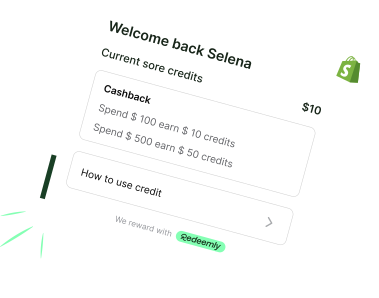
Spend-Based Rewards: Automatically issue credit when a customer spends a certain amount. Think: give $10 in credit for every $100 spent. It’s a direct incentive for bigger carts.
Loyalty Milestones: Celebrate your best customers. You can reward them on their second or third purchase, or when they hit a lifetime spending goal.
Engagement Incentives: Offer small amounts of credit for actions like writing a product review or on their birthday. This turns simple brand engagement into future sales.
Design a Flawless Customer Experience
Here's the bottom line: for any store credit program to work, it has to be dead simple for customers to understand and use. From earning credit to spending it, the whole thing should feel completely effortless. A native Shopify app ensures this process is perfectly seamless.
Here are the key ingredients for a great user experience:
Clear On-Site Visibility: Your customers should be able to see their credit balance at a glance. An on-site wallet widget or a clear display in their account page eliminates any confusion.
Automated Email Notifications: Let them know the second they've earned credit. Even better, send automated reminders if they have a balance just sitting there, gently nudging them back to your store.
Seamless Checkout Redemption: The best programs plug directly into the Shopify checkout. Customers should be able to apply their credit with a single click—no weird codes, no extra steps.
This kind of frictionless experience is what separates a successful program that actually boosts your AOV from one that just gets ignored.
Best Practices For A Winning Store Credit Strategy
Launching a great store credit program isn't just about flipping a switch in your Shopify admin. To really see a return, you need a smart strategy that gets customers excited, protects your profit margins, and makes the whole process feel effortless. This is about turning a simple feature into a core part of your growth engine.
Here’s your playbook for rolling out a program that actually works. We’ll cover how to market your new rewards, set rules that make sense for your business, and get your team ready to use store credit to bump up both your AOV and LTV.
Market Your Program Like a New Product Launch
Your store credit program won't sell itself—you have to build hype, just like you would for a new product. Treat the launch as a major event to grab your customers' attention and show them exactly what's in it for them.
Your marketing needs to be crystal clear, consistent, and laser-focused on the main benefit: getting real, cash-like rewards for being a loyal customer.
On-Site Banners: Use eye-catching banners on your homepage and product pages. Keep the message simple: "Shop and Earn! Get 5% Back in Store Credit on Every Order."
Launch Email Campaign: Send a dedicated email to your entire list announcing the new program. Explain how it works, why it beats old-school points systems, and how they can start earning right away.
Update Your Post-Purchase Flow: Add a section to your order confirmation emails showing customers the credit they just earned. This reinforces the value immediately after they buy.
Set Reward Rules That Are Simple and Sustainable
The best reward rules are dead simple for customers to understand and profitable for you. Complicated tiers and confusing earning structures just create friction and kill excitement. The goal here is clarity and immediate value, which is exactly what a native Shopify store credit system delivers.
A simple spend-and-get model is a fantastic starting point. For instance, offering $5 in credit for every $100 spent is incredibly straightforward and nudges customers to add a little more to their cart to hit that next reward. This kind of structure is a staple for many successful stores with store credit. For a little more inspiration, you can check out other examples of loyalty programs that are crushing it.
Don't forget how powerful store credit is for handling returns. With US retail returns expected to keep climbing, store credit acts as a critical buffer, turning potential refunds into future sales. It's a strategy big retailers use to hold onto 30-40% more revenue from frequent returners, effectively locking in a future purchase that would have otherwise been lost. You can dig deeper into this trend in the National Retail Federation's 2025 landscape report.
Pro-Tip: Start with a simple, flat-rate reward. You can always get fancier later by offering bonus credit during sales or for things like leaving a product review. Keep it simple at the start so customers get it and actually use it.
Equip Your Customer Service Team for Success
Your customer service team is on the front lines, and they’ll be the first ones fielding questions. Giving them the right info is absolutely critical for a smooth rollout that makes customers happy, not frustrated.
Put together a simple internal FAQ sheet that answers the most common questions:
How do I earn store credit?
Where can I see my balance?
How do I use my credit at checkout?
Does my store credit expire?
When your team is prepared, every customer conversation becomes an opportunity to reinforce how awesome your program is. This builds trust, strengthens loyalty, and gets them excited to spend those rewards.
Measuring and Optimizing Your Program's Success
Getting your Shopify store credit program live is a fantastic first step. But the real magic happens when you stop seeing it as just another app and start treating it like a core part of your business—something you measure, analyze, and constantly fine-tune.
After all, how do you really know if it's working? You need to track the right data. A healthy program isn't just about handing out credit; it's about seeing that credit come back to you in the form of profitable, repeat purchases that boost lifetime value. By keeping an eye on a few key numbers, you can ditch the guesswork and make smart, data-backed decisions that get real results.
Key Metrics to Monitor for Program Health
To get a clear picture of how your program is doing, you need to focus on the numbers that directly tie back to revenue and retention. The good news is that most dedicated Shopify store credit apps have built-in dashboards that make this a breeze.
Here are the vital signs you absolutely have to watch:
Credit Redemption Rate: What percentage of the credit you issue actually gets spent? A high number here is a great sign that your customers find the program valuable and easy to use.
Repeat Purchase Rate: This is the big one. Are customers with store credit coming back to buy again more often than those without it? This tells you if your program is genuinely building loyalty.
Time Between Purchases: A successful program should get people excited to shop again sooner. Look for a drop in the average time it takes a customer to make their second, third, or fourth purchase.
Average Order Value (AOV) Lift: Compare the cart size of orders where credit is used against those without. You should see a healthy bump—customers often spend more to "make the most" of their credit.
Tracking these metrics tells a story. It shows you whether your program is just a neat feature or a true engine for driving up customer lifetime value.
Optimizing for Higher Lifetime Value
Once you have your baseline numbers, the real fun begins: optimization. The goal is to make small, iterative changes that lead to big improvements in how much your customers spend and how long they stick around.
Don't be afraid to experiment. Think of your strategy as a series of small tests designed to uncover what truly motivates your customers.
A store credit program is never "set it and forget it." The most successful stores with store credit are constantly tinkering, testing, and refining their strategy. They use customer data to turn good results into great ones, separating a basic rewards system from one that truly boosts lifetime value.
Here are a few tactics to get you started:
A/B Test Reward Amounts: Is a 5% credit-back offer getting more traction than a 10% one? You might be surprised. Test different reward tiers to find that perfect sweet spot that encourages spending without eating into your margins.
Survey Your Customers: Go straight to the source! Send a simple survey to your best customers and ask what they love about the program and what would make them use it even more. Their feedback is gold.
Analyze Redemption Behavior: Dive into your analytics. Are people hoarding their credit or spending it right away? Do they use it on specific types of products? These patterns can give you powerful clues for your next marketing campaign.
By constantly measuring and refining, you ensure your program remains a powerful driver of both loyalty and profit. For a deeper look at the financial side of things, check out our guide on how to calculate customer LTV.
Got Questions About Shopify Store Credit?
Switching up your loyalty strategy always raises a few questions. And as more and more stores see their lifetime value skyrocket with store credit, it's only natural to wonder about the details. Let's tackle some of the most common things merchants ask when they're thinking about moving to a native Shopify store credit system.
Can I Offer Store Credit Instead Of A Cash Refund?
You absolutely can. In fact, Shopify’s built-in functionality lets you issue a gift card as a refund, which works just like store credit. This is a brilliant way to hold onto revenue from returns, effectively turning a potential loss into a guaranteed future purchase.
If you want to get more sophisticated, you can use specialized Shopify apps to automatically offer bonus cash to customers who choose store credit over a refund. A little extra incentive here goes a long way in convincing shoppers to keep their money in your ecosystem, directly fueling your AOV down the line.
Is A Store Credit System A Pain To Set Up?
Not in the slightest. The basic capability for handling returns is already baked right into your Shopify store. And for running proactive reward campaigns that really drive LTV, the best apps on the Shopify App Store have incredibly simple setups you can knock out in an afternoon.
When you weigh it against the constant margin-shredding of discount codes or the headache of a confusing points system, a native store credit program is a breath of fresh air. It's simpler to manage and delivers a much clearer, more direct return on your effort.
The real beauty of a Shopify-native store credit system is its simplicity. You get to skip the confusing math of points and the brand-cheapening effect of discounts. Instead, you're offering clear, cash-like value that customers just get—and love.
How Does Store Credit Mess With My Financial Reporting?
It doesn't have to be complicated. Store credit is generally handled as a liability on your balance sheet until a customer actually uses it. The moment they redeem that credit on a purchase, the liability is cleared and you officially recognize the revenue.
Modern Shopify apps built for store credit make this painless by giving you clear reporting dashboards. These tools track every dollar of credit issued, redeemed, and still outstanding, which makes life much easier for your bookkeeper. That said, it's always smart to have a quick chat with your accountant to make sure your reporting lines up perfectly with their process.
Ready to replace discounts with a loyalty program that actually grows your profit? Redeemly helps Shopify merchants drive higher AOV and LTV with a simple, native store credit system. See how it works at https://redeemly.ai.


Join 7000+ brands using our apps